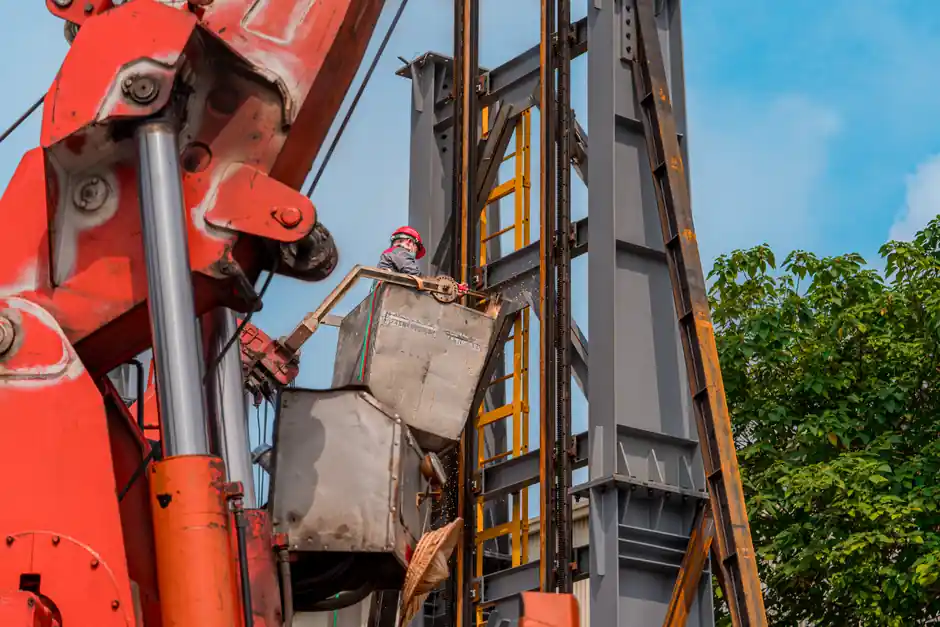
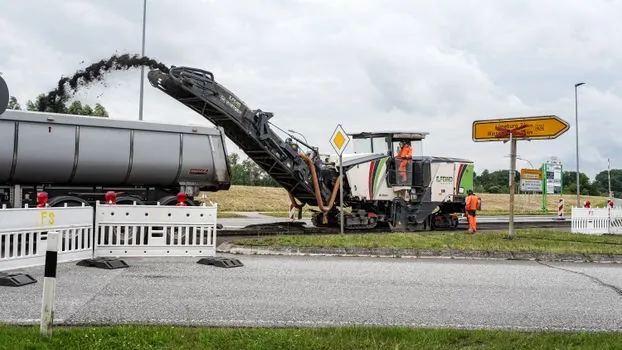
On a half-lane asphalt rehabilitation job, the four highest-probability downtime drivers are milling-bit loss, milling-drum bearing failure, hydraulic-system leakage, and electrical-control faults; together they account for the bulk of unplanned stoppages recorded on Wirtgen-class compact and large cold milling machines [S1][S2][S3].
Cold milling, the mechanical removal of asphalt and concrete layers at ambient temperature, subjects every primary component to abrasive wear, vibration, and shock loading, so the failure map reads more like a wear-and-impact chart than a classic machine-tool reliability curve [S2]. For buyers writing a tender or a maintenance plan, the most useful frame is: which parts fail, why, and which inspection or operating rule actually moves the failure rate.
Milling bits and holders: the dominant failure-and-cost node
Field failure surveys attribute roughly 35-40% of premature road-milling-bit failures to sub-spec carbide material, 30-50% of tool-life loss to improper installation and holder mismatch, and 15-20% of unexpected failures to hidden road obstacles and impact damage [S4]. Tungsten-carbide tip quality is the single largest controllable variable, and the manufacturing-process signal that matters is hot isostatic pressing (HIP): HIP-treated tips reach 14.8-15.0 g/cm³ density and 90-92 HRA, while non-HIP sintered stock typically lands at 14.0-14.5 g/cm³ and 87-89 HRA, a gap that translates into 50-70% of expected service life versus the 100-150% achieved by properly pressed carbide [S4].
For road applications, ISO 513:2012 places the relevant cemented carbides in the K-series, optimized for abrasive conditions and impact loading, and using continuous-cut metalworking grades (e.g. P-series) on a milling drum is a documented route to rapid tip fracture [S4]. The practical prevention rule is to spec K-grade, HIP-processed carbide, pair it with the holder geometry the OEM publishes, and replace on wear-pattern criteria (tip too short, partial wear, tip fracture, or steel-body partial wear) rather than on calendar interval [S1][S4]. A useful adjacent reference for blade and bit replacement intervals is the marble cutter lifespan and blade replacement guide, which applies the same wear-pattern-first logic to a different cutting tool class.
Milling drum, bearings, and the mechanical wear chain
Mechanical vibrations during cutting are inherent to the cold-milling process, and they propagate into the drum, the drive belts, and the drum-shaft bearings; the operating consequence is that bearing race wear, belt stretch, and cutter-holder block loosening cluster as a single failure family rather than independent events [S1][S2]. The preventive chain is short and concrete: check holder seating torque at every shift change, inspect the drum for blocked or missing water-spray nozzles (overheating accelerates bearing failure), and replace bearings on vibration-spectrum thresholds rather than on a fixed hour count, because asphalt temperature, cutting depth, and aggregate hardness shift the loading envelope job to job [S1][S2].
Cross-referenced failure analysis from rotating-equipment maintenance work shows inadequate lubrication at 35-40% of failures, normal wear and aging at 18-25%, and improper installation or assembly at 12-18%, a distribution that maps cleanly onto the milling-drum subsystem where grease-packed bearings and hydraulic-motor couplings dominate the maintenance burden [S6]. Operators who move to a fixed lubrication schedule with sampled grease (looking for metallic wear debris and water ingress) typically catch drum-bearing defects two to three shifts before a hot bearing event, which is the difference between a planned 4-hour bearing swap and a 24-hour drum-pull repair.
Hydraulic, pneumatic, and water-system leakage
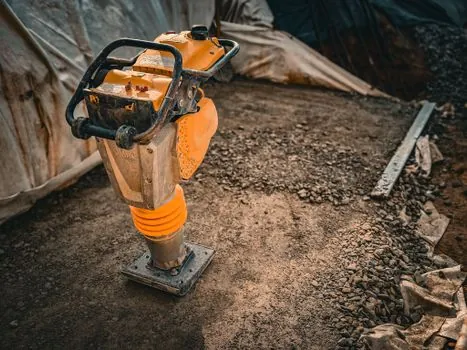
Hydraulic-system leakage is the third major fault cluster and it usually appears first as a pressure drop at the drum drive, the conveyor lift, or the track-drive motors; root cause is almost always a seal, hose, or fitting that has aged past its service interval rather than a pump failure [S3]. On cold milling machines the hydraulic circuit is dual-loaded because it powers both propulsion and the down-pressure cylinder that controls milling depth, so even small leak rates shift depth-holding accuracy and force the operator to compensate, which accelerates wear elsewhere in the machine [S2][S3].
Water-spray systems deserve a separate line in any maintenance schedule because they suppress dust, cool the carbide tips, and reduce cutter-block heat checking; a clogged nozzle array raises tip temperature and is a documented precursor to premature bit loss and holder cracking [S1][S4]. A practical rule: walk the machine at the start of every shift, verify nozzle flow at each block, and check hydraulic line routing for chafing against the drum guard, an inexpensive 60-second step that the data ties directly to bit life and bearing life [S1][S4].
Electrical, control, and sensor faults on modern compact mills
Modern compact and small cold milling machines run leveling systems, drum-speed sensors, conveyor position switches, and engine governors through a CAN-based network with proportional hydraulic valves, so electrical faults cascade into apparent mechanical symptoms if the diagnostic order is wrong [S2][S3]. The three electrical sub-failures that operators see most are control-system faults (often software or connector-related, not hardware), sensor drift (position and speed sensors losing calibration), and unstable supply voltage during generator transitions on remote sites, each of which has a documented corrective action: restart or reflash the controller, recalibrate or replace the sensor, and install a voltage stabilizer or UPS for the machine's electronics bay [S3].
LEVEL PRO PLUS and LEVEL PRO ACTIVE leveling, the OEM integrated systems on Wirtgen's small, compact, and large milling classes, depend on a clean sensor signal chain, so a level-holding error reported by the operator should be triaged as sensor or wiring first, valve second, and hydraulic-mechanical third, reversing that order burns hours of diagnostic time on a problem that a $20 connector would have fixed [S2]. The reliability lever here is documentation: a wiring diagram, sensor calibration log, and software version pinned to the machine serial number shortens mean-time-to-repair on electrical faults by a large margin, and it is the cheapest prevention step on the whole machine.
Operating-parameter and installation-driven failures
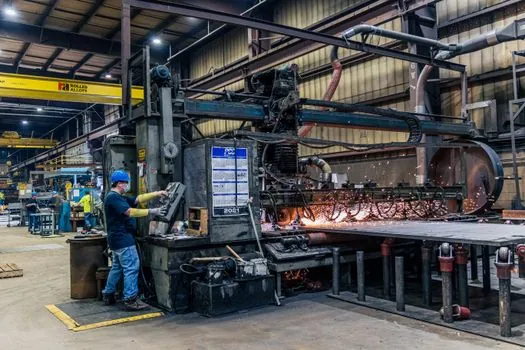
Operating the drum outside the manufacturer's published cutting-depth, engine-speed, or ground-speed window can cut expected milling-bit life in half, and this is the second-largest controllable cause of premature wear after carbide quality [S1][S4]. Two operator behaviors dominate this category: forcing deeper cuts than the drum's line spacing supports, which loads individual bits beyond their impact rating, and running at low engine speed under high hydraulic load, which stalls the MILL ASSIST or equivalent automatic power-management routine and lets the drum lug down [S2][S4].
Installation and holder issues, separate from carbide quality, cause an additional 30-50% reduction in tool life and produce uneven wear patterns that are visible on the bit base as galling or oval distortion of the retainer pocket [S4]. A repeatable prevention procedure is: clean the holder pocket before bit insertion, verify the retainer is the correct part number for the drum, torque to the OEM value with a calibrated tool, and rotate bits on the drum to even out wear across the pattern, a process analogous to tire rotation on a fleet vehicle. For organizations buying or auditing a machine before delivery, the cold milling machine inspection checklist gives a field-ready pre-start, daily, and pre-purchase audit format; pairing that with the testing and commissioning procedure closes the loop from acceptance through steady-state operation.
Failure-mode comparison across the four major subsystems
Across the four primary failure subsystems, the decision criteria that matter for prevention budget allocation are: failure share, lead-time on the spare part, consequence severity (planned stop vs. drum pull), and detectability on routine inspection. The comparison below lines those criteria up using only the data in the research base. [S6]
Milling bits and holders carry the highest failure share at 35-40% carbide-driven plus 30-50% installation-driven loss, but they are also the lowest lead-time item (24-72 hours typical), lowest consequence (planned bit change), and highest detectability (visual wear pattern, torque check) [S1][S4]. The drum-and-bearing cluster sits in the middle on every axis: lower failure share than bits, longer lead-time on bearings, higher consequence because a failed drum bearing usually means a conveyor-out service, and medium detectability via vibration and temperature trends [S2][S6]. The hydraulic and water subsystem ranks low on failure share but high on consequence because leaks degrade milling accuracy before they trigger a stop, and lead times on hydraulic motors and proportional valves are typically 1-3 weeks [S3]. Electrical and control faults have the lowest failure share in the dataset, the highest detectability when a wiring diagram and calibration log are kept, and a moderate lead-time dominated by sensor and connector availability rather than controller board stock [S2][S3].
The actionable read of this matrix: spend the largest prevention budget on bit-and-holder quality and torque procedure, then on drum-bearing condition monitoring, then on hydraulic-line inspection, and treat the electrical system as a documentation-and-training problem rather than a parts problem.
What this means for procurement and maintenance planning
A cold milling machine specified for a 5,000-10,000 hour service life is realistic only if the operator's maintenance program treats bit-and-holder wear as the primary cost driver rather than as a consumable afterthought, and if the procurement specification pins carbide grade to ISO 513 K-series with documented HIP processing [S1][S4]. A practical tender clause is to require carbide-grade certification, holder-part-number traceability per drum position, and a wear-pattern photo log at 250-hour intervals, evidence that lets the buyer distinguish a 100-150% service-life bit from a 50-70% service-life bit within the first quarter of operation [S4].
Two trackable signals to watch over the next operating season: hydraulic-leak incident rate per 1,000 machine hours (a leading indicator of seal and hose aging that precedes drum-drive pressure complaints), and unplanned-stop hours per 1,000 machine hours split by root-cause category (bit, drum, hydraulic, electrical), because the ratio between those four categories is a better predictor of next-season spend than the absolute stop count [S1][S3][S6]. The broader cold milling machine encyclopedia entry covers the related machinery and equipment context for fleet planners comparing milling machines to adjacent roadwork assets.
Detailed specification references: cold chamber machine, and cold box core machine.