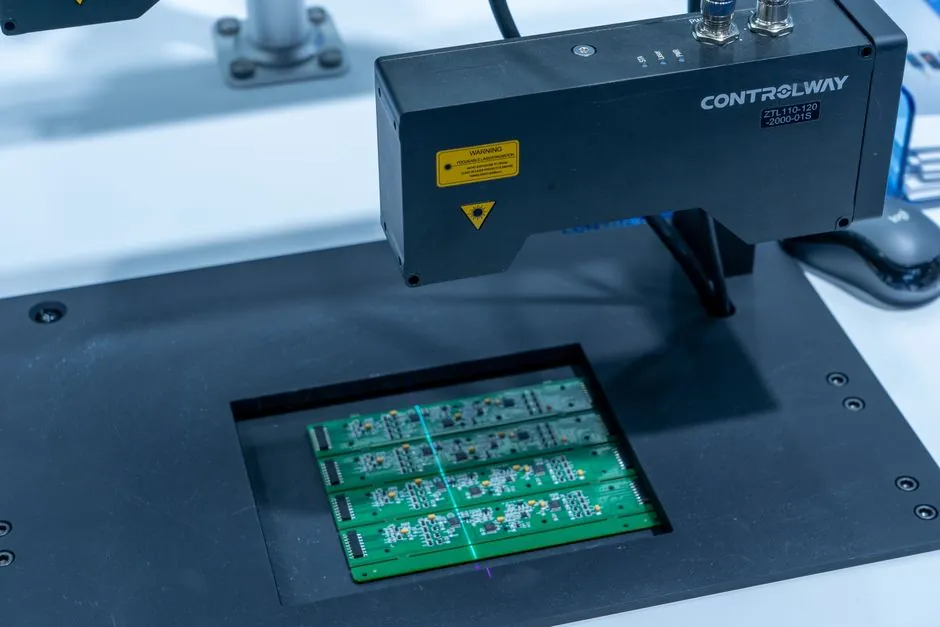
According to February 2026 industry coverage, fully automated production lines are fast becoming the norm in hydraulic cylinder manufacturing, redefining capabilities for quality and throughput [S2].
The shift covers five integrated work stages: raw material feed, precision machining (turning, milling, drilling), surface treatment (grinding and honing), robotic assembly and sealing, then automated leak and dimensional inspection, with humans retained for systems design, maintenance, and supervisory roles [S2]. Sensor-integrated cylinders with continuous position and speed feedback are now requested alongside the mechanical part, lifting a cylinder order from a single BOM line into a mechatronics sub-assembly that ties directly into the cell's MES and CMMS layers [S3].
Cell architecture: what the 2026 line actually contains
A modern hydraulic cylinder cell is built from PLCs, SCADA, and computerized maintenance management systems coordinating sensors, robotics, machine vision, and analytics, with wired fieldbuses such as EtherNet/IP and Profinet, plus Wi-Fi and cellular links, replacing older serial comms for higher-level data flow [S3]. Within the cell, the machining stage holds micron-level tolerances on bore roundness, surface finish, and seal-groove geometry, while robotic cells handle seal insertion, rod assembly, and end-cap torquing with force/angle verification rather than human feel [S2]. Honing and hard-chrome rod prep remain process-critical because seal life is set by the surface they ride on, which is why these steps sit inside the automated line rather than being subcontracted to manual shops [S1].
The closure on a 2026 cell is automated leak testing at proof pressure (commonly 1.5x working pressure for hydraulic service, per the supplier guidance cycle, dated 2026-02) and inline dimensional inspection, with rejects flagged to a rework station instead of leaving the cell [S2]. Compared with semi-automated cells of 2022 vintage, the new layout drops manual touch points on safety-critical surfaces and removes the human variable from torque, stroke length, and seal-seat depth.
Selection criteria: which parts are worth automating first
Not every cylinder belongs on a fully automated cell. The economic break-even is best on tie-rod and welded-body cylinders in the 50–250 mm bore range, with working pressures in the 160–350 bar band common to mobile and industrial hydraulics, where repeat volumes justify the capital cost of dedicated fixtures [S1][S2]. At the other end, custom one-off cylinders for steel-mill hydraulic presses or large transfer systems still favor conventional build cells because the engineering content per part is high and the batch size is low [S1]. A reasonable rule is: if the cylinder length is fixed, the seal kit is catalog, and the volume exceeds a few hundred per year, it is a strong cell candidate; if the rod diameter, stroke, and mounting style are re-engineered per order, conventional flow is still the right answer [S2][S3].
Material choice also influences the cell decision. Heavy-duty cylinders typically use thick-wall tube, high-strength end caps, and S45C carbon-steel rods with hard-chrome plating and precision ground finishes, all of which lend themselves to automated handling and inspection because the inputs are well controlled [S1]. The seal system is the variable: cells designed for PTFE and FKM seal families can run faster and with tighter gripper tolerances than cells still handling NBR or fabric-reinforced stacks, which deform under robotic handling [S3].
Comparison: manual, semi-automated, and fully automated cylinder cells
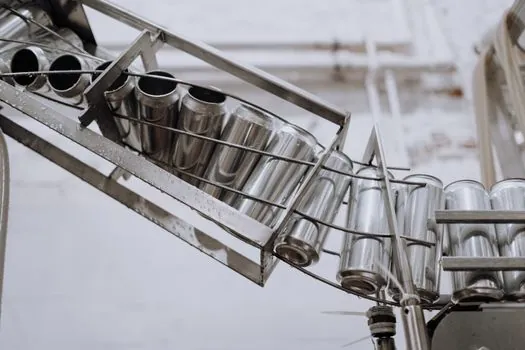
Across the three build approaches, the 2026 trade-off is clear: manual cells win on flexibility, fully automated cells win on consistency and throughput, with semi-automated sitting in a vanishing middle. [S2]
Manual cell: lowest capex, suited to low-volume custom cylinders (heavy-press, large transfer system builds), but introduces variability in bore finish, seal-seat depth, and torque, which is exactly the variability that drives field leak and premature-seal-wear failures [S1][S2]. Semi-automated cell (pre-2022 norm): CNC machining of the bore and rod, manual assembly and testing, with humans retained for seal fit, torque, and leak-test sign-off, which remains common in small-to-mid hydraulic shops [S2]. Throughput scaling is the most concrete delta: a fully automated cell can run 24/7 without fatigue, versus a single-shift manual cell, and that is the single line item that most often pays back the integration cost [S2].
Beyond throughput, the comparison turns on data: fully automated cells generate per-cylinder traceability (torque curves, leak-test decay curves, dimensional reports) that the smart-factory side of the operation needs for predictive maintenance; semi-automated and manual cells cannot feed that pipeline without manual transcription, which usually does not happen in practice [S3]. For procurement, this is also where a hydraulic cylinder order stops being a catalog SKU and starts being a configurable mechatronics sub-assembly, with the integration cost loaded on top of the bare cylinder price.
Sensor integration and the data the cell now has to ship
Industry 4.0 in hydraulic cylinders is driven by sensor integration, continuous position and speed measurement rather than end-point only, and standardized comms to upstream PLC and SCADA layers, per August 2025 manufacturing-side reporting [S3]. The practical ask on a 2026 cell is: position, pressure, and vibration data off the cylinder, fed back to MES and CMMS so that seal wear and rod misalignment can be trended before they fail in the field, which is the foundation of the predictive-maintenance story now expected on premium cylinder orders [S3][S5].
The cylinder-side hardware has changed to match. PTFE and FKM seal compounds are now the default for high-duty continuous-motion applications (cutting, forming, pressing), and rod coatings beyond hard chrome (polymers, ceramics, nano-coatings) are being qualified where cycle rates push surface temperatures past the chrome limit [S3]. Smart press equipment, including body-in-white welding and stamping cells, is the proving ground: integrated position/pressure sensors on the cylinder, plus temperature and seal-wear monitoring, drive closed-loop control and predictive maintenance that in turn raise OEE on the parent line [S5]. For buyers, the procurement checklist on a 2026 order typically includes: integrated sensors (yes/no), comms protocol (EtherNet/IP, Profinet, IO-Link, or analog), expected OEE contribution, and a data-sheet row for predictive-maintenance trigger thresholds, none of which appeared on cylinder datasheets five years ago [S3].
Use cases driving 2026 demand
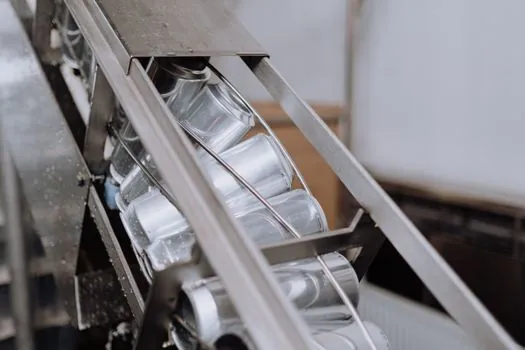
EV battery manufacturing is the headline growth segment: battery cell pressing and lamination, electric motor component assembly, automated die casting and mold clamping, and welding-gun actuation for robotic arms all run on high-speed hydraulic cylinders where the force density of hydraulics beats pneumatic and the cycle rate beats most electric linear actuators [S5]. Metal forming and pressing is the second pillar: stamping, forging, and bending demand synchronized multi-cylinder motion at high tonnage, and hydraulic remains the default for synchronized large-press control loops [S5]. Injection molding and blow molding for high-strength plastics and rubber rely on hydraulic mold-open/close, injection-phase pressure control, and ejector actuation, often paired with servo valves for closed-loop force control [S5]. Body-in-white welding, fixture clamping, AGV lift mechanisms, and heavy-payload robotic EOAT round out the application map that 2026 cell builders are targeting [S5].
Outside the headline segments, clamping and fixturing decisions still come down to force density and stiffness, with hydraulic preferred where workholding must hold position under heavy cutting loads, and pneumatic retained for low-force, spring-assisted clamping where stiffness is not critical [S4]. In an automated cell context, that means a typical fixture design will use a spring-loaded or pneumatic clamp for part location, with one or two hydraulic clamps taking the heavy cut, and the cylinder cell feeding both cylinder families through the same leak-test and traceability pipeline [S4].
Limitations, failure modes, and what the cell cannot fix
Automation does not eliminate engineering risk; it relocates it. Side load and misalignment remain the dominant in-field failure causes on heavy-load cylinders, and a cell that does not control rod alignment at the machine interface will still produce guide-bushing wear, rod scoring, and seal damage regardless of how cleanly the bore was honed [S1]. Seal selection still has to match pressure, temperature, and duty cycle: a cell designed for 200 bar catalog work is not automatically safe at 350 bar continuous duty, and the seal compound, backup ring, and groove tolerance all have to be re-qualified, not just re-torqued [S1].
For buyers specifying a cell or sourcing a cylinder, three constraints are worth flagging up front. First, sensor-integrated cylinders with continuous position feedback are still mostly custom-engineered, and off-the-shelf catalog cylinders are typically too large, too short-stroke, or wrong on comms protocol to drop into a high-speed smart line, so plan a lead time of weeks to months rather than the days a catalog SKU would imply [S3]. Second, the electrical automation layer of the cell (PLCs, SCADA, EtherNet/IP, Profinet) and the hydraulic cylinder hardware are increasingly procured as a single package, which means a mismatch in either the comms stack or the cylinder's sensor data sheet will stall commissioning, so it pays to lock both specs before issuing the PO [S3]. Third, fully automated cells do not remove the need for skilled hydraulic engineers; they shift them from torque-wrench operation to systems integration, seal compound selection, and predictive-maintenance rule authoring, and that is the role the smart-factory procurement team needs to staff for, not avoid [S2][S3].
Trackable signals to watch next
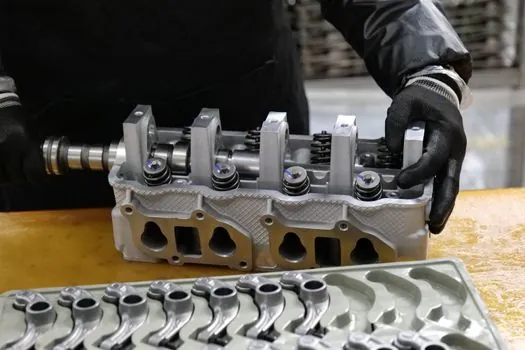
Three signals are worth tracking through the rest of 2026: the rate at which mid-tier hydraulic shops (not just the top three or four tier-one suppliers) ship sensor-integrated cylinders as catalog SKUs rather than custom builds, the first published MES-level OEE delta between a fully automated cylinder cell and a semi-automated baseline on a comparable product mix, and any 2026-vintage technical update to the relevant honing and seal-groove tolerance standards, since those are the specs the cell's inline inspection has to enforce. Watch the construction machinery and equipment buyer side as well: as excavator and loader OEMs retool for higher-force cylinder requirements, their cell-spec asks will pull the wider hydraulic supply chain toward the automated-cell baseline. [S2]
Related analysis: DLC-Coated Ball Bearings and Grease: When the Coating Replaces the Lubricant, and When.