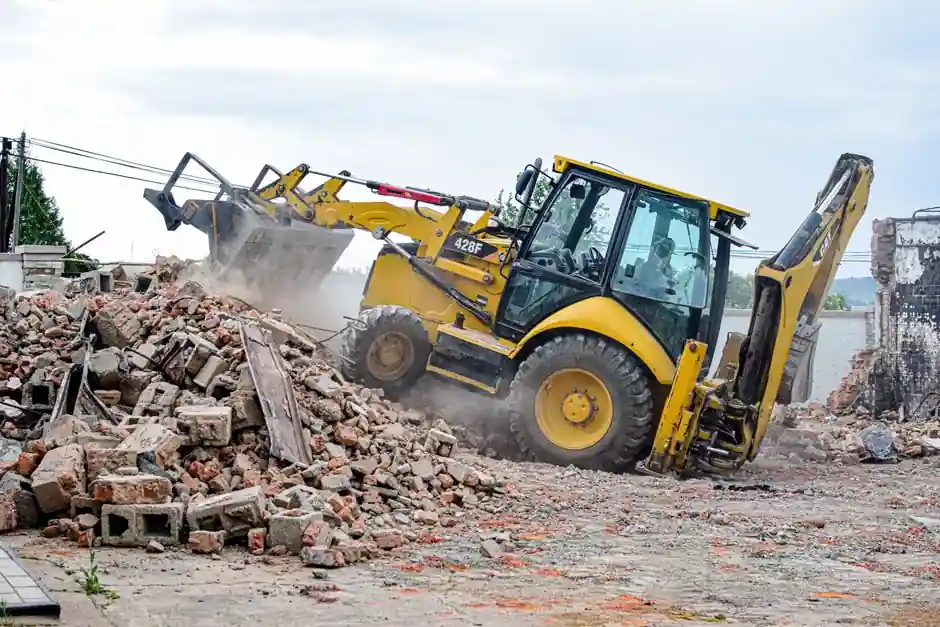
A compliant backhoe pre-trip inspection runs in four sequential blocks (power-off visual, fluids, chassis, and power-on function) and typically lists 30 to 40 line items on a single-page form per the Douglas County ORS-36 Backhoe Pre-Trip Inspection Report [S1].
The scope covers the machine itself only: tires, axles, hydraulics, ROPS/FOPS, seatbelt, fire extinguisher, gauges, steering, and forward/reverse. It is not a scheduled preventive-maintenance task and it does not replace the OEM service-interval walk-downs delivered through platforms like Cat Inspect [S3].
Power-off walk-around: undercarriage, tires, leaks
The first block on the ORS-36 form lists fifteen power-off checks starting with "Check Underneath Machine," "Check Tires and Rims," and "Check Axles" [S1]. The Heavy Equipment College of America checklist reuses the same sequence, calling out visible wear, loose bolts, tire inflation, axle seals, and driveshaft damage from rough terrain [S5].
Acceptance is binary on most public forms: a check-mark means the item meets county or fleet standard, a blank means it needs attention [S1]. A dark or cloudy engine-oil sample, contaminated coolant, or hydraulic fluid with visible particulates each fail the block and force a service ticket before the machine is released, per the three-fluid rule of thumb published in the HEC 2025-02-21 update [S5]. A wet patch under the machine, an inflated-but-cut sidewall, or a seep at an axle seal is a hard fail, not a "monitor" item.
Fluids block: oil, coolant, hydraulic, DEF
The ORS-36 form separates fluids into their own subsection, listing engine oil, engine coolant, hydraulic fluid, and diesel exhaust fluid (DEF) when equipped [S1]. IEDA's BACKHOE LOADER INSPECTION FORM places fluids under a "Lubrication / Inspection" header alongside the engine-door and platform checks [S2].
The pragmatic acceptance criteria: oil level between min and max on the dipstick with no milky discoloration, coolant level full and free of oil sheen, hydraulic reservoir at the sight-glass mid-band, and DEF level above the OEM low-warning threshold. HEC's 2025 update adds a fourth fluid check, transmission/hydraulic combined, on machines where the reservoir is shared [S5]. A common failure mode is a slow hydraulic weep at a rod-end seal, visible only with the machine cold; a paper placed under the boom overnight is the cheapest test. Related: hydraulic system procurement 2026 spec playbook for what to write on the requisition when the weep forces a hose replacement.
Chassis and safety devices: ROPS, seatbelt, extinguisher
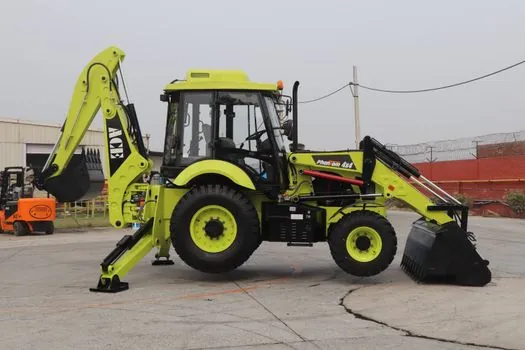
The ORS-36 "Chassis" block lists cab glass, emergency exit, entry/exit steps, ROPS/FOPS, counterweight and counterweight bolts, fire extinguisher or suppression system, and the articulated-frame lock preventer [S1]. The seatbelt line carries an explicit hard rule: "Regardless how old, seatbelt must be replaced every 3 yrs." [S1]. SG World's Starter Kit positions the documentation system as a way for supervisors to "see at a glance if OSHA/MSHA/ANSI required safety inspections have taken place" [S4].
Counterweight bolt torque is the most-skipped chassis item on older fleets: a missing or loose bolt shifts the machine's center of gravity and turns a slope parking into a tip-over. The fire extinguisher must be within its service tag window (typically a 12-month hydrostatic/visual cycle per NFPA 10), and the articulated-frame lock must positively engage before anyone crawls under the loader arms. A cracked windshield, a missing grab iron, or a bent step is a "tag-out" item until repaired. Related: mining motor grader specs for how ROPS/FOPS ratings translate between equipment classes.
Power-on block: gauges, controls, all movements
The ORS-36 "Power on Inspection" block starts with "Unit Starts and Runs Properly" and ends with "Bucket Attachments All Movements" [S1]. IEDA's form adds a pass/fail column keyed "E" for excellent and uses a sketch with letter codes A through G for scratch, broken, cracked, dented, loose, flat, and missing [S2].
Acceptance here is operational, not cosmetic: the engine must start cold without excessive cranking, all warning lights must extinguish after the bulb-check, the horn and reverse alarm must sound, and every hydraulic function (lift, tilt, swing, extend, curl) must respond without jerking or delay [S5]. A jerky backhoe swing or a drooping loader arm under no load is a hydraulic-internal-leak symptom, not a control-valve problem, and the machine should be locked out. Reference also: skid-steer loader and wheel loader checklists share the same control-function section, useful for fleets that run mixed rosters.
Documentation, OSHA/MSHA/ANSI alignment, and tooling
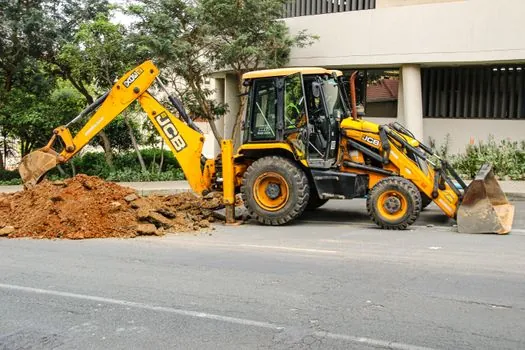
SG World's patent-protected Backhoe Inspection Checklist Solution Starter Kit frames the documentation itself as the deliverable, mapping line items to OSHA/MSHA/ANSI required safety inspections and providing color-coded tag status for at-a-glance supervisor review [S4]. Cat's parallel offering is the Cat Inspect mobile app, which downloads pre-defined inspection tasks, captures photos and comments, and uploads completed forms to a web portal for follow-up and opportunity management [S3].
For procurement-side spec writing, an inspection checklist is a deliverable, not a feature. The acceptance criteria for the form itself: single-page A4/Letter layout, binary check or pass/fail columns, a section for hour-meter reading, an inspector signature line, and a sketch block for damage location [S1][S2]. Any checklist longer than two pages or requiring a login to fill in fails the field-usability test on most sites. Reference also: backhoe loader encyclopedia for the machine classes these forms are written against.
The HEC checklist was last revised 2025-02-21 [S5]; the next revision cycle is the cleanest trigger to compare against.