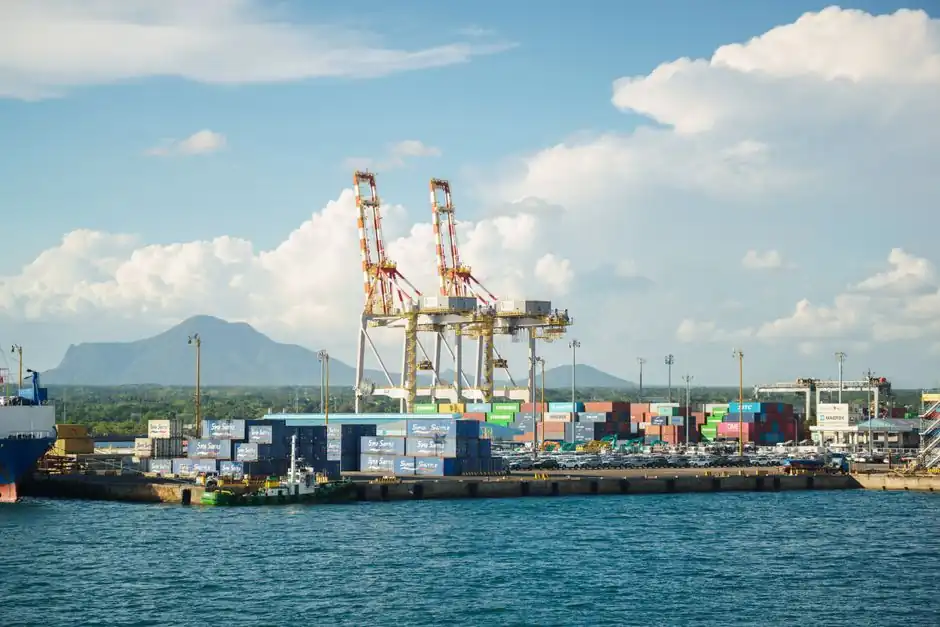
Rotary jet tank cleaning machines for port and terminal service cover tanks from small service vessels up to 10,000,000 gallons (38,000 m³) when multiple units are deployed, with the Butterworth Type K being a reference bronze-alloy, turbine-driven design [S2].
Operating windows in marine and terminal service typically sit at 30–345 gpm (6.8–79 m³/hr) flow and 85–250 psi (5.9–17.3 bar) pressure, with hot-wash at 50–80 °C (122–176 °F) where coating and safety permit [S2][S3]. Compliance work in ports runs under MARPOL Annex I, SOLAS, ISGOTT, IMO 2020 sulfur limits, and Port State Control rules, with waste streams routed to Port Reception Facilities [S3].
Operating envelope: flow, pressure, temperature
Flow rate for fixed rotary jet heads spans 30–345 gpm on the Butterworth Type K and SK models, with 20–60 L/min per head typical in marine fuel-tank service [S2][S3]. The HydroWhirl Orbitor class operates at 21.5–160 gpm (80–600 L/min) and 45–145 psi (3–10 bar), positioning it for higher-impact industrial cleaning cycles [S4].
Static temperature limit on the Type K reaches 250 °F (121 °C static), with operational temperature capped at 121 °F (49 °C), which constrains hot-wash loops unless a separate heater and recirculation skid is used [S2]. Hydrojets supplementing fixed heads are commonly run at 200–500 bar (2,900–7,250 psi) for heavy deposits, frame work, and sumps [S3]. For comparison on three common duty classes, fixed rotary jet heads (Type K) deliver 30–345 gpm at 85–250 psi, hydroblasting lances deliver 5–30 L/min at 200–500 bar, and chemical recirculation skids operate below 10 bar with heated 50–80 °C loops, so selection follows residue hardness and coating tolerance rather than raw flow.
Mechanical envelope: opening, weight, drive
Minimum tank opening for the Type K and SK machines is 9.00 in (228.6 mm), which is the binding constraint for retrofits on older terminal tanks and marine bunker service tanks [S2]. The HydroWhirl Orbitor standard-capacity version needs a 125 mm opening, giving it an edge on vessels with smaller manways [S4].
Dry weight of the Type K is 48 lbs (21.77 kg) and the SK is 58 lbs (26.31 kg), with bronze alloy as the standard material of construction and an integrated turbine drive removing the need for external motors or compressed-air supply [S2]. The full pattern matrix for the Type K completes after 63 axial revolutions of the body, producing a repeatable 360° indexed coverage similar to a ball of twine, which is the metric auditors look for when verifying a clean [S2].
Application split: fuel tanks, cargo tanks, storage terminals
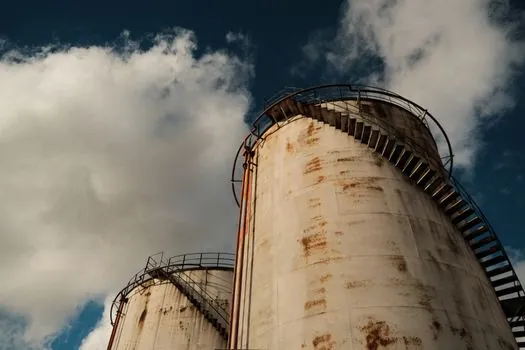
For HFO/IFO fuel tanks, the cleaning target is asphaltene sludge, wax, and cat-fine sediment, with hot-wash at 50–80 °C on fixed rotary heads; VLSFO tanks add paraffinic wax and instability sludge to that list [S3]. Slop and settling tanks focus on phase separation and water draw-off, while cargo and chemical tanks are handled only where coating compatibility permits and a neutral pH final state can be verified [S3].
Port-side storage terminals handling 1,000–38,000 m³ of product need at least two fixed machines per tank to hit the 10,000,000-gallon envelope that the Type K datasheet quotes, and the typical deployment pattern pairs one head on a short cycle and one on a long cycle to clear baffles and shadow zones [S2][S3]. Robotic inspection, as deployed at the Ultracargo terminal in Itaqui (MA) for firefighting-system tanks, sits downstream of the cleaning pass and feeds back residue data to refine cycle counts [S6].
Codes, safety, and entry-prevention
Confined-space entry under ISGOTT/NR-33 requires O₂ near 20.9%, hydrocarbon vapor below 10% LEL, and toxics below TLV before any manual intervention, with EX/ATEX portable equipment and bonding/earthing as standing requirements [S3]. Permit-to-Work and LOTO of lines, pumps, and heaters are mandatory before the rotary heads start, and inerting status must be re-verified at each shift handover [S3].
U.S. aboveground and underground storage tank design and release-detection rules sit under 40 CFR Part 280, which feeds directly into terminal upgrade specifications on the regulatory side [S1]. The dominant driver behind specifying rotary jet heads over manual washing is entry prevention: automated machines eliminate confined-space entry for cleaning, cut effluent generation, and reduce energy and chemical use, which is the same set of benefits Alfa Laval markets on its rotary impingement line [S5][S2].
Selection criteria and who should not use rotary heads
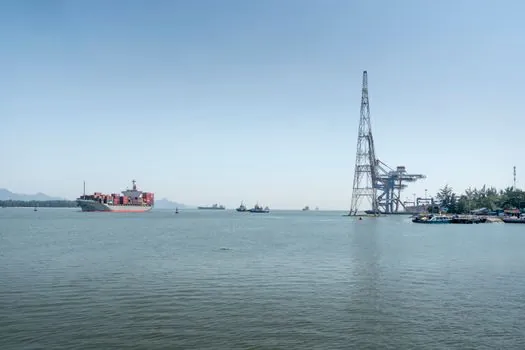
Selection is driven by four measurable inputs: tank opening diameter, target flow in gpm or L/min, allowable pressure in psi or bar, and residue class (asphaltene, wax, polymerized film, or water-soluble) [S2][S3][S4]. Buyers should match opening first, because a 9 in manway rules out larger heads; flow second, because residue class determines whether a 30 gpm or a 300 gpm machine is needed; and pressure third, because coating limits on cargo tanks cap hydrojet output at well below the 500 bar that bunker tanks tolerate [S2][S3].
Rotary jet heads are not the right tool for very small process vessels below roughly 1 m³ where spray balls are sufficient, nor for tanks with internal coil heating where the impingement can damage fins; in those cases a tank cleaning machine selection should drop down to spray-ball or static-fountain options [S7]. For very large terminals that still move product via pumps, valves, and construction machinery and equipment, the cleaning duty is one node in a wider maintenance loop that includes self-cleaning filter skids on the wash-water recirculation line.
Trackable signals for the next 6–12 months include IMO guidance updates on low-flashpoint fuel changeovers that change hot-wash temperature limits, and a second wave of robotic inspection retrofits at Brazilian terminals following the Ultracargo Itaqui pilot. Procurement teams that standardize on Type K or equivalent bronze machines should also re-validate opening dimensions against any new 125 mm-class head that emerges, since the gap between 9 in and 125 mm manways decides which machine a port can actually install without a flange upgrade. For broader terminal-side context on spec-first sourcing, see the industrial filter upstream and downstream sourcing map.