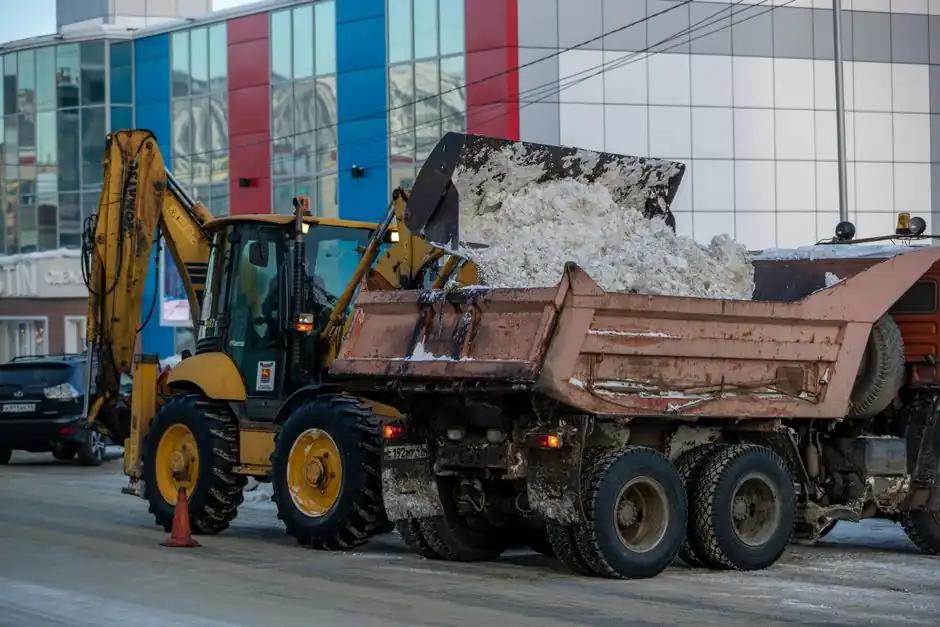
A backhoe loader is mechanically ready for release only after a fixed sequence of pre-start checks, cold-start verification, and hydraulic function cycling, with pass criteria drawn from OEM daily inspection protocols [S1][S2]. The sequence matters because most first-day failures on a new unit trace back to skipped pre-delivery checks, not to design defects [S3].
Commissioning differs from routine maintenance in scope: it is a one-time acceptance event that validates the machine as delivered, not a recurring service. Operators, technicians, and fleet owners who follow a written commissioning script catch transport damage, low factory fluids, and uncalrated controls before the machine clocks its first productive hour [S1][S4].
Pre-Start Visual and Fluid Inspection
Park the unit on level ground with the engine off and the hydraulic system cool before opening any service panel; oil level taken on a slope gives a false reading [S2]. With all cylinders fully retracted, check the hydraulic oil level on the sight glass or dipstick, then verify engine oil, coolant, transmission fluid, and brake fluid against the cold-side marks on their respective gauges [S2][S3].
Walk the machine looking for transport damage: loose or missing handholds, leaks at hose fittings, tire damage, and cracked or shifted bucket cutting edges [S5]. Bucket teeth on the backhoe should be intact, with no missing points, and all pivot pins must be greased and show no daylight at the joint [S2]. On a backhoe loader with a quick coupler, confirm the locking mechanism fully seats before any digging cycle is attempted.
Hydraulic System Cold-Start Verification
After fluids pass visual check, start the engine from the operator seat with all controls in neutral and the area confirmed clear of personnel [S2]. Allow the hydraulic fluid to reach operating temperature at low idle, then run each loader and backhoe function through its full range of motion, watching for cylinder drift, binding at swing pins, and abnormal noise at the boom and stick pivots [S2][S4].
Drift test is the decisive pass criterion: with engine off and a loaded bucket held at full lift, hold for 60 seconds and check for measurable boom settle. A passing machine shows no measurable drop; any visible drift points to internal bypass, a control-valve issue, or a cylinder seal failure that must be logged before delivery [S2]. Hydraulic oil temperature after a full work cycle should remain inside the OEM-specified band, typically below 90 to 95 degrees C for most mid-size units [S2].
Mechanical Component Pass Criteria
Each mechanical subsystem has a specific acceptance check tied to its wear mode. The loader bucket requires a level-ground lowering test, with the cutting edge checked for security, cracks at welds, and wear beyond the OEM service limit, plus verification that lift-arm pivot points show no slop under load [S2]. The backhoe boom, stick, and bucket must be inspected for cracks or deformation, with the swing mechanism run through a full 360-degree arc to confirm smooth, binding-free rotation [S2].
Stabilizer pads deploy and retract under load, with the pads checked for cracks or missing material; damaged pads cause the machine to rock under trenching load and are a common commissioning flag [S2]. For comparison against related service routines, the daily-check pass criteria used on a road roller follow a similar logic: level ground, neutral controls, then a function-by-function cycle with hard pass or stop-work thresholds.
Safety System and Control Verification
Safety interlocks are commissioned as a separate pass, after the mechanical and hydraulic checks are clean. The backup alarm must sound when reverse is selected, the parking brake must hold the machine on a slight grade, and the horn must be audible from all four sides at the rated volume [S2]. All work lights, indicators, and the swing-lock pin must engage and release without binding, and transport locks on the loader arm and backhoe must seat fully before any road travel [S2][S5].
Control verification closes the loop: with the operator at the seat, test every joystick detent and pedal through its full travel, confirming the correct function responds (for example, left joystick swing does not also trigger stick curl). OEM commissioning scripts flag any cross-coupled control as a hard fail and route the unit to the dealer for hydraulic harness re-pin before release [S4].
Documentation and First-Hour Records

A commissioning pass is not complete until the data is written down. The deliverable record should include the engine and hydraulic serial numbers, the cold fluid readings, the drift-test result with the bucket at full lift, the swing-arc observation, and any flagged items deferred to warranty [S4]. First-hour readings establish the baseline against which every future construction machinery and equipment service interval is judged [S3].
Two trackable signals confirm the machine is ready for production: a clean drift test with the bucket held at full lift for 60 seconds, and an OEM-form commissioning sheet countersigned by the technician and the receiving operator. Either one missing means the unit is not yet in service, regardless of how the machine looks on the yard.
Spec-level background on the components involved: tensile testing machine.