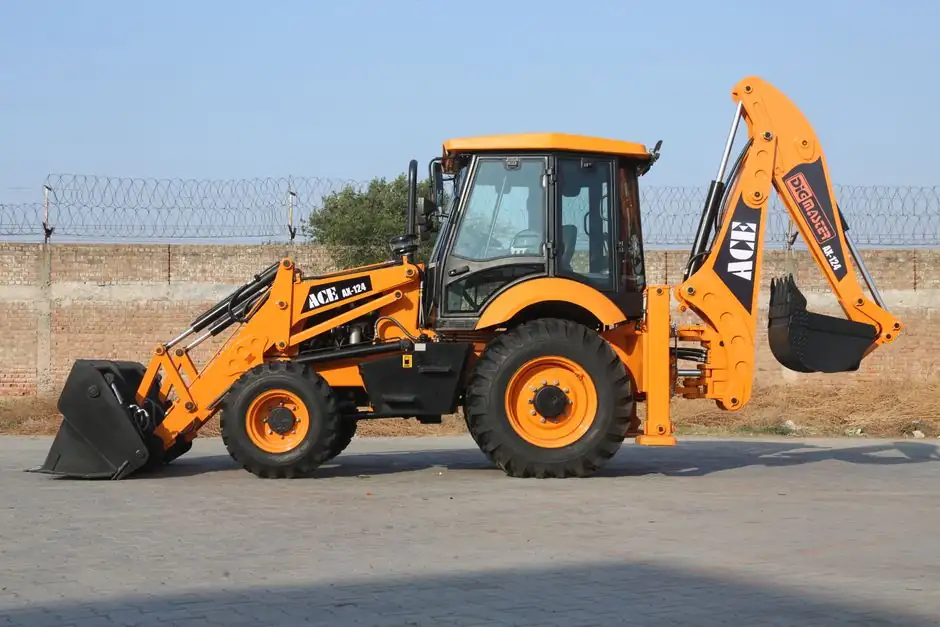
A backhoe loader and a cold milling machine solve different problems and only overlap at the edges: a backhoe loader is a carrier with a rear excavator-style dipper and a front loader bucket, typically operating in the 6–9 tonne class with 0.08–1.0 m³ bucket capacity, while a cold milling machine is a single-purpose pavement remover with a rotating carbide-tipped drum and a slewing discharge conveyor, in working widths from 350 mm to 4.40 m [S1][S2].
For most contractors the decision is simple. If the work is digging, trenching, loading, or backfilling, the backhoe loader is the correct host. If the work is removing asphalt or concrete in a controlled layer at production rate, a dedicated cold milling machine replaces a fleet of attachments and produces a reusable recycled asphalt product (RAP) on the first pass [S1][S2].
What Each Machine Is and What It Does
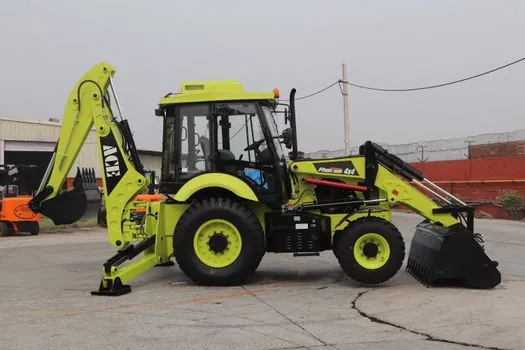
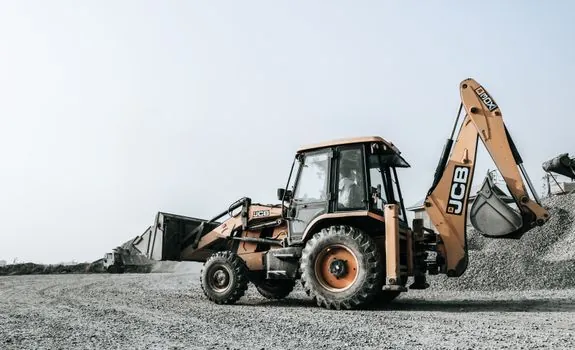
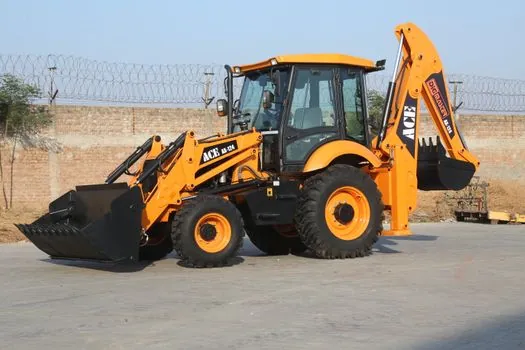
A backhoe loader combines a tractor-style chassis with a front loader and a rear excavator, so the same unit can dig a trench, load a truck, and grade a yard. A backhoe loader is built around a rigid frame, four equal-sized wheels, and a swing seat that lets the operator face the rear digging arm. [S5]
A cold milling machine, also called a cold planer, uses a rotating drum covered with carbide-tipped teeth to grind asphalt or concrete without heating it. Wirtgen's published range covers working widths of 350 mm up to 4.40 m and working depths up to 350 mm in a single pass, with a right rear wheel that swivels inwards on the small class so the drum can mill flush against kerbs and obstacles [S2].
The two are not direct competitors. A backhoe loader with a hydraulic breaker can chip concrete, but it cannot produce a uniform milled surface or a controlled-depth removal. A cold milling machine can dig dirt in the right soil, but it cannot trench to a square wall, backfill, or load a truck with a bucket on demand [S1][S5].
Decision Criteria: Power, Width, Depth, Maneuverability
Engine power tells the story on the milling side. Wirtgen's small W 35 Ri is rated at 45 kW (61 HP) and 4,650 kg operating weight, the W 100 Fi compact class jumps to 265 kW (360 HP) at about 20,000 kg, and the large-class machines sit above that with centrally mounted drums and two-part front-loading conveyors [S2]. Backhoe loaders in the typical 7–8 tonne class run 55–75 kW (74–100 HP) engine power and use roughly 30–40% of that for hydraulic work at the rear dipper.
Cutting geometry is the next gate. Small cold milling drums start at 350 mm wide and 110 mm deep, compact milling machines reach 1,500 mm wide and 330 mm deep in a single pass, and the largest class works up to 4.40 m wide at 350 mm deep [S2]. A skid steer cold planer attachment tops out at 47 in (about 1,190 mm) wide and 5–9 in (127–229 mm) deep, and is driven by the host machine's hydraulics with no independent engine [S1].
Maneuverability flips between the two tasks. A backhoe loader is the most flexible machine on a small site because it can dig, swing 180°, and load in one chassis. A small rear-loader cold milling machine with a swivelling right rear wheel can mill flush against a wall, but it cannot rotate in place or change function on demand [S1][S2].
Production Rate and Throughput Comparison
On a milling machine the conveyor is the throughput bottleneck. Operator experience shows a Wirtgen-class machine can load 18–20 tons of milled material into a truck in 1–3 minutes, faster than an excavator, scraper, or loader moving the same volume in the same pit [S5]. That number is dirt-specific; on asphalt, the limiting factor shifts to engine load and grade tolerance, not conveyor speed.
On a backhoe loader the comparable number is cycles per hour. A 0.3 m³ rear bucket cycling at 15–20 seconds per dig-to-dump pass gives 180–240 cycles per hour, or 54–72 m³/h in ideal conditions. Real urban trenching rates drop to 20–40 m³/h once you include swing, repositioning, and truck spotting.
Cost per cubic metre therefore depends on what you are measuring. For pavement removal at depth, a cold milling machine wins on $/m³ removed because it cuts, loads, and sizes RAP in one pass. For mixed excavation work, a backhoe loader wins on flexibility because no milling drum can trench a square wall for a utility or backfill a footing.
Use-Case Match: Who Each Machine Is For
Spec a backhoe loader when the work is mixed: utility trenching, foundation digging, landscape grading, loading aggregate or RAP into trucks, and small demolition with a hydraulic hammer. A skid steer loader with a cold planer attachment fits only the smallest patch jobs, where a 100 ft run can take a full day and the operator absorbs heavy vibration the whole shift [S1].
Spec a cold milling machine when the work is pavement: partial-depth removal of ruts, alligator cracking, and potholes; full-depth reclamation that mixes the existing asphalt into the road base; or fine milling to restore skid resistance on a runway or intersection [S1][S2][S3].
The two classes meet on three jobs: (1) a small contractor that only needs one machine and uses a backhoe loader with a milling attachment for spot repairs; (2) a milling contractor that follows a milling machine with a wheel loader to clean up and stockpile the RAP; (3) a utility crew that uses a backhoe loader to expose a service and a small cold planer to square the pavement patch around it.
Limitations, Failure Modes, and Operator Load
Skid steer cold planer attachments are limited by their host hydraulics: cutting depth caps at 5–9 in (127–229 mm), cutting width tops out at 13–47 in (330–1,190 mm), and the operator absorbs constant vibration that limits shift length on anything but the smallest jobs [S1]. A 100 ft project on a skid steer attachment can consume an entire shift with no margin for grade error.
Cold milling machines in dirt have their own failure mode: hydraulic overload, not engine overload. Dirt does not load the diesel the way asphalt does, so the operator tends to drive too fast, the conveyor bogs, the drum surges, and the housing packs with sticky material. The fix is to run the drum at maximum RPM in full manual mode (not Eco or Power) and slow the travel speed until the drum clears itself [S5].
Backhoe loaders have their own risks. The rear swing arc is the leading injury pattern on small sites, and stabiliser placement dictates whether a deep dig will lift the rear wheels. Side-shift backhoe booms reduce the risk by letting the operator dig close to a wall or kerb without repositioning, but they do not eliminate it.
Standards, Sourcing, and Specifications
Milling machine specifications follow OEM-published data with consistent fields: milling width, maximum milling depth, maximum engine power in kW and HP, engine speed in rpm, and CE operating weight in kg. Wirtgen's published small-class numbers run from W 35 Ri (350 mm, 110 mm, 45 kW/61 HP, 4,650 kg) to W 120 Ri (1,200 mm, 300 mm, 160 kW/218 HP, 15,500 kg), and the compact-class W 100 Fi to W 150 Fi cluster at 265–313 kW (360–426 HP) and 20,000–21,400 kg [S2].
For procurement, the smallest milling machines fit on a single low-loader with no permits in most jurisdictions, the compact class needs a heavy haul escort on some roads, and the large class is usually dismantled for transport. Backhoe loaders in the 6–9 tonne class can be driven to most job sites on a tag trailer, which is part of why they remain the default machine for small municipal and utility crews.
On the paving side, partial-depth milling targets surface distresses (dips, ruts, alligator cracking, potholes) and leaves a milled surface ready for an asphalt overlay, while full-depth reclamation pulverises the asphalt and mixes it with the road base as a structural repair [S1]. Sizing the RAP for reuse as trench backfill, road base, driveway, or shoulder material is a separate spec line that the milling drum and cutter spacing have to satisfy.
Field Notes and Trackable Signals
Two signals worth tracking through 2026: Wirtgen's small-class line is rated up to 350 mm working depth and 4,400 mm working width on the largest machines, with the small-class minimum at 350 mm width and 110 mm depth, which sets the lower and upper envelope for OEM-published cold milling specs in 2026 [S2]. Operator-side, the Wirtgen Fi-series manual-mode note (run in full manual, not Eco or Power, when milling dirt) has been a consistent field-report item since the line launched, and shows up in both asphalt and dirt operator guides [S5].
One related reference: a bulldozer vs motor grader stage-based selection for road work piece sits next to this comparison because the road-building sequence (mill, load, grade, pave, compact) is the same one a backhoe loader or cold milling machine is being picked to start.