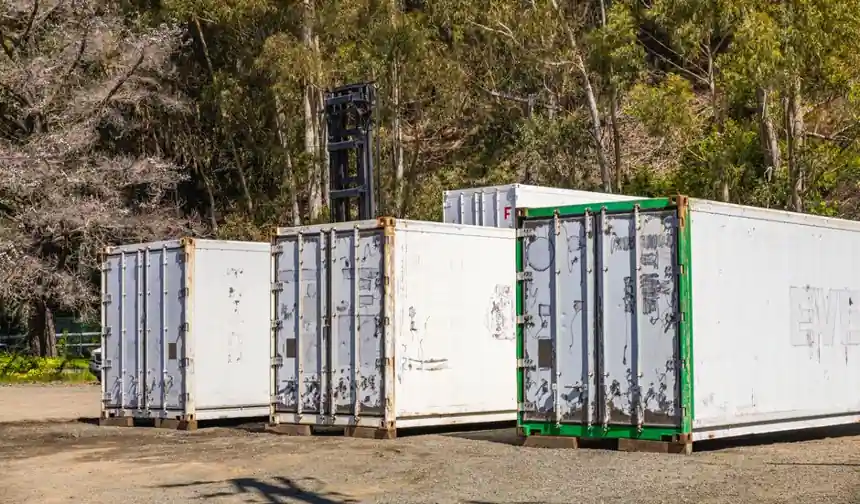
Mining-grade tank container selection resolves to four variables: reagent chemistry, certification scope (UN31A, IMO, Transport Canada TDG), volumetric throughput (24,000 L ISO tank to 65 m³ bunded fuel container), and remoteness of the haul cycle. A purpose-built, lined or alloy tank container is the only defensible specification for sulfuric acid, sodium cyanide, ammonium nitrate emulsion, or diesel service at a remote mine site; generic poly totes fail within 18 months under those reagents [S1][S5].
Procurement error in this category is not a sunk cost. A pinhole leak in a heap-leach sulfuric acid circuit at a Canadian mine can trigger a WHMIS 2015 report, a Transport Canada dangerous goods violation, and a provincial environmental order simultaneously, with the nearest certified repair depot potentially 400 km away [S1]. Matching container to duty is therefore a production-continuity decision, not a purchasing preference.
Container Type Comparison by Mining Service
Four container architectures dominate the mining bulk-liquid and bulk-reagent envelope, and each maps to a distinct service class. The selection table below distills what an engineer actually compares at the desk. [S1]
UN31A-certified steel intermediate bulk containers (IBCs), typically 1,000 L, are the workhorse for mine-site reagent storage because they accept corrosive chemistries when specified with the correct liner or alloy, and they remain recertifiable on a defined cycle, which preserves residual asset value across multiple site deployments. 24,000 L ISO tank containers built to the CSC/IMDG/UN framework are specified when reagent must move over public road or rail to a remote site, since they intermodal-stack on standard chassis and accept a broad liquid spectrum from potable water through dilute acid [S2][S8][S10]. Integrally-bunded fuel supply containers, with capacities up to 65 m³, are engineered for diesel and lubricant distribution at mine fuel bays; the bund wall is the container shell, which removes a separate secondary-containment structure and simplifies spill-compliance audits [S5]. Modular bolted-steel water storage tanks (the SBS-class design with 60+ year service life) cover process water, dust suppression, fire water, and wastewater duties where volumetric scale dwarfs what a single ISO tank can deliver [S4].
Across the four options, the decision drivers line up as: chemical compatibility (liner or alloy for acid/cyanide), certification (UN31A, IMO, TDG), intermodal fitness (CSC corner castings for road/rail), and total installed cost per liter over the recertification cycle. A poly tote with no UN marking loses on every one of those criteria in corrosive reagent service [S1][S2].
Reagent-Specific Specification Traps
Specifying a tank container without naming the reagent class is the most expensive line item in a mining procurement cycle. Heap-leach sulfuric acid at typical process concentrations oxidizes unlined carbon steel and produces pinhole leaks inside 18 months; sodium cyanide solutions carry the same corrosion mechanism plus a WHMIS Class 6.1 toxic designation that mandates secondary containment compatibility and specific venting [S1].
Flotation circuit reagents, including xanthate collectors, frothers, and pH modifiers, frequently carry WHMIS 2015 flammability or toxicity classifications and require bonding lugs plus vent configuration that a generic IBC catalog does not enumerate. Emulsion explosive precursors, principally ammonium nitrate solution and fuel oil, are a tightly controlled service class under Transport Canada TDG; there is no field-upgrade path, and the container either ships with the certification or it does not ship at all [S1]. Diesel and lubricant service in underground or open-pit fuel bays favors the integrally-bunded 65 m³ class with telemetric level control, because the bund wall doubles as the tank shell and the package arrives as one Transport Canada-compliant unit [S5].
Water duties split across the SBS modular bolted-steel class for process, dust suppression, potable, fire, and effluent streams, where a 60+ year service-life rating and a 12-month no-leak warranty are now the published OEM baseline rather than a premium option [S4].
ISO Tank Containers: When Intermodal Haul Drives the Decision
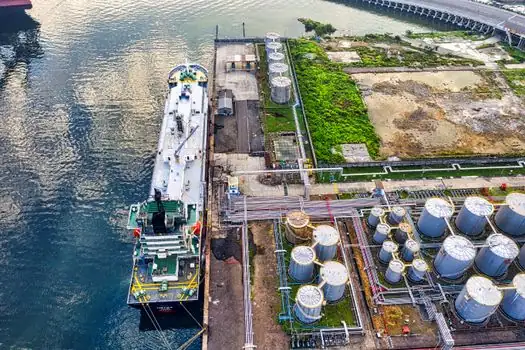
ISO tank containers built to the ISO 1496/3 and CSC framework are the correct specification when reagent volume is large and the haul cycle includes public road, rail, or sea segments before reaching the mine gate. The 24,000 L class is the most commonly specified capacity for energy and mining bulk-liquid movements, with capacities up to 26,000 L available for higher-density cargoes [S2].
For an engineer comparing ISO tank to IBC for the same reagent, the quantitative line is throughput per shift. A 24,000 L ISO tank moves 24 IBC equivalents in a single intermodal move, and the depot-level cleaning, inspection, and recertification workflow runs on a documented schedule that an IBC tank fleet cannot match at the same scale. That is the structural reason ISO tanks dominate long-haul reagent logistics to remote sites; they consolidate handling risk into a recertifiable asset rather than dispersing it across a pool of small containers [S8][S9][S10].
For in-mine haul, the dynamics invert. A 24,000 L ISO tank is too large to position on a bench or a decline; a tank container of 1,000 to 5,000 L UN31A specification becomes the practical unit, with movement handled by site forklifts or telehandlers rather than prime movers.
Fuel and Lubricant Supply Containers
Underground and open-pit fuel supply is a separate engineering discipline from reagent logistics because the regulatory regime (mine safety, fire code, environmental spill) overlays on top of the dangerous-goods framework. The dominant architecture is the integrally-bunded fuel container, with the bund wall being the container shell itself, sized up to 65 m³ for high-flow mine fuel bays [S5].
Specifying for a 65 m³ unit typically drives the rest of the package: high- and medium-flow dispense pumps, a separate transfer pump for tanker unloading, and telemetric tank-level monitoring tied to mine control. A 40' hi-cube ISO container footprint remains the standard envelope because the same chassis can be lifted onto a lowboy or positioned on a mine hardstand without civil works [S5]. Above-ground and underground fuel supply systems further split into "Tank Battery" configurations, where a centrally located administrator container with pumps, meters, filters, and central control feeds multiple worker storage containers distributed across the mine [S3]. That topology is the only way to keep dispense-line length manageable at pit scale without exceeding pump suction limits.
Cleaning, Recertification, and Asset Life
Tank containers must be thoroughly cleaned between cargoes to prevent contamination, chemical reactions, and product-quality issues, and that rule intensifies in mining where a single residual trace of ammonium nitrate or xanthate in a downstream food-grade or potable-water shipment is a recall event [S7].
Depot-level cleaning is the operational mechanism that makes a tank container fleet economically viable; the cleaning, inspection, and recertification cycle is what allows a single ISO tank to cycle through sulfuric acid, sodium hydroxide, and emulsion precursor service across its 30-year asset life, provided the liner package is correctly specified for each cargo [S9]. For mine-site IBCs, the analogous discipline is the UN31A periodic inspection and test cycle, which is the legal basis for keeping a steel IBC in cyanide or acid service beyond a single deployment. Both tank cleaning machine selection at the depot and recertification scheduling on site are the levers that determine whether a fleet earns out its capital cost across multiple cargoes or gets written off after one [S7][S9].
Selection Criteria: When Each Container Type Fits
Use a UN31A steel IBC (typically 1,000 L) when reagent volume is modest, chemistry is corrosive, and the asset stays on a single mine lease. Use a 24,000 L ISO tank when reagent volume is high and the haul includes public road, rail, or sea. Use an integrally-bunded 65 m³ fuel container when the duty is diesel or lubricant distribution at a mine fuel bay. Use a modular bolted-steel water tank (SBS-class) when the duty is process water, dust suppression, fire water, or wastewater at volumetric scale that an ISO tank cannot cover [S1][S2][S4][S5].
Do not use a generic poly tote or non-UN IBC for sulfuric acid, sodium cyanide, or ammonium nitrate emulsion service; the 18-month failure window is documented, and the regulatory exposure on a Canadian mine site is layered (WHMIS, TDG, provincial environmental) [S1]. Do not use a single 24,000 L ISO tank as an in-pit reagent reservoir; the footprint and lifting requirements will not match mine-site equipment. For mine haul-road fleets and material movement, the mining dump truck selection map applies a parallel spec-driven logic to the haul fleet that feeds the tank container network.
Trackable signals over the next procurement cycle: (1) whether UN31A recertification lead times at regional depots are keeping pace with remote-site demand, since a 16-week overseas lead time on a failed tank remains the binding constraint on Canadian and African operations; (2) whether integrally-bunded fuel container demand continues to consolidate around the 65 m³ class as the de facto mine fuel-bay standard, with telemetric level control becoming a default rather than an option [S1][S5].
See also our earlier report, Dump Truck Selection for Port and Terminal Operations.