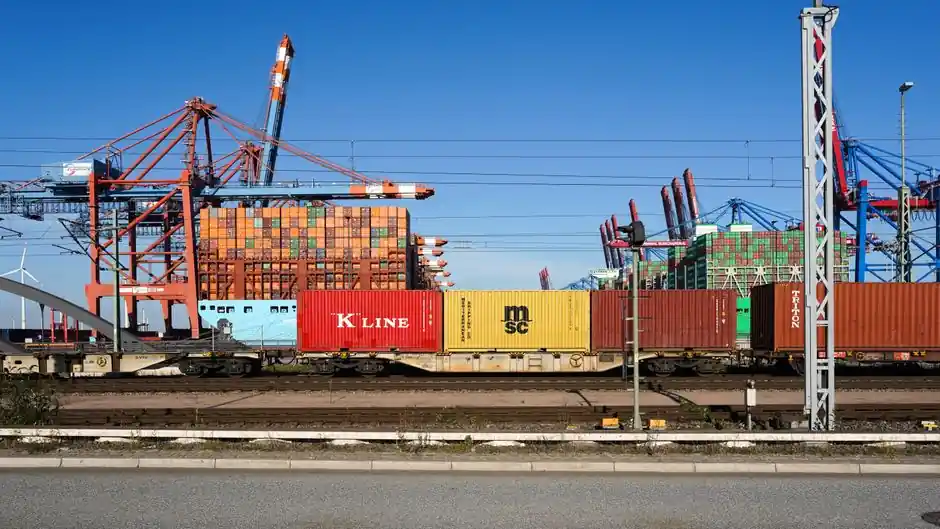
ISO tank containers built to the standard 20-ft frame (ISO 668) are the workhorse bulk-liquid and liquefied-gas unit feeding urban water, fuel, and chemical infrastructure, and the global fleet is dominated by a small set of lessors holding around 56% of operator-managed units [S5].
For procurement engineers working on water-treatment chemicals, fuel distribution, and cryogenic industrial gas supply, the selection conversation has moved past "tank vs flexitank" and onto four hard questions: frame conformance, T-code, lining, and fill ratio. This piece lines up the spec matrix a buyer needs to walk into a tender with.
Frame geometry, capacity, and the 20-ft standard
A tank container is a stainless or carbon-steel vessel held inside a corner-casting frame that matches ISO 668 dry-container dimensions, so the unit moves between sea, rail, and road without re-pouring the product [S1]. Standard 20-ft frames are the universal default; the 20-ft ISO tank carries roughly 26,000 L of liquid payload within a typical gross weight of 36,000 kg, and 45-ft high-cube variants exist for higher-volume but lower-density cargoes.
Because the outer frame is dimensionally identical to a dry box, the asset can be lifted, stacked, and transhipped with standard reach-stackers, twist-locks, and chassis already deployed at any container terminal or intermodal yard. That compatibility is the single biggest reason ISO tanks displaced ISO-bag, drum, and parcel-tanker options for short-haul urban delivery loops [S1][S5].
T-code selection under the IMDG Code: T1 to T23
Tank instructions in the IMDG Code (T-codes T1 to T23) drive pressure rating, shell thickness, relief-device set pressure, and whether the vessel is top-loading only or bottom-discharge capable, so the T-code on the nameplate is the first line of the spec sheet [S5]. T11 is one of the most specified portable-tank instructions for ambient-temperature liquid chemicals, and IMO5/T50 covers refrigerated liquefied gases; the dangerous-goods list maps each UN number to its required T-code plus any tank special provisions [S5].
For urban infrastructure, three codes cover most of the load list: T11 for ambient liquid chemicals (caustic, acids, polymer additives), T14 for higher-pressure liquids, and T50 for cryogenic gases (LOX, LIN, LAr, LNG) used by utility and hospital projects. Bottom-discharge hardware with a top air-line valve is the default unloading arrangement, and heating coils (steam or electric) are specified for viscous or waxy cargoes [S5].
Fill ratio: the 80–95% operating window

ISO tank containers are filled between 80% and 95% of capacity to leave thermal-expansion headroom and prevent liquid surge under braking, and operating outside that window is a hard reason to refuse loading at the depot [S2]. On a 26,000 L unit, the practical load band is 20,800–24,700 L; below 80% the surge moment during a road brake event can spike dynamic loads on the frame, and above 95% there is no margin for thermal expansion in warm weather or solar gain.
This 80–95% rule also interacts with the tank container cleaning cycle: under-filled loads waste cubic capacity per wash, and over-filled loads trip relief devices on hot days. Track the verified gross mass (VGM) at the loading point; an overloaded tank fails the depot pre-trip inspection and gets refused for road leg [S5].
Sustainability and end-of-life: 20-year service, 90% recyclable
ISO tank containers are designed for a service life of more than 20 years and are approximately 90% recyclable at end of life, primarily through standard metal-recovery streams, which is the figure operators cite against flexitag single-use film waste [S3]. A single flexibag at roughly 40 kg of polyethylene plus polypropylene represents the mass of more than 7,500 single-use shopping bags and goes to landfill after one load, a comparison that has hardened municipal and utility buyer preferences toward reusable stainless assets [S3].
Stainless 304 is the default shell for food-grade and most chemical cargoes, with 316L specified for chloride-bearing or higher-purity service; rubber-lined carbon steel is still in use for hydrochloric acid and similar aggressive chemistries. The depot cleaning process is controlled and auditable, unlike the "no cleaning needed" claim attached to single-use flexitags, which fails the moment a residual layer is left in the liner [S3].
Market structure: CIMC dominance and 6.3% CAGR
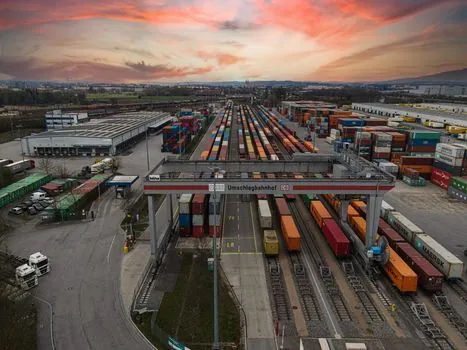
The global ISO tank container market is valued at USD 254.5 million in 2024 and is projected to reach USD 470 million by 2034 at a 6.3% CAGR, with the Asia-Pacific region carrying the strongest growth on the back of urbanisation and chemical-sector build-out [S4]. CIMC (Shenzhen) is the dominant global manufacturer, producing close to 60% of worldwide output, followed by Van Hool, Welfit Oddy, Uralkhimmash, and Uralkriomash [S1].
On the operator side, the top 10 tank container operators manage more than 235,000 units, equal to over 56% of the global operator fleet, and the top three leasing companies control around 155,000 units, roughly 55% of the total leasable pool [S5]. For an urban-infrastructure buyer, that concentration is useful: leasing, not buying, is the dominant commercial model, and 1- to 5-year operating leases cover most short-cycle project demand without balance-sheet exposure. Procurement should ask the lessor for evidence of the periodic inspection cycle and the pressure transmitter calibration records on the relief-device circuits before signature.
Selection criteria matrix: ISO tank vs flexitank vs drums
Across four decision criteria, ISO tanks score as follows: service life is 20+ years vs 1 trip for a flexitank and 3–5 trips for a reusable drum; recyclability is 90% vs 0% (flexitank film is not recycled) vs 95% (steel drum); hazardous-goods approval is full (UN portable tank instructions apply) vs not permitted for hazardous cargo vs limited to small-packaging UN listings; and fill-window compliance is met at 80–95% by design vs uncontrolled for flexitank vs not applicable to drum [S2][S3][S4][S5].
For urban-infrastructure cargoes on the UN dangerous-goods list, that matrix rules out flexitags. For high-volume, non-hazardous, single-load project cargoes (for example a one-off potable-water or surfactant delivery) a flexitank inside a standard 20-ft dry box can be cheaper on per-trip cost. For multi-drop, multi-month urban distribution loops, ISO tanks win on total cost per litre-km, depot turnaround, and ESG reporting.
Failure modes and constraints specific to urban deployment
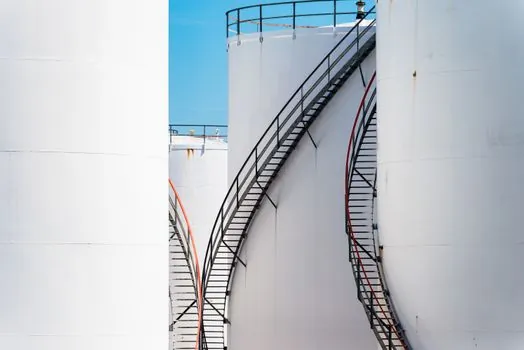
Three failure modes drive most urban-infrastructure rejection events: free-surface sloshing on partially filled tanks during emergency braking, which is mitigated by holding fill at 80% minimum and by baffle specification on viscous service; valve-leak residuals that fail the pre-trip inspection, addressed by proper draining and depot tank cleaning machine cycles; and corrosion at the man-lid gasket interface on older units, caught by the 2.5-year and 5-year periodic inspection regime that operators are required to track [S1][S5].
Constraint to flag at tender: ISO tanks are not a fit for very high-pressure gases above their T-code rating, so ammonia bulk and chlorine bulk ship in dedicated pressure vessels, not standard ISO tanks. Likewise, food-grade cargoes demand a 316L or dedicated food-grade liner with documented last-three-loads history, and the depot must be able to issue the corresponding wash certificate [S5]. For a buyer sourcing from a leasing company, the inspection-record audit is where most spec defects are caught before they become project delays.
Standards and sourcing reference
Procurement specs should reference the IMDG Code for T-code assignment and fill rules, ISO 668 for frame dimensions, and the UN Recommendations on the Transport of Dangerous Goods for portable-tank instructions; manufacturer certifications should include material traceability to the shell plate and the lining system [S1][S5]. For depot-side acceptance, the operator's pre-trip inspection report and the equipment interchange report are the two documents to file at goods-in [S5].
For project lift planning around a 20-ft ISO tank, the loaded mass at 36,000 kg gross is well within reach-stacker and forklift capacity but dictates ground-bearing pressure checks at soft urban sites; this is the same load-class conversation that shows up in rough terrain forklift selection for port and terminal yards, where axle load and tyre pressure drive the equipment choice. On the cryogenic-gas side, the 90% recyclability and 20-year life claims do not apply to T50 refrigerated units, which carry a different end-of-life protocol and a higher flow meter calibration cadence. The next procurement review should ask lessors for: (a) nameplate T-code on every quoted unit, (b) last inspection date and next due date, and (c) the food-grade or chemical-grade wash certificate applicable to the cargo on the project bill of lading.