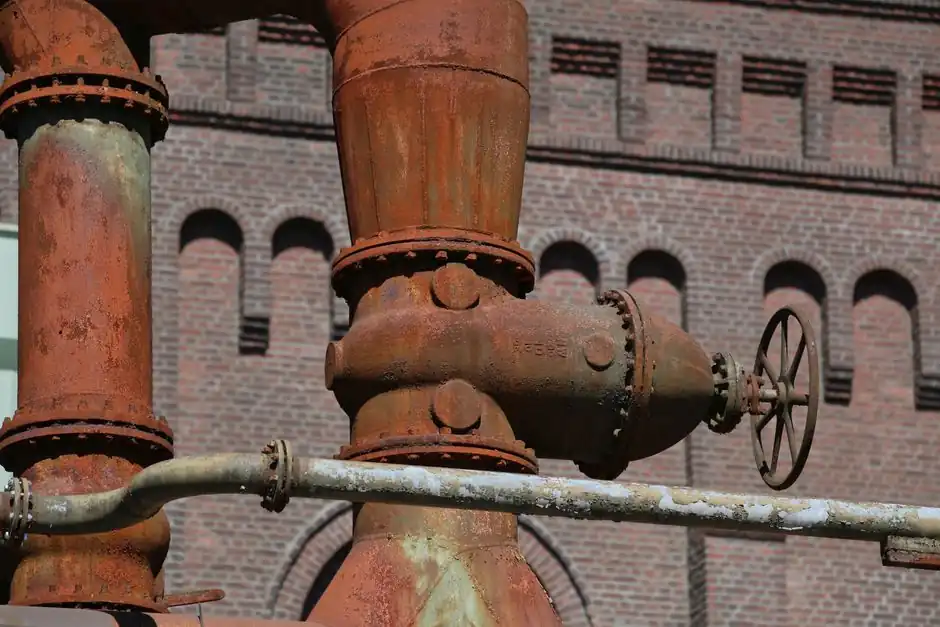
A balancing valve combines a manual or automatic throttling element with two pressure-test ports, and its job is to set a defined flow at a defined pressure differential, typically across the index circuit of an HVAC or district-heating network, with a measurement accuracy commonly quoted at plus or minus 5 percent of the design flow once commissioned [S5].
The fundamental trade-off versus a fully open ball or gate valve is higher permanent pressure loss in exchange for controlled flow distribution; where an isolation ball valve is sized for minimum Cv and almost zero head loss, a balancing valve is intentionally sized one or two nominal lines smaller than the pipe, producing a design ΔPv in the 3-15 kPa range on terminal branches and higher on risers, which is what the engineer trades for repeatable commissioning across parallel branches [S3].
Where balancing valves sit in the valve family
Balancing valves belong to the throttling family, alongside globe and double-regulating valves, not the on/off family of ball, gate, and butterfly valves, and the distinction matters because the bore geometry, seat surface, and stem drive are optimised for partial-flow metering rather than bubble-tight shut-off [S1][S3].
Static (manual) balancing valves use a fixed orifice and a calibrated handwheel position; dynamic (automatic) balancing valves add a diaphragm or piston that modulates open area against a spring set-point to hold a constant flow within a working ΔP window, commonly 14-140 kPa or 20-200 kPa depending on body size. For context, the broader ball valve category is a quarter-turn rotary shut-off device whose port is either full or reduced, with the lever position showing open or closed rather than a metering percentage [S1].
Selection criteria: Kv, pressure class, end connection, and body material
Engineers size a balancing valve by Kv value (m³/h at 1 bar ΔP), with the design flow and the ΔP budget across the branch driving the selection; a typical DN15 terminal-unit balancing valve sits in the Kv 0.6-2.5 range, DN25 in Kv 2.5-6.3, and DN50 in Kv 10-25, while larger DN100-DN150 risers cover Kv 40-160 and are usually flanged rather than threaded [S5].
Pressure class is usually PN16 (16 bar) for HVAC, PN25 for high-rise hot water, and PN40 or ANSI Class 150/300 for district heating and steam-side applications; end connections are typically threaded (BSP or NPT) up to DN50 and flanged (EN 1092-1 PN16/PN25, ASME B16.5) above that. Body material is ductile iron (GGG40/GGG50) with epoxy coating for water service, brass CW617N for DN15-DN25, and stainless steel 1.4408 for closed-loop systems with high oxygen or glycol concentration. A useful cross-reference for end-connection choice across throttling and isolation valves appears in the construction machinery and equipment spec family, where flanged and wafer interfaces share similar gasket and bolting considerations [S4].
Comparison: static vs dynamic balancing vs double-regulating
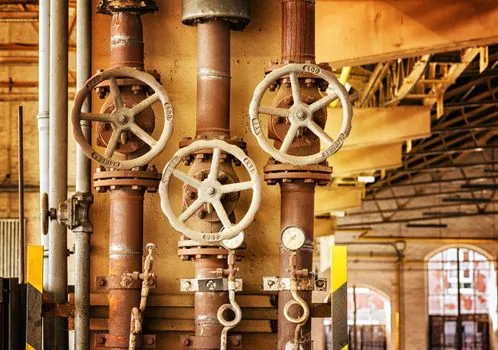
Static balancing valves are the lowest-cost option (typically 30-60 percent cheaper than the dynamic equivalent) and work where system pressure differential is reasonably stable, but they need re-adjustment if the pump head or valve authority in the circuit changes. Dynamic balancing valves hold the set flow across a stated ΔP window, eliminating the need for a proportional-proportional method at commissioning, at the cost of higher unit price and a minimum ΔP requirement (usually 14-20 kPa) across the valve. [S3]
Double-regulating valves combine a fixed-position memory stop with a measurement port and are used where the valve doubles as both a shut-off and a balancing element, common on terminal unit branches in European projects. Across the three types, the trade-off grid is: cost (static lowest, dynamic highest), commissioning labour (dynamic lowest, static highest), part-load stability (dynamic best, static worst), and suitability for variable-speed pumps (dynamic only). For an adjacent spec comparison, the lamps and light fittings reference shows how the same trade-off logic (fixed vs automatic regulation) plays out in lighting controls.
Real use cases: HVAC terminal branches, chiller headers, and district heating
On the secondary side of a chiller or boiler header, dynamic balancing valves are installed at each branch to the air-handling unit so that each coil receives its design GPM regardless of pump curve movement, which is critical when a variable-speed primary pump shifts its head from 12 m to 6 m at part load. [S5]
On district heating substations, a combined static balancing valve plus differential pressure control valve pair is the standard arrangement to protect the heat interface unit from excess ΔP; the balancing valve sets the maximum flow, the DPCV holds the differential across the unit within 50-100 kPa. For HVAC terminal units such as fan-coil units and chilled-beam circuits, DN15-DN25 brass-body balancing valves with Kv 0.6-2.5 are the typical pick, fitted with PT test plugs and a memory-stop handwheel. The general lighting equipment and electric lamps reference illustrates comparable circuit-level regulation logic in another trade.
Advantages, limitations, and failure modes
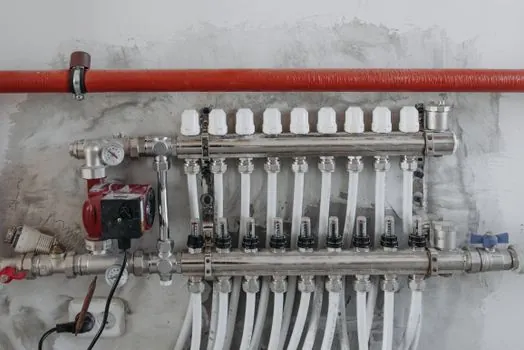
The main advantages of balancing valves are repeatable flow distribution, documented commissioning (each valve has a handwheel position log), compatibility with PT test instruments for non-invasive verification, and operation in systems where proportional balancing is impractical due to long pipework. The main disadvantages are permanent pressure loss (2-15 kPa per valve on terminal branches, higher on risers), higher unit cost versus an isolation ball valve of the same size, and dependence on correct Kv and ΔP selection at design stage; an undersized balancing valve becomes the system bottleneck, an oversized one loses authority. [S5]
Common failure modes include: (1) seat erosion after 5-10 years in untreated open-loop water with high oxygen or sediment, particularly on brass-body valves; (2) stem packing leaks when the gland is not re-torqued after the first thermal cycles; (3) clogged PT test ports in systems with high particulate load, which can mask real flow drift; and (4) loss of memory-stop calibration if the handwheel is rotated past the stop, which is why many spec sheets require tamper-proof caps on the handwheel. The balancing valve encyclopedia entry summarises the core geometry, while the dynamic balancing machine reference covers the related rotor-balancing instrumentation used in valve actuator and pump impeller production. For broader 5-year ownership cost logic, the steam trap TCO analysis is a useful parallel, since balancing valves and steam traps share the same service pattern: passive throttling element, periodic verification, and predictable failure mode.
Standards, sourcing, and installation notes
The relevant standards are EN 1267 (test methods for balancing valves), EN 12266 (industrial valve testing), and the body marking rules under the Pressure Equipment Directive 2014/68/EU for PN16 and above; for HVAC water-side work, NSF/ANSI 61 or WRAS approval is required for potable service. Commissioning follow the proportional-proportional method described in CIBSE Commissioning Code W and the ASHRAE Guideline 0 series, with PT test readings taken at design ΔP and a tolerance of plus or minus 5 percent of design flow per branch. [S5]
Sourcing reality on 2026-08-26: lead time for DN15-DN50 brass-body static balancing valves from European stock is typically 2-4 weeks, DN50-DN150 ductile-iron flanged bodies 4-8 weeks, and dynamic balancing valves with integrated DPCV 6-12 weeks. Trackable signals for buyers are the published Kv tables against EN 1267 test pressure, presence of PT test plugs on each body, memory-stop handwheel with positive detent, and a body rating that matches the system PN; valve models that publish only generic Cv curves without an EN 1267 test certificate are a red flag for spec-grade projects. For related procurement guidance, the safety relief valve TCO breakdown maps similar cost-of-ownership logic for another throttling family, and the plumbing install level spec map covers adjacent field-instrumentation discipline.