
Balancing valves are throttling devices designed to regulate the fluid flow through hydronic components, with the operating principle being to introduce a calibrated pressure drop so each branch receives its design flow rate [S1].
In HVAC chilled-water systems, balancing valves and static balancing valves are mainly used in branch pipelines to regulate and control flow, ensuring balanced operation across different parts of the system, and they are typically combined with automatic control systems in applications that require precise temperature or flow control [S2].
Manual (static) balancing valves: the baseline throttling device
Manual balancing valves are fixed-orifice throttling devices; the operator turns a handwheel or sets a memory stop to a calculated number of turns, locks the position, and leaves the valve alone unless the system is rebalanced [S1]. They are the lowest-cost option in a hydronic plant room and the workhorse of branch balancing on small commercial jobs. Accuracy is tightly coupled to the commissioning technician, because the final Kv at the locked position is a function of the upstream pressure differential and the chart published by the manufacturer, not a measured flow [S3].
Manual valves pair naturally with fixed-orifice ball valves used as isolation on the same branch, because the ball provides bubble-tight shutoff while the balancing valve handles only the calibrated restriction [S2]. Operating temperatures on bronze and brass bodied manual balancing valves typically stay below 120 degrees Celsius on closed-loop heating water, and brass body variants are the default for domestic-water recirculation loops where dezincification resistance is required for potable duty [S1].
Automatic (dynamic) flow-limiting valves
Dynamic balancing valves hold a constant flow across a defined differential pressure window, using an internal spring-loaded cartridge or diaphragm that modulates the orifice area as the system pressure changes [S3]. The defining performance window is a published delta-P range (commonly 14 to 95 kPa on common HVAC cartridges) outside of which the valve cannot hold its setpoint and behaves like a fixed restriction [S3]. They are the right pick on terminal-unit branches (fan coil units, air handling unit coils, radiation loops) where the designer wants one setpoint per terminal regardless of how other branches are adjusted.
Dynamic valves are commonly specified on variable-flow primary systems where two-way control valves on the coils cause the branch differential pressure to swing widely. Compared with manual balancing, dynamic balancing removes the need for a proportional-balancing method at commissioning, because the device self-compensates within its published differential pressure window [S3]. On the equipment side, the moving cartridge and elastomer seals set a different maintenance profile than a static valve; spec sheets typically rate the working life of the cartridge at 100,000 cycles, after which the flow accuracy drifts out of the published plus or minus 5 percent band [S3].
Pressure-independent control valves (PICV)
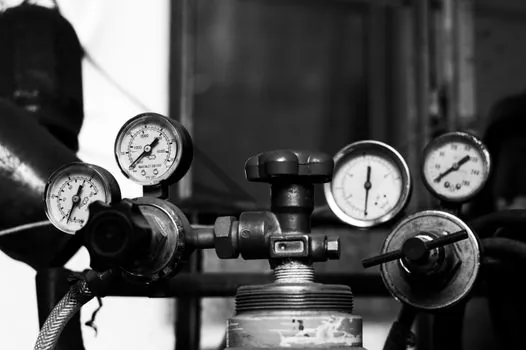
Pressure-independent control valves combine a differential pressure regulator and a two-way control valve in one body, so the flow is a function of the actuator signal only, independent of the available differential pressure across the valve [S3]. PICVs are the highest-cost option per branch but collapse three discrete devices (manual balancing valve, strainer, and control valve) into one, which simplifies the riser and reduces installation labour.
Selection between a dynamic balancing valve and a PICV comes down to whether the branch has its own modulating control valve downstream; if yes, a PICV is the cleaner spec, if no, a dynamic balancing valve alone is enough. The PICV's published flow tolerance is typically plus or minus 5 percent across the full stated differential pressure range, and the actuator choice (thermal, electric, pneumatic) is selected against the same logic as a standard two-way control valve [S3]. For a balancing valve selection, this means a PICV is preferred on terminal units with electronic actuators and a Building Management System write-back, while a dynamic balancing valve is sufficient for fixed-flow terminal circuits.
Comparison of the three main balancing-valve families
Stacking the three families on the four criteria that actually drive specification (commissioning cost, flow accuracy, control interface, suitable application) gives a cleaner shortlist than reading individual datasheets [S3]:
- Manual (static): lowest unit cost, accuracy is technician-dependent, no control interface, suitable for constant-flow primary loops and small branch balancing where the system is rebalanced infrequently. - Automatic (dynamic): mid-range cost, plus or minus 5 percent flow accuracy within a published differential pressure window, no control interface, suitable for variable-flow terminal branches that do not need modulating control. - Pressure-independent control: highest unit cost, plus or minus 5 percent flow accuracy across the full differential pressure range, accepts 0-10 V, 4-20 mA, or digital actuator signals, suitable for variable-flow terminal branches with a Building Management System.
Differential setting, circuit setters, and the role of a PRV
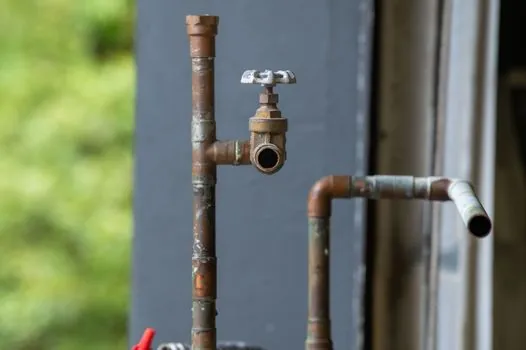
A circuit setter is a manual balancing valve with two pressure tappings, one upstream and one downstream, that lets the technician measure the actual differential pressure drop across the valve and read the corresponding flow from the manufacturer's chart, which is how it is distinguished from a plain throttling valve [S3]. A pressure reducing valve (PRV) is a different device: it adjusts to a target downstream pressure regardless of flow, and it is used to protect downstream equipment from over-pressure rather than to balance flow [S3]. The three devices are commonly seen on the same riser diagram and get confused at quotation time, so the order of operation at commissioning is: PRV first (set the maximum available differential pressure for the branch), then circuit setter (trim the branch to design flow), then any control valve [S3].
For the ball valve upstream of a balancing valve, the spec is usually a full-port brass or stainless ball valve with PTFE seats rated to 16 bar and 120 degrees Celsius on HVAC duty, sized line-size to the balancing valve so it does not introduce a hidden pressure drop that corrupts the commissioning chart [S2]. Drain tappings on the balancing valve body are worth specifying on heating systems where the branch must be isolated and emptied for maintenance without draining the entire riser.
Materials, pressure ratings, and where to push back on a quote
On closed-loop HVAC water, the body material is almost always dezincification-resistant brass or bronze up to DN50, and ductile iron with an epoxy lining above DN50, because plain brass will dezincify in hot soft water and the body will eventually pinhole [S1]. Standard pressure ratings are PN16 for HVAC and PN25 for higher-rise heating risers, with a maximum operating temperature of 120 degrees Celsius on the standard EPDM seal range and 150 degrees Celsius on the high-temperature EPDM or FKM option [S1]. Where to push back on a quote: a manual balancing valve specified on a variable-flow primary branch (it will lose balance every time a control valve strokes), a dynamic balancing valve specified outside its published differential pressure window (it will not self-compensate), and a PICV specified on a constant-flow branch (the pressure regulator adds cost with no benefit).
Adjacent context: balancing, monitoring, and the wider hydronic system
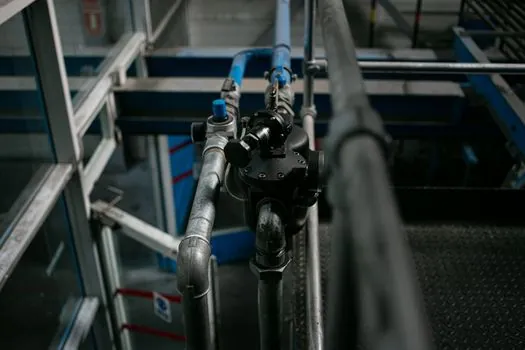
Balancing valves are only one piece of a hydronic control loop, and the spec changes when the system shifts from constant-flow to variable-flow primary pumping, which is now the default in most new commercial builds [S2]. The valve interacts with the pump curve, the control valve authority, and the strainer upstream; if any of those are undersized, the balancing valve cannot compensate and the branch will be off-design at part load. On commissioning day, the verification step is always a measured flow (using a dynamic balancing machine on the pump, or an ultrasonic flow meter on the pipe) cross-checked against the balancing valve chart, not just a turns-count [S3].
For a fuller picture of how balancing valves fit into the broader hydronic component set, the construction machinery and equipment reference page on plant-room assembly is a useful sanity check on riser layout, while the lamps and light fittings and lighting equipment and electric lamps pages are unrelated but appear in the same building-services specifier's workflow. For specifier-to-specifier comparison, see also this steam trap TCO breakdown for how the same kind of throttling-device trade-off plays out on steam systems, and the pressure switch sizing map for the differential pressure sensing side of the same control loop.
What to track next on balancing-valve specification
Two signals are worth watching over the rest of 2026: first, the spread of PICV adoption on small commercial terminal units, where the unit-cost gap with dynamic balancing valves is narrowing on volume quotes; second, the publication of updated commissioning protocols by ASHRAE and CIBSE for variable-flow primary systems, which will tighten the verification step on every balancing valve on the riser [S2].