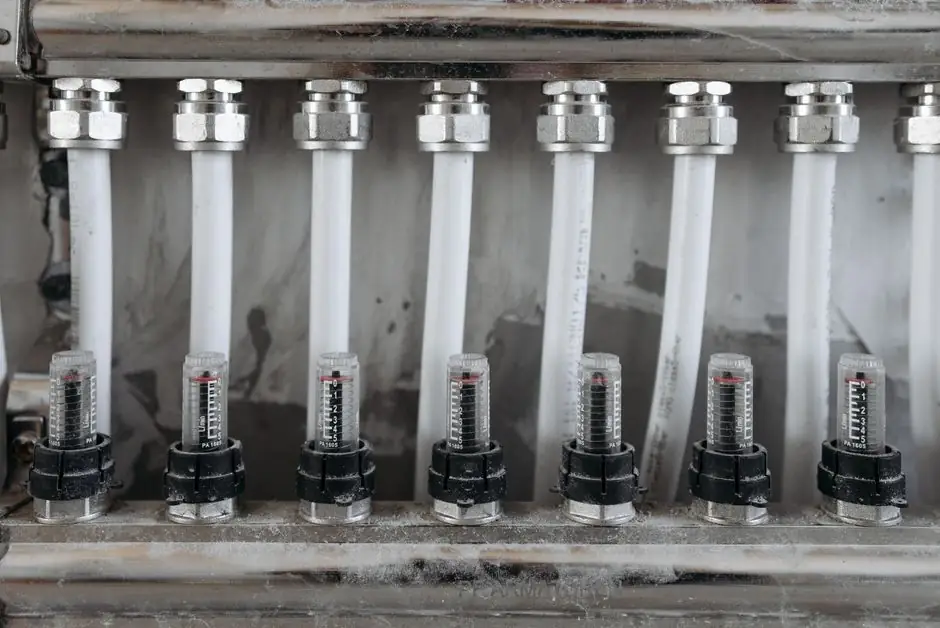
Choose a chemical-processing balancing valve from its pressure rating, calculated flow capacity, wetted materials, and throttling control, then confirm the selection against the installed piping curve.
This guide covers balancing duties in chemical plants, including flow balancing, pressure equalization, and controlled throttling. Balancing-valve selection should account for the service conditions, including chemical compatibility, shutoff requirements, and maintainability.
Balancing valve scope and selection variables
A balancing valve is selected to distribute flow between parallel branches or to match a required flow against a known pressure difference. The governing quantities are differential pressure, branch resistance, fluid density, and the design flow, not simply pipe diameter. Chemical service adds the process medium, concentration, temperature, pressure, and allowable leakage to the hydraulic calculation. [S4]
Valve selection must separate 4 duties: isolation, throttling, balancing, and backflow prevention [S4]. A balancing duty normally needs repeatable modulation, whereas a gate valve is intended for fully open or closed service, a ball valve for fast shutoff, and a globe valve for precise flow or pressure control [S1][S4]. An air-release valve serves a different function, managing trapped gas rather than balancing flow.
For the procurement file, define the valve function and determine the required flow characteristics, system pressure, response time, and complete valve construction for the service.
Balance the hydraulic duty before choosing a valve type
Calculate the required flow coefficient from the actual branch pressure drop, then select a valve whose rated capacity covers the calculated duty with margin. The valve must retain enough control authority at minimum flow, remain stable at maximum flow, and avoid operating close to its seat or flange limits. [S3]
A useful comparison is by valve family. A globe-style balancing valve normally gives better incremental throttling than a butterfly valve, but it creates more resistance when fully open. A butterfly valve has a lower installed pressure loss and a compact envelope, yet its shutoff performance and control range depend more heavily on pressure, temperature, and elastomer or seat construction. A ball valve provides fast isolation and tight shutoff, but it is a poor default for continuous throttling because the ball geometry does not provide stable modulation [S1][S3].
For a chemical loop with 2 or more parallel branches, use the measured or calculated resistance of each branch to identify the balancing target. Do not assign equal nominal percentages to unequal branches.
Compare the realistic balancing valve options
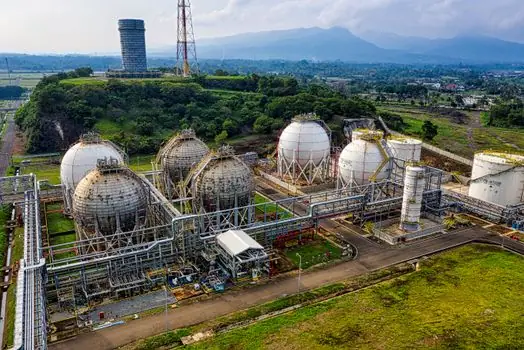
The angle-seat valve is another compact throttling option, but it is not a default substitute for a balancing valve without a verified flow characteristic and pressure class. [S1]
Ball and globe valves are common valve types in chemical processing, but hydraulic sizing is still required for balancing applications. The fluid compatibility must cover every wetted component, including body, trim, seat, seal, stem, gasket, and actuator interfaces.
Match every wetted material to the actual chemical service
Material selection must be based on the complete wetted construction, not on a generic “stainless” or “chemical-resistant” description. A compatible alloy or lining limits corrosion, thermal degradation, and chemical attack, while a mismatched seat or seal can still cause leakage and repeated maintenance [S1][S3].
Stainless steel covers many conventional services, but it is not universally resistant to every chemical, concentration, or temperature. Hastelloy is used for highly corrosive media and elevated-temperature service. PTFE is common for seats and seals because it resists broad chemical families, but its temperature and pressure limits must be verified against the selected grade and design. Lined valves can protect a structural body, provided the liner is not exposed to a compound that attacks it [S1][S3].
Build the compatibility check around at least 5 fields: chemical family, concentration by mass, temperature in °C, pressure in bar, and phase. Also record water content, oxidizing or reducing character, chloride content, and whether the chemical is batch-dosed or continuously present. A compatibility chart is a screening tool, not final approval, because concentration, temperature, cycling, and velocity can move a material outside its practical service envelope [S3].
Pressure class, temperature, leakage, and actuation limits
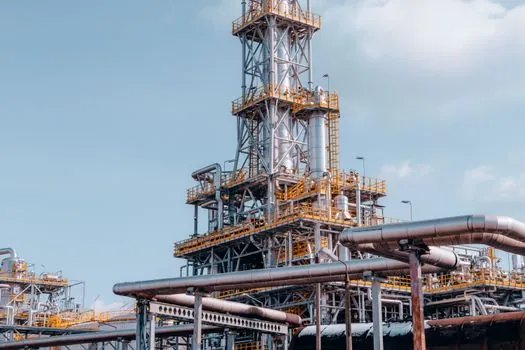
The selected valve must remain within the pressure-temperature envelope of every pressure-containing component. This includes the body, closure member, seat, stem, bolting, gaskets, and actuator. A body that meets the pressure rating does not establish that the seat, stem, elastomer, or trim will tolerate the same combination of temperature and chemical exposure. [S3]
For chemical isolation, the reference framework includes DIN EN 12266-1 and ISO 15848-1 for valve tightness testing, with ISO 15848-1:2015 cited in the fugitive-emissions qualification discussion [S5]. Specify whether the balancing valve requires zero visible leakage, a defined allowable leakage rate, or bubble-tight isolation. Also state the test medium, test pressure, test temperature, and whether the actuator is fail-closed, fail-open, or fail-last-position.
Actuation torque changes with pressure, fluid viscosity, trim friction, stem condition, and seat compression. Pneumatic, hydraulic, and electric operators must each be checked for available thrust or torque, travel speed, maximum side load, and emergency-function response. The chemical service envelope should include at least the normal operating point and 2 off-design points, minimum and maximum flow, and maximum allowable operating pressure.
Where balancing valves fail in practice
The most common selection failure is using a valve that can pass the required flow but cannot control it near the operating point. Oversizing exposes the trim to excessive velocity, erosion, noise, and unstable control, while undersizing can leave the valve nearly closed, with inadequate authority and increased cycling. [S1]
Material mismatch is the second major failure mode. Corrosion can enlarge stem clearances, distort seats, and turn a tight shutoff into a leakage path. Seal mismatch can produce a similar symptom without bulk-metal corrosion, particularly when temperature, chemical concentration, or differential pressure exceeds the elastomer or PTFE grade used.
Installation errors then magnify the original mistake. A balancing valve should have enough straight upstream and downstream pipework to develop a stable velocity profile, and it should not be installed immediately beside an elbow, tee, pump discharge bend, or another disturbance. Dirty or solid-bearing media also require a design that avoids seat fouling, because a balancing element that cannot close cleanly cannot hold the calculated split.
Isolation needs must be considered separately. If hazardous chemical inventory must be positively isolated for maintenance, specify a suitable isolation device rather than relying on a modulating balancing valve as the sole containment barrier. Related selection logic for ball valves in chemical processing can be applied to that separate isolation function.
Specify, test, and maintain the balancing valve
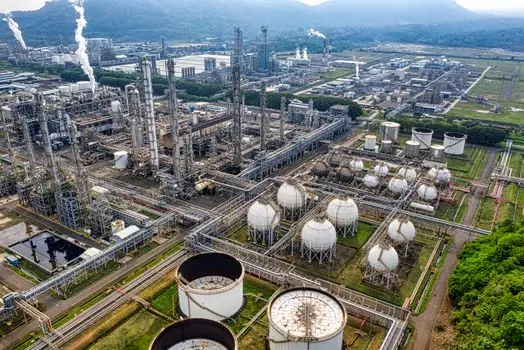
A purchasable balancing-valve data sheet should contain at least 12 fields: tag, service, line size, flow range, differential pressure, fluid name, concentration, design temperature, design pressure, valve type, body material, trim and seat material, actuator type, fail action, leakage class, and end connection. Add maximum velocity, cavitation or flashing limits, and required straight-pipe dimensions when the medium is volatile, high-temperature, or flashing. [S3]
Factory and site checks should cover 6 items: shell strength, seat and shell leakage, stroke and travel calibration, actuator stroke time, fail-position verification, and preservation for storage. After installation, commission the valve with the actual branch configuration. Record the measured differential pressure and branch flow at minimum, normal, and maximum demand, then compare the observed balance with the design calculation.
Maintenance should include stem and seat inspection, actuator torque checks, packing or seal leakage inspection, and comparison of branch flow against the commissioning baseline. A change in differential pressure or flow distribution can indicate a changed system resistance, a failed internal component, or a leaking branch isolation valve. This condition should be diagnosed before the balancing valve is readjusted to hide the process change.
The shortlist logic is straightforward: require a verified hydraulic calculation, match the complete wetted-material route to the chemical envelope, confirm pressure-temperature and leakage limits, and select globe, butterfly, or another characterized throttling architecture only after comparing control authority and pressure loss.