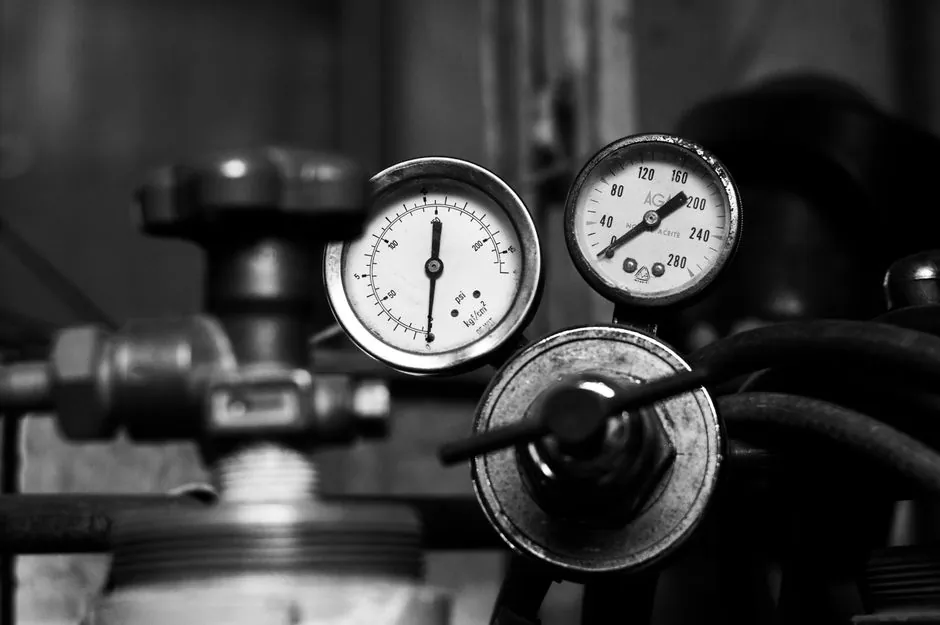
Needle valves provide graduated throttling for low-flow chemical duties, with threaded stems and tapered plungers changing the opening in small increments for repeatable regulation and isolation.
Chemical plants use them for dosing, sampling, pressure-gauge and transmitter isolation, purge, bleed, and analytical service, typically where tight shutoff and controlled low flow matter more than high capacity.
Needle Valve Selection Criteria for Chemical Service
A needle valve is a manually or automatically operated throttling device whose finely threaded stem moves a tapered needle toward or away from a machined seat. Multiple turns change the opening gradually, unlike a ball valve, which operates in 90 degrees for rapid shutoff; this makes the needle valve appropriate for low-flow precision control but not for rapid on/off isolation or high-volume service [S2][S5].
The primary selection data are service pressure, design temperature, fluid chemistry, allowable pressure drop, required flow coefficient, connection type, and shutoff requirement. Stainless steel needle valves are used for corrosive chemicals and fuels, while brass is generally restricted to non-reactive or non-corrosive liquids such as potable water. The operating limits must come from the selected model and material grade, not from the generic term “stainless steel” [S1][S4].
For an overview of related internal-isolation and flow-control hardware, compare the duty with air release valves, balancing valves, and angle-seat valves before finalizing a valve architecture.
Pressure, Temperature, and Material Limits
Published construction examples span 100 bar at 110 °C for brass and 300 bar at 200 °C for stainless steel, but those values are product-category examples rather than universal ratings. Stainless steel needle valves are rated for pressures up to 300 bar (4351 psi), while brass needle valves are rated for pressures up to 100 bar (1450 psi). Each rating must be confirmed for the exact model, size, end connection, material, and seat [S1][S2][S4].
For corrosive media, wetted material selection is a line-by-line check. Stainless steel may be appropriate for many chemical, oil, and fuel sampling duties, while Brass needle valves are described as suitable for potable water and non-reactive, non-corrosive liquids., but neither combination should be assumed compatible with strong oxidizers, solvents, or elevated temperatures without material-specific verification [S1].
Seat construction controls the sealing trade-off. Metal-to-metal seats support demanding high-pressure and temperature service, while soft seats such as PTFE or PEEK can provide tighter sealing in small-bore gas and liquid service. A soft seat is not automatically the better choice because elastomer or polymer compatibility, temperature limits, and media absorption must be checked [S3][S5].
Needle, Ball, Globe, and Check Valve Comparison
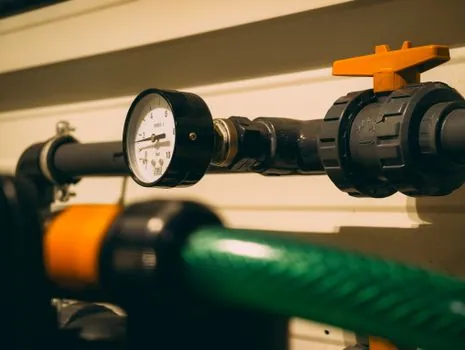
Needle valves offer very high adjustment precision, slow travel, positive shutoff, and limited flow capacity, making them strongest for sampling, gauge isolation, purge, and fine metering. Ball valves provide fast quarter-turn shutoff with low throttling precision. Globe valves provide moderate general throttling but are generally larger and more suitable for substantial flow control, while check valves passively prevent reverse flow and do not regulate flow [S2].
A quantitative shortlist starts with the required flow rate and allowable pressure drop, then confirms that the selected valve has an adequate flow coefficient at the actual process condition. The needle valve’s small orifice, high pressure drop at reduced opening, and low flow coefficient make it unsuitable for moving large volumes quickly; if required capacity is outside the available valve range, use a globe or angle-seat configuration instead [S4][S5].
Chemical Plant Applications and Operating Sequence
The cited sampling-system figure labels an inlet needle valve, sample cylinder, outage tube, and outlet needle valve. [S1].
Instrumentation applications include isolation of pressure gauges, switches, transmitters, and flowmeters. Placing the valve upstream allows maintenance while limiting pressure spikes and keeping the downstream device at a calibrated low flow; the required isolation arrangement should also be checked against a dedicated axial-flow check valve where reverse flow is a separate design concern [S1].
Other chemical duties include controlled dosing of catalysts and additives, analytical sampling, purge, bleed, vent, and gas-train regulation. Needle valves are also used where manual adjustment is preferred for individual gas cylinders, while automated versions can use pneumatic or hydraulic actuation [S3][S4]. The related selection logic for broader valve families is covered in Chemical Process Control Valve Selection by Service and Sizing.
Failures, Constraints, and Selection Exclusions
A needle valve should not be selected where rapid full-bore isolation, minimum pressure drop, high volumetric throughput, or automated quarter-turn action is required. Its small seat creates a restricted flow path and can produce a large pressure drop even at substantial opening, while the fine adjustment range becomes less efficient as the required capacity rises [S4][S5].
Operational risks include stem packing leakage, seat damage, galling from metal-to-metal contact, and degradation of polymer seats by incompatible media. Corrosive fluids can also attack exposed stem, thread, handle, and packing materials. For sampling and analytical systems, dead volume, sample contamination, and washability are additional selection criteria; dual isolation can prevent a sample cylinder from remaining connected to the process [S1][S3].
Do not use a generic chemical-service needle valve for oxygen, hydrogen, helium, steam, toxic gases, or extreme-pressure duty without a model-specific pressure, temperature, material, oxygen-cleanliness, and hazard review. Although high-pressure gas service is identified as an application, the research does not establish that every listed model is safe or approved for every gas [S4].
Procurement and Verification Checklist
Specify at least 6 controlled data points on the datasheet or purchase specification: maximum working pressure, design temperature, body material, trim and seat material, end connection, and flow coefficient. Add the actual medium composition, concentration, viscosity, temperature, pressure range, required flow range, allowable pressure drop, seat leakage criterion, actuation method, and applicable connection code [S1][S3][S5].
Verify operating limits at the actual flow condition rather than relying on a headline pressure number. Confirm whether the listed rating applies to manual operation, the selected body size, the selected end connection, and the chosen seat. For purge or vent service, include operating direction and the required rise or fall in pressure; for instrument isolation, include locking or tamper resistance if the plant procedure requires it [S2][S5].
The shortlist logic is straightforward: retain a needle valve when the duty is low-flow, graduated control with isolation; select a ball valve for fast shutoff; use a globe or angle-seat valve for higher-capacity throttling; and add a check valve only when reverse-flow prevention is independently required. Then close the procurement package with a datasheet for the exact model, material certificates where required, seat and seal compatibility confirmation, and the specified pressure-temperature envelope [S2][S8].