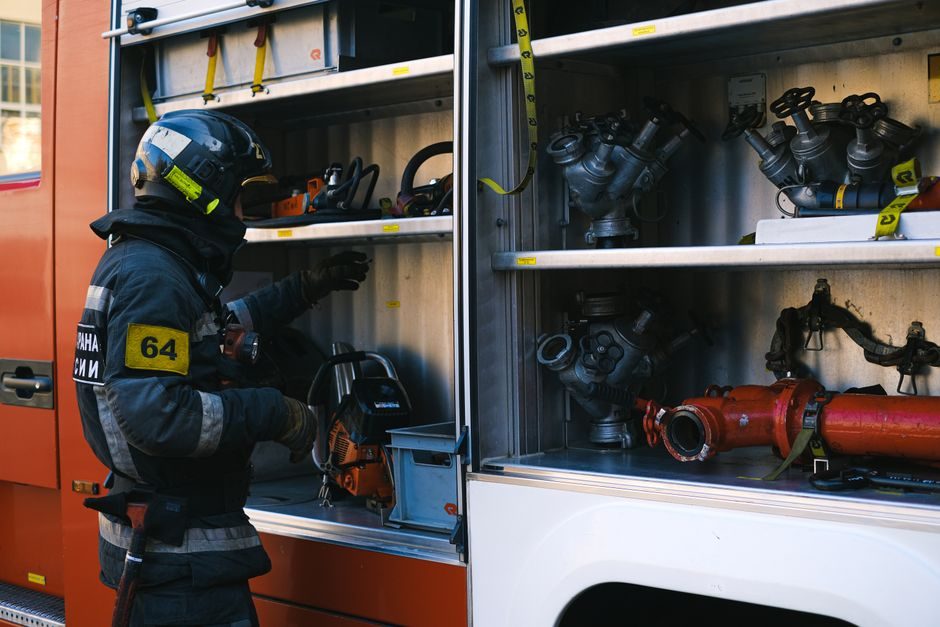
Balancing valves and safety relief valves solve different problems and live on different lines of a P&ID, but they are routinely confused in procurement and in field retrofit work. A balancing valve is a flow-distribution and commissioning device used in closed hydronic loops — chilled water, hot water, condenser water — to set and measure flow at each branch; a safety relief valve (SRV) is a code-mandated overpressure protection device fitted on pressure vessels, heat exchangers, hot-water heating boilers, and pressure piping [S1][S2].
The mechanical packages are also distinct. A balancing valve body is typically a Y-pattern or globe-pattern bronze, cast iron, or ductile-iron fitting with two pressure-test ports for a differential meter, an adjustable throttling element (a multi-turn handwheel or a fixed orifice cartridge), and may carry a memory stop so the commissioned position is locked [S3]. A spring-loaded safety relief valve body is a spring-and-disc assembly rated to a set pressure, with an inlet bore sized to a required orifice area (API 526 letters A through T) and a discharge sized to handle the rated flow at 10% or 21% overpressure [S1].
Function and Failure Mode: Flow Trim vs Overpressure Protection
A balancing valve does not relieve pressure. Its job is to introduce a controlled pressure drop so that the design flow is delivered to each coil, air-handling unit, or heat exchanger regardless of the natural flow imbalance created by different loop path lengths. Failure mode in a balancing valve is leakage past the seat when fully closed during isolation, or drift from the set position if the memory stop is not re-locked after balancing. [S1]
A safety relief valve is sized to open at a set pressure and discharge a certified flow rate so that the protected equipment never exceeds its maximum allowable working pressure (MAWP). Failure mode is the valve failing to open at set pressure (simmer/leak), opening at the wrong pressure (set pressure drift), or not passing the rated capacity at the allowable overpressure (lifting against a restricted discharge) [S1]. On hot-water heating boilers and unfired pressure vessels, the relief path is a code requirement — the safety relief valve is not an optional accessory.
Sizing and Selection Criteria Are Not Interchangeable
Balancing valves are selected on three numbers: the design flow in m³/h or GPM, the available differential pressure across the branch in kPa or ft of head, and the desired minimum valve authority (typically the valve should take at least 10–25% of the branch ΔP to be controllable). Manual balancing valves are then verified in the field with a differential manometer across the two test ports, with the target flow converted from a manufacturer-published Kv/Cv curve at the measured ΔP [S3].
The valve orifice is then matched to an API 526 lettered orifice area (D, E, F, G, H, J, K, L, M, N, P, Q, R, T) so that certified capacity is achieved [S1].
Material, Pressure-Temperature and Certification Gates
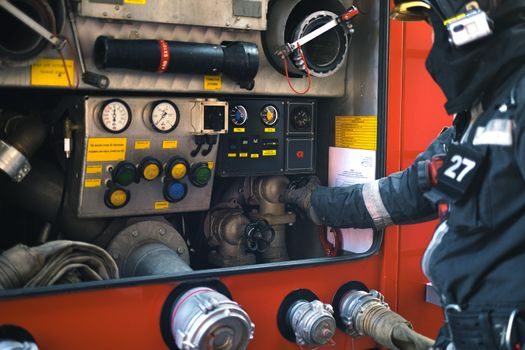
Body and trim materials diverge sharply between the two categories. Balancing valves for HVAC hydronics are commonly ASTM B62 or B584 bronze, ASTM A126 class B cast iron, or ductile iron with EPDM seats, rated 16 bar (PN16) or ANSI Class 125/150 at 120 °C. Safety relief valves are specified against the process fluid: carbon steel (ASTM A216 WCB) for steam and air, stainless (A351 CF8M) for corrosive service, bronze for hot-water heating boilers up to 1.0 MPa set pressure, and special alloys (Alloy 20, Monel, Hastelloy) for acid or sour service [S2][S3].
Certification tracks the duty. Balancing valves on potable water loops in the EU carry WRAS, DVGW, or ACS approval; on building HVAC they typically carry CE under the Pressure Equipment Directive (2014/68/EU) for Category I or above. Safety relief valves on boilers and pressure vessels carry the ASME UV stamp for North America, the CE mark and PED module for the EU, and on oil & gas or chemical service, separate fire-test or NACE MR0175 compliance for sour H₂S service [S1][S3]. Picking a balancing valve for a relief duty, or an SRV for a balancing duty, fails every one of these gates.
Comparison: Balancing Valve vs Safety Relief Valve on Four Decision Criteria
On the four criteria that drive a procurement decision — purpose, sizing input, body pattern, and certification — the two products do not overlap. The table below lines them up so a buyer or an engineer can match a part number to a P&ID tag without ambiguity. [S2]
Purpose: balancing valve = set and measure branch flow in a closed loop [S3]; safety relief valve = protect equipment from overpressure, code-mandated on fired/pressurized equipment [S1]. Sizing input: balancing = design flow + available ΔP + valve authority; SRV = set pressure + required capacity + allowable overpressure + discharge back pressure [S1]. Body pattern: balancing = Y-pattern globe with twin test ports and memory stop; SRV = spring-loaded top-guided or high-capacity semi-nozzle body with API 526 orifice. Typical certification: balancing = CE/PED or WRAS/DVGW for hydronic; SRV = ASME UV, CE/PED, and on process service NACE MR0175 for sour service [S1][S2].
Where the Two Devices Can Sit on the Same System
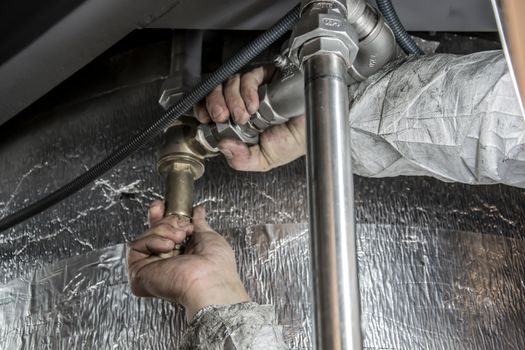
On a packaged hot-water heating skid, both valves can be present on the same pipe. The safety relief valve sits on the boiler or on the heat-exchanger shell, sized to the heating surface input in kW or Btu/hr, with the discharge piped to within 6 inches of the floor or to a safe drain. A safety relief valve for this duty is a spring-loaded temperature-and-pressure (T/P) type with the temperature sensing element limiting the water temperature to 99 °C in a non-storage application, and a pressure element set at or below the boiler MAWP [S3].
Downstream of the boiler, on the supply and return headers, balancing valves are fitted at each branch to distribute flow to the various heating coils. A balancing valve on each branch is set, locked, and tagged during commissioning so that the design ΔT across the primary loop is achieved. The two devices are on the same pipe diagram but protect different things: the SRV protects the pressure envelope of the boiler; the balancing valve protects the operating efficiency of the distribution system. Conflating the two leads to undersized relief capacity, a code-violating installation, or a loop that cannot be commissioned.
Limits, Failure Modes and Field Inspection Cues
Balancing valves fail in service when the handwheel is left unlocked and the valve drifts under thermal cycling, when the test-port caps are missing and the ports leak, or when the valve is fully closed during a partial-load season and erosion cuts the seat. None of these failure modes endangers the pressure envelope of the system, but they waste pumping energy and create complaints about uneven heating or cooling. [S3]
Safety relief valves fail in service in three observable ways: simmer/leak (the valve dribbles below set pressure, usually because of a damaged seat or a stuck disc), set-pressure drift (the valve opens above or below the stamped set pressure, usually because of spring relaxation or corrosion), and capacity shortfall (the valve lifts but cannot pass the rated flow, usually because of a restricted discharge or an undersized outlet) [S1]. Any of these puts the protected vessel outside its code envelope. Periodic bench testing on a certified test rig, with the set pressure, blowdown, and capacity re-stamped, is the standard remediation; the API 576 inspection interval is the typical reference window for process plants.
Sourcing, Lead Time and Cost Signal
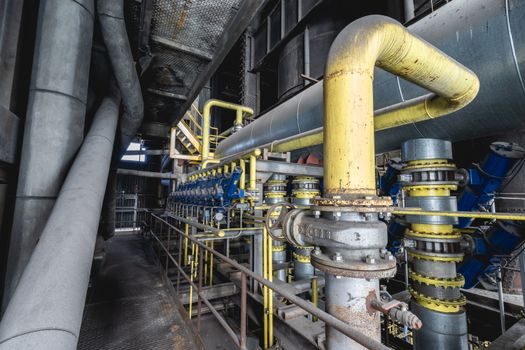
Balancing valves in PN16/PN25 bronze or ductile iron are widely stocked by HVAC wholesalers in DN15–DN300 sizes, with a typical 4–6 week lead time for a project build and ex-stock availability for common DN50–DN150 sizes. For a deeper look at how certified safety relief valves are priced across size, pressure class, and material — and where the cost gates sit for boiler, oil & gas, and chemical service — the Safety Relief Valve 2026 Price & Cost Guide maps the variables in detail. Where the project also needs adjacent flow-control or steam-side hardware, the Steam Trap 2026 Buying Guide covers the matching selection logic for steam-system condensate removal. [S4]
The procurement decision is therefore not "either-or" but "both, on different lines." A typical hydronic plant room will have one or two safety relief valves on the heat source and a dozen or more balancing valves on the distribution side. Spec the SRV first against the code and the relieving case; spec the balancing valves second against the commissioning flow and ΔP budget. Treat them as separate commodities, sourced on separate RFQs, and stamped with separate data sheets. The next signal worth tracking is the 2026 update of the EN 12516 series on metallic valve shell-design calculations, which feeds both the PED conformity assessment for balancing valves and the inlet/bonnet sizing rules for safety relief valves; plants that have not re-rated their existing SRVs against current PED modules should flag those tags for the next shutdown.
For component-level specifications, see dynamic balancing machine.