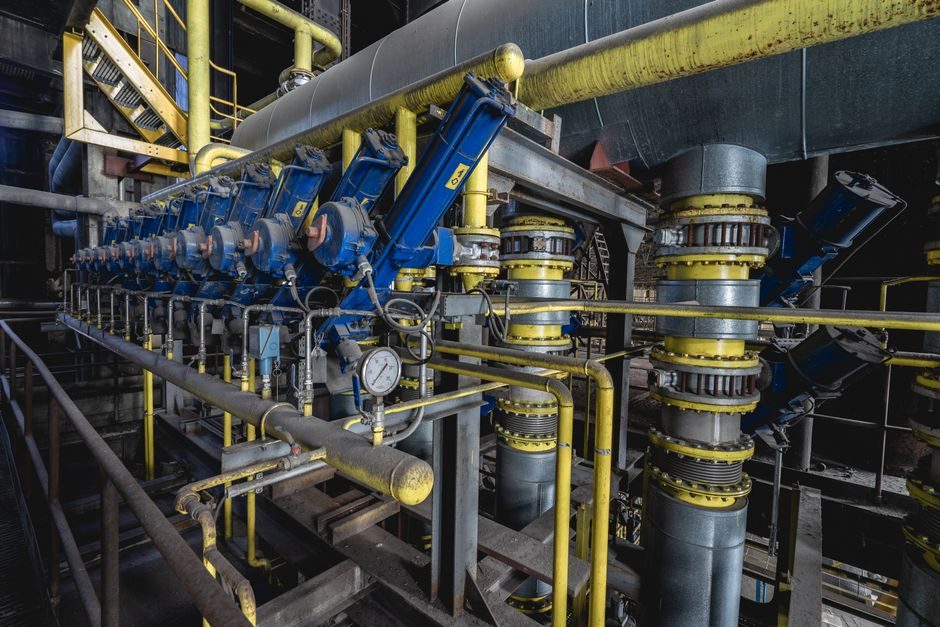
A 1/2"-3/4" NPT stainless safety relief valve in the 0.5-45 bar range typically lands between $180 and $2,800 per unit, with most list prices clustering in the $400-$1,200 band for compact SV 805-ES-class units [S2]. Commodity refrigerant ASME Section I/VIII units from the SR/SRH family (13-20 mm inlet) are routinely quoted in the $50-$350 band depending on set pressure and cert package [S1].
For a working budget in 2026, plan $300-$700 per valve for general-process stainless screwed units, $800-$2,500 for flange-ended or high-pressure gas variants, and verify with a real RFQ — the spread between catalog sticker and shipped price on an NPT or flanged safety relief valve routinely runs 20-40% once size, cert and documentation are added [S1][S2][S3].
Price Bands by Size, Pressure Class and Body Material
Small-bore screwed relief valves (1/2"-3/4" NPT, DN15) in stainless steel are the workhorse tier: the WITT SV 805-ES covers 0.5-45 bar controlled pressure at 14.1-665.4 m³/h flow in a 260-660 g compact body, and is typically listed in the low-hundreds to roughly $1,200 depending on option load [S2]. Commodity brass or bronze screwed units drop to the $40-$180 range when sold in carton quantities from trading-portal listings [S3].
Flanged and larger-orifice safety valves start at roughly $1,200 for 1"-2" cast steel/iron bodies and climb to $3,000-$8,000+ for 3"-6" high-pressure gas or steam units; bidders should size by required orifice area (API 520 / ASME Section I/VIII) before reading a safety relief valve price sheet, because a 1" body with a 1-letter larger orifice jumps capacity by 30-60% but only 15-25% in cost [S1][S3][S4].
Cert and Documentation Cost Levers
ASME Boiler and Pressure Vessel Code Section I (power boiler) versus Section VIII (unfired) is the first cert fork: SR/SRH refrigerant units are built "in strict accordance" to ASME BPVC and National Board certified, and Section I codestamp valves carry a 10-25% premium over Section VIII equivalents because of the heavier spring and full-lift validation [S1].
European hazardous-area projects stack ATEX 2014/34/EU and IECEx on top — and the upstream safety barrier interface should be rated for the same zone classification as the relief device's discharge envelope — while sour-service adds NACE MR0175 material traceability; each certificate package adds roughly 5-15% to base price and 2-4 weeks to lead time on a NPT or flanged body [S2][S3]. When specifying against a pressure-reducing valve on the same skid — see the Pressure Reducing Valve 2026 Buying Guide — confirm the relief valve downstream of the PRV is sized for full PRV failure at upstream MAWP, not just the PRV's nominal setpoint.
Comparison: Three Common Body / Cert Tiers
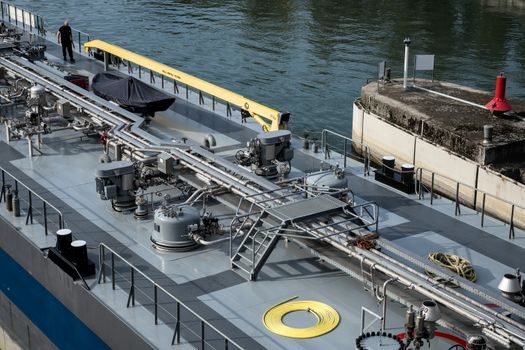
On a like-for-like DN15 0.5-45 bar service, three spec tiers dominate the 2026 market. Tier 1 (commodity brass/bronze, NPT, ASME Section VIII): $40-$180, 1-3 week lead, suited to air/water/inert gas up to ~120 °C [S3]. Tier 2 (stainless 316, NPT or flanged, ASME Section VIII + ATEX/IECEx): $400-$1,200, 3-6 week lead, suited to chemical, food-grade, hydrogen [S2]. Tier 3 (carbon/stainless, full-bore flanged, Section I + NACE MR0175 + EN 10204 3.1): $1,800-$8,000+, 6-12 week lead, used on steam, hydrocarbon, sour service [S1][S4].
Selection rule of thumb: if the working fluid is below 200 °C and non-flammable, Tier 1 is fine; if flammable gas, hydrogen, or solvent, jump to Tier 2; if steam > 150 psig or H₂S service, Tier 3 is non-negotiable regardless of sticker price [S1][S2][S4]. A complementary pressure-side pairing — for example a Pressure Reducing Valve vs Diaphragm Valve spec cut — should be specified to the same cert tier to avoid a weak relief device on a strong PRV.
Where to Buy and How to Read an RFQ Response
Direct OEM and authorized distributor RFQs (Parker Refrigerating Specialties, Kunkle/Eppler, WITT, Farris, Crosby, LESER) produce the cleanest data because list price, codestamp, capacity cert, and lead time arrive on one document [S1][S4]. Trading-portal quotes (go4worldbusiness, CENS, DirectIndustry's 11-company NPT safety-valve category) are useful for benchmarking, but raw "Ask for price" listings often hide MOQ tiers and don't expose the spring or cert line items [S3][S5][S6].
Send each bidder the same six-line spec sheet — inlet size, outlet size, set pressure, back pressure, fluid, and Section I vs VIII — and you will get apples-to-apples quotes within ±10%; omit any one of those and the spread balloons to 2-3× [S1][S4]. Ask for the orifice area letter (API 520) and a published coefficient of discharge Kd, not just "sized for 100 psig", because the same DN25 body can have 2-3 orifice letters and the cost difference between letters is non-linear [S1][S4].
Failure Modes and Cost-of-Getting-It-Wrong
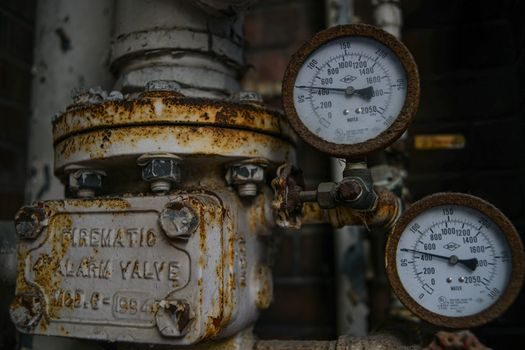
Undersized orifice on a flanged body is the single most expensive specification error: a relief valve that chokes at 60% of required capacity will pass a bench test and fail on the first real overpressure event, often voiding downstream equipment warranty. Industry guidance — including the family spec walkthrough in the Safety Relief Valve 2026 Buying Guide — recommends sizing at 110% of the worst-case combined inlet pressure loss plus back pressure, not at the PRV setpoint [S1][S2][S4].
Material mismatch is the second trap: galvanized carbon-steel bodies on wet H₂S or amine service will pit through in 6-18 months; a $400 stainless upgrade is cheap insurance against a $50,000+ leak event [S2][S4]. Set-pressure drift on a soft-seat unit after a few cycles is normal — request the reseat tolerance (±5% is typical for ASME Section VIII, tighter for Section I) and budget a field-adjustment visit if the valve is mounted on a hot line [S1][S3].
Standards, Lead Time and 2026 Market Signals
The two governing standards buyers will see on every datasheet are ASME BPVC Section I (power boiler) and Section VIII (unfired pressure vessel); refrigerant SR/SRH units cite the boiler code directly and are National Board certified [S1]. European hazardous-area projects add ATEX 2014/34/EU; sour-service hydrocarbon adds NACE MR0175; capacity calculation uses API 520 / 521, and in-line pipe sizing uses ISO 5167 [S2][S4].
As of mid-2026, lead times for Tier 2 stainless units are running 4-8 weeks ex-Asia and 6-10 weeks ex-EU/US, with Tier 3 Section I flanged valves at 10-16 weeks — about 2-4 weeks longer than 2024 baselines per multiple trading-portal RFQs [S3][S5][S6]. A trackable signal for Q3-Q4 2026 buyers: watch 316L stainless bar-stock and Inconel spring-wire spot prices, both of which moved up 6-10% through Q1-Q2 2026 and feed directly into Tier 2-3 valve list prices [S3][S5]. Lock pricing on a 30-60 day quote validity window, not 90 days, until the stainless index stabilises [S1][S4].
For component-level specifications, see linear guide.