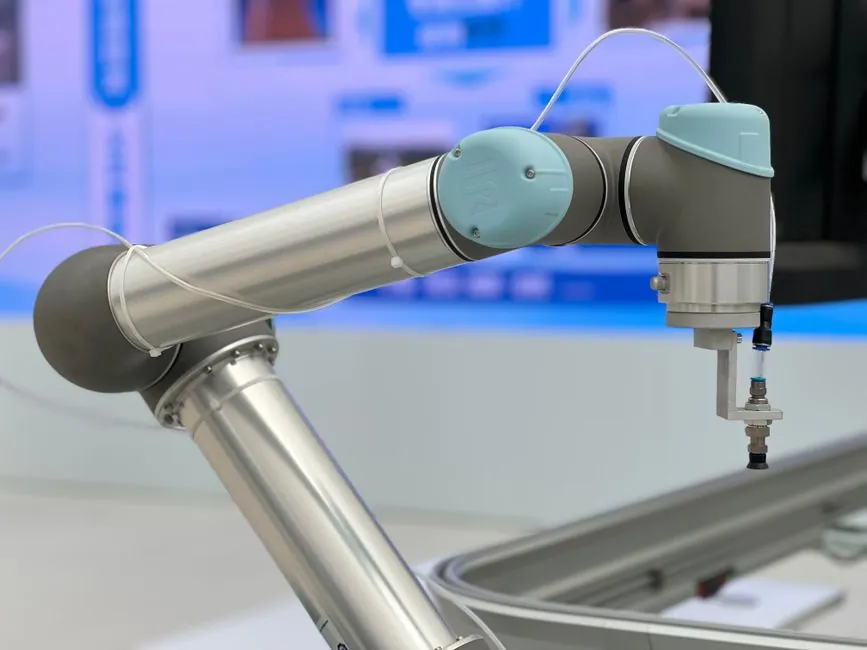
A robotic transfer cell running 24/7 typically demands bearings rated for combined radial+thrust loads above 250,000 dN at high dN speed factors, with full material and lot traceability on the certificate of conformance (C of C) to satisfy end-customer audits [S5][S10].
This checklist walks engineers through the eight evidence gates most frequently missed: bearing type, dimensional tolerance class, material grade, lubrication, sealing, dynamic/static load ratings, calculated L10 life, and the documentation trail that proves each one. It is written for the procurement-side engineer who signs the FAT paperwork, not the marketing brochure.
Gate 1, bearing type and structural family for each axis
Specifying the correct ball bearing family is the first gate, and the structural form must match the load vector in the axis it serves [S7]. Single-row deep-groove (e.g. 60-series) bearings cover radial-dominated loads in conveyor idlers and gearbox input shafts; angular-contact and four-point contact pairs handle the combined radial+thrust loads on robot wrist and arm joints; thrust ball bearings (e.g. 51116) take pure axial loads in vertical lift or transfer-column applications [S6][S9].
For a transfer cell with H-frame gantry axes, expect a mix: deep-groove on the horizontal drive, a matched angular-contact pair on the vertical ballscrew support, and a thrust or ball-spline at the carriage. If the cell uses a ball-screw for the Z axis, the screw-support bearings must be specified together with the screw stiffness class, not as independent line items.
Gate 2, dimensional tolerance class, ABEC vs ISO 492
Transfer cells targeting < 50 micron positioning repeatability need at minimum ABEC-5 (ISO 492 Class 5) bearings, and ABEC-7 (ISO 492 Class 4) for laser-cutting end-effectors or vision-guided pick heads where runout under 5 microns is required. The certificate must list the tolerance class, the actual measured bore, OD, and width, and the radial runout figure, not a generic 'P0' or 'P6' code [S6].
Watch for vendors that only state 'high precision' on the datasheet: that phrase is unregulated. The deliverable must show ISO 492:2014 class number, ABEC equivalent, and lot traceable measured values for radial runout (typically < 2-3 micron for ABEC-7 6204-class parts). If the supplier cannot provide the runout number, escalate before placing the PO.
Gate 3, material grade, rings, balls, and retainer
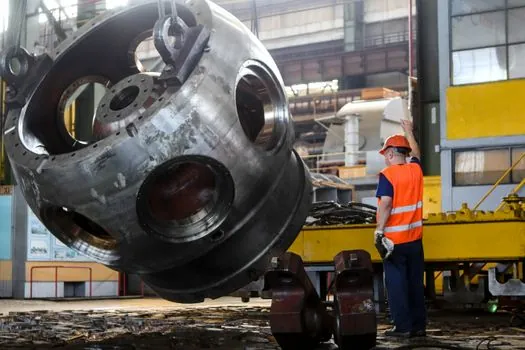
The ball bearing material evidence has three sub-gates: ring steel, ball grade, and retainer. For standard transfer cells, 52100 chrome steel rings with 52100 or Si3N4 ceramic balls is the most common combination; full ceramic (Si3N4 or ZrO2) is reserved for non-magnetic, vacuum, or cleanroom cells [S5].
Stainless steel 440C or 300-series variants appear in washdown or food-grade cells where corrosion resistance outweighs fatigue life. The certificate must show ball grade (e.g. G10, G16, G20 per ABMA Std 10), steel cleanliness (ASTM E45 method A or DIN 50602 K-values), and the retainer material (phenolic, PEEK, or brass for high-speed). A vendor claiming 'ceramic hybrid' without naming the ball composition should be treated as unsubstantiated until the spec sheet is updated [S5][S10].
Gate 4, lubrication, grease life, and relube interval
Grease specification is where most cells fail the audit, because suppliers ship with a generic industrial grease and the certificate never names the actual lubricant. A transfer cell that runs 3-shift with a 1.5-3 year design life should specify a polyurea-thickened synthetic grease (e.g. SK-1A / LGEP-2 family) with a defined base-oil viscosity, dropping point above 240 deg C, and a published relube interval at the operational temperature [S2][S6].
For cold-store cells (below -20 deg C) or oven-side cells (above 150 deg C ambient near the bearing), confirm the grease base oil is rated for that range; silicone or PFPE greases are common in these windows. The C of C should list grease type, fill percentage, and any food-grade NSF H1 registration if the cell is in a GMP zone.
Gate 5, sealing: 2RS, 2RZ, ZZ, or open

Seal type is a contamination-versus-torque trade-off, and the choice changes the published speed rating by 20-40 percent. 2RS (rubber-contact seals on both sides) is the default for dirty transfer cells with airborne particulate; 2RZ (low-friction non-contact shields) is preferred where the cell runs at high dN and low contamination; ZZ (metal shields) sits between the two and is common in electric-motor-grade bearings [S6].
The certificate should state seal material (NBR, FKM, HNBR), seal hardness, and whether the seal is single-lip or labyrinth. For a ball-valve-style indexing mechanism in a washdown cell, specify FKM seals at minimum; NBR cracks at the detergents used in pharmaceutical CIP cycles. If the supplier cannot name the elastomer, the seal data is not auditable.
Gate 6, load ratings, L10 life calculation, and safety factor
The static (C0) and dynamic (C) load ratings on the C of C must be entered into an L10 life calculation using the actual radial and thrust loads, not the nominal motor torque. ISO 281:2007 with the modified aISO factor (contamination, lubrication, and temperature coefficients) is the standard method; SKF, FAG, and NSK publish free calculators that follow this method. A conservative transfer cell typically targets L10 above 40,000 hours, which corresponds to roughly 8-10 years of 1-shift operation [S5][S6].
Document the inputs and the resulting a1 (reliability factor), a2 (material/lube), and a3 (operating conditions) numbers, then file the calc with the bearing C of C. An audit that finds L10 numbers but no calculation trail is treated as a non-conformance.
Gate 7, supplier audit and certificate verification

The supplier's ISO 9001 certificate is necessary but not sufficient. For robotic cells that must support an end-customer IEC 61508 SIL claim, the bearing maker should also hold IATF 16949 (automotive process discipline) or a documented PPAP-style control plan for the part numbers supplied [S2][S10]. Request the IATF scope statement and confirm 'rolling bearings' or 'precision bearings' is on the scope; a generic 'metal components' scope does not cover a precision bearing line.
Cross-check the heat/lot number on the bearing against the mill test certificate (MTC) for the steel. Each lot of 52100 should have a heat code, a chemistry check (C, Cr, Mn, Si), and an inclusion rating. China-origin suppliers on Made-in-China.com or independent platforms often list 'Diamond Member Audited' badges, but the underlying audit is typically a financial-credibility check, not a technical process audit; treat these badges as procurement-screening signals, not as engineering evidence [S2][S9].
Gate 8, the documentation package required for FAT sign-off
The final handover package should bind: the bearing C of C (with lot, class, runout, material, grease), the MTC, the L10 calculation sheet, the supplier ISO 9001 / IATF 16949 scope, the dimensional inspection report, and a photo of the bearing marking (laser-etched part code + lot). Without all six, the FAT cannot be signed off against the spec. [S5]
For related selection context beyond the bearing itself, the thrust bearing selection guide for cement plants and the roller bearing selection map for marine duty walk through load-class and corrosion logic in more hostile environments, useful for benchmarking L10 targets. For the broader audit package around the cell's control hardware, the OEM control-cabinet certification checklist complements this bearing-side list and avoids a gap between the mechanical and electrical evidence stacks.
Trackable signal to watch: ABMA's working group on harmonising ISO 492 and ABEC-7 nomenclature; revision drafts in 2025-2026 are still in comment phase, so any 2026 supplier claim citing 'ISO 492:2026' is likely forward-leaning marketing. Confirm the actual published edition on the certificate before accepting the terminology. Also note that the ABMA Std 20 carbon-chrome steel specification, last revised in 2022, is still the cited reference for 52100 chemistry on most 2026 C of Cs.