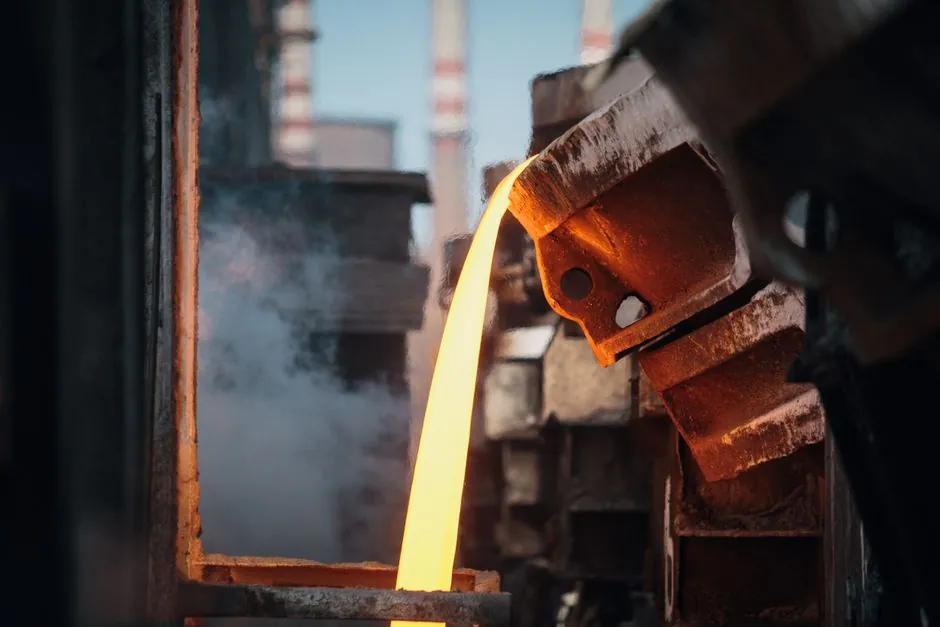
Steel mill bearing work is dominated by four operating envelopes: roll-table and conveyor idlers running at 50-200 °C under heavy dust, continuous caster segments at 150-300 °C with water-scale contamination, cold-mill back-up rolls at 80-150 °C with shock load cycles, and sinter/blast-furnace fans carrying combined radial-axial loads above 50 kN. Each envelope rules out a different family in the ball bearing catalog, and most premature failures in mill audits trace back to choosing by catalog Cr number instead of by thermal and contamination class [S4][S6].
Cross-discipline data sources such as the AsiaBearings manufacturer index and OEM catalogs from Fuzhou Freerun, Konlon, and Manu Yantralaya confirm the same envelope logic: steel-mill users are not a single market, they are at least four, and the bearing type that survives one will eat itself in another [S2][S3][S4][S10].
Load Envelope vs. Bearing Type: A 4-Criteria Comparison
Radial load capacity is the first gate, not the only one. A deep-groove ball bearing in 6200-series (12 mm bore) typically delivers a dynamic load rating Cr in the 6.8-10.0 kN range with a rated speed near 12,000-15,000 r/min in grease, which is enough for a roll-table idler but a fraction of what a cylindrical roller bearing can carry in the same envelope [S4]. Self-aligning ball bearings (1200/1300-series) trade speed for misalignment tolerance up to 1.5-2.5°, which is why they show up in sinter-cooler drive shafts where the structure walks [S4]. Angular contact 7000-series pairs handle combined radial+axial load up to 25-40 kN per single-row bearing and are mandatory for cold-mill back-up roll spindles running at 2,000-4,000 r/min [S4][S10].
Heat Class: 120 °C Grease vs. 230 °C Sealed-for-Life
Continuous-caster segment bearings sit in radiated heat of 150-300 °C with intermittent water deluge, which is the single most aggressive steady-state condition outside a sinter cooler. Standard chromium-steel AISI 52100 bearings with nitrile seals and general-purpose grease fail within weeks in this envelope; the published mitigation is a move to high-temperature fluorocarbon-rubber seals, polyurea or PFPE grease, and either a 100Cr6 (SUJ2) stabilized heat treatment or a Si3N4 ceramic-hybrid rolling element set, with documented service temperatures spanning -60 °C to +230 °C in sealed-for-life 60-series designs [S6].
For sinter-cooler and blast-furnace blowers the temperature peak is shorter but the radial load is higher; suppliers such as Fuzhou Freerun Bearing and Manu Yantralaya list chrome-steel deep-groove, stainless-steel, and ceramic ball bearing options for these heavy-rail industrial fans, and the Manu Yantralaya site confirms its bearings are recognized by SKF as zero-defect supply, which is the relevant QA signal for mill-grade procurement [S3][S10].
Contamination Class: Shields, Seals, and the Sealed-for-Life Trade
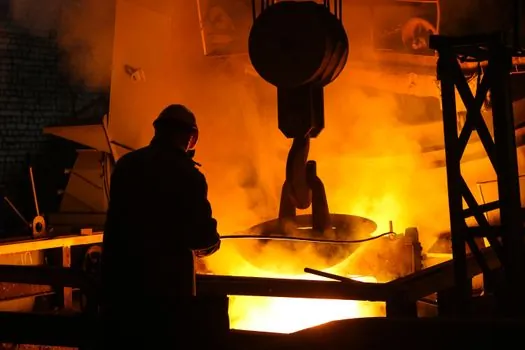
Mill airborne contamination is the second-largest failure driver after heat. Iron-oxide fines, rolling-mill scale, and cooling-water carryover all behave as abrasive paste once grease picks them up, so the bearing enclosure matters more than its Cr rating. The Manu Yantralaya product range explicitly identifies "sealed-for-life" as the structural direction for the past two decades, with bearing dust shields as the entry tier and 2RS contact seals as the mill-default tier [S3]. Konlonbearing's catalog lists stainless-steel, chrome-steel, and ceramic bearing variants side by side, and the practical crossover is: choose chrome-steel with 2RS nitrile seals up to 120 °C, switch to stainless-steel AISI 440C with PTFE seals once water and chloride exposure rise (continuous caster, pickle-line rolls), and reserve silicon-nitride hybrid units for the dry-end 200-230 °C segments [S4][S6].
Retainer (cage) selection sits inside this same decision. Steel-stamped ribbon cages are standard; brass machined cages appear on larger 6300-series and above where vibration and shock load dominate, and the OEM bearing-retainer catalogs (Zhejiang, China, US$0.79-4.79 per piece at 10-piece MOQ) show the volume pricing in the commodity tier [S8]. For high-shock mill service, a brass or phenolic-resin cage on a deep-groove ball bearing survives roll-table start-stop cycles that crack steel-stamped cages within weeks.
Clearance Class: C3, C4, and the Fit Rule That Decides It
Mill bearings are routinely underspecced on internal clearance. A shaft that runs 80-150 °C expands radially by roughly 0.1-0.2 mm/m at the inner ring, and if the bearing is mounted with normal (CN) clearance, the running clearance collapses into negative territory once steady-state hits, which manifests as skidding, smearing, and grease starvation. The rule used in mill audits: at steady-state operating temperature above 100 °C, specify C3 clearance minimum, and C4 on continuous-caster segments where the differential expansion between the through-cooled shaft and the radiant outer ring exceeds 30 °C [S4][S6].
Fit class is the partner decision. For 6200-series mounted on roll-table idler shafts (≤75 mm bore), a tight k6 or m6 shaft fit and a loose J7 housing fit lets the outer ring walk into its own thermal-center position; for 6300-and-larger caster-segment shafts, drop to a js6 (light press) shaft fit to allow axial thermal growth without brinelling. Sourcing hubs for these fits (chrome-steel, stainless-steel, and ceramic ball bearing families in 60, 68, 69, and R-series) carry the full matrix in single place, which shortens the engineer-to-procurement loop [S4][S5][S6].
Material Class: Chrome Steel, Stainless, and Ceramic-Hybrid Crossover
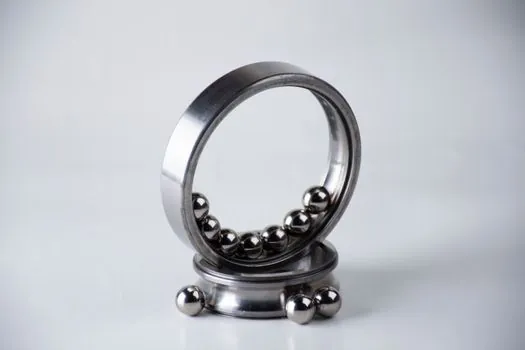
Three material choices dominate mill selection. AISI 52100 chrome steel (SUJ2 in JIS, 100Cr6 in DIN) is the default: through-hardened to HRC 60-64, dimensionally stable, and the lowest cost. AISI 440C stainless extends the corrosion envelope to pickle-line and marine-terminal rolling stock, at a ~3-4x cost premium and a 10-15% speed derating for the same series [S4][S10].
For broader bearing line references in adjacent mill and heavy-industrial processes, the cement-plant selection map is a useful structural twin: same four-envelope logic, same clearance and fit rules, different contamination profile (limestone dust vs. iron-oxide scale), as laid out in Ball Bearing Selection for Cement Plants: 2026 Spec Map. Wire-rope handling and sling attachment points inside the mill also bear on bearing life when crane-served roll changes drop a 25-ton backup roll onto the bearing seat; the sling-angle and D/d ratio guidance in Wire Rope Sling Types and Industrial Applications: 2026 Spec Reference sets the upstream load-handling envelope that the bearing designer must not exceed.
Lubrication Class: Grease Fill, Relube Interval, and Solid Lubricants
Grease fill is the most common mill-side failure contributor after contamination. Standard lithium-soap grease is rated -30 to +120 °C; polyurea thickeners extend that to 150 °C with better shear stability; PFPE (perfluoropolyether) thickener systems hold 200-230 °C steady-state and are the documented choice for sealed-for-life caster segments [S6]. Relube interval at 150 °C for a 6200-series 2RS deep-groove bearing falls from a 2,000-4,000 h fresh-grease baseline to 500-800 h once the mill environment is added, which is the underlying reason most steel mills have moved to sealed-for-life on everything below 100 mm bore [S3][S6].
Solid-lubricant (MoS2 or graphite) composite cages and overlays are the last-resort option when grease relube is mechanically impossible (encapsulated roll-table bearings inside an integrated mill stand) or when ambient temperature spikes above 250 °C. The relevant trade is lifetime vs. restart-torque: solid film runs cleanly to 300 °C but requires a run-in procedure on each cold start, which a mill that cycles 4-6 times per shift can usually absorb.
Spec Procurement: Series, Tolerance, and QA Signal
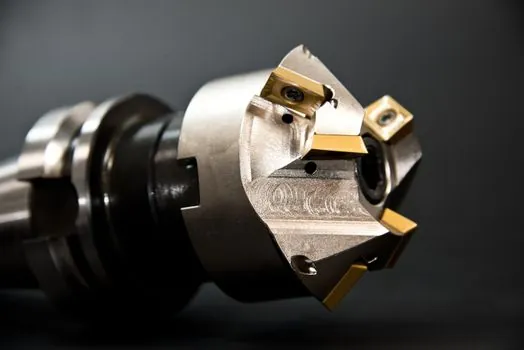
Specify the bearing series before the brand. The 60-series (extra-light), 62-series (light), 63-series (medium), and 68/69-series (thin-section) cover the bulk of mill applications from 10 mm to 200 mm bore; cylindrical roller NJ/NU series step in above 100 mm bore and 50 kN radial load. Tolerance class P0 (ABEC 1) is the mill default, P6 (ABEC 3) is the cold-mill back-up roll default, and P5 (ABEC 5) is reserved for high-precision cluster-mill and Sendzimir bearings [S4][S5][S6].
Procurement signals worth tracking: documented ISO 9001 + ISO 14001 certification at the bearing manufacturer, declared bearing life targets (e.g. "up to 10 years" published for the 60/68/69/R series on current 2026 OEM datasheets), and a clear sealed-for-life product line. The published 2026-08-08 catalogs from Kent Bearing, XinDonghuang, and Konlon all carry the same envelope data (60/68/69/R-series, P5/P6 tolerance, -60 to +230 °C sealed-for-life, RoHS + SGS tested), which is a useful cross-vendor sanity check before a mill commits to a single supplier [S5][S6][S4]. Verify next month that the chosen vendor's published static and dynamic load ratings reconcile to the ISO 281 / ISO 16281 basic dynamic load rating formula before signing the PO.
Spec-level background on the components involved: ball screw.