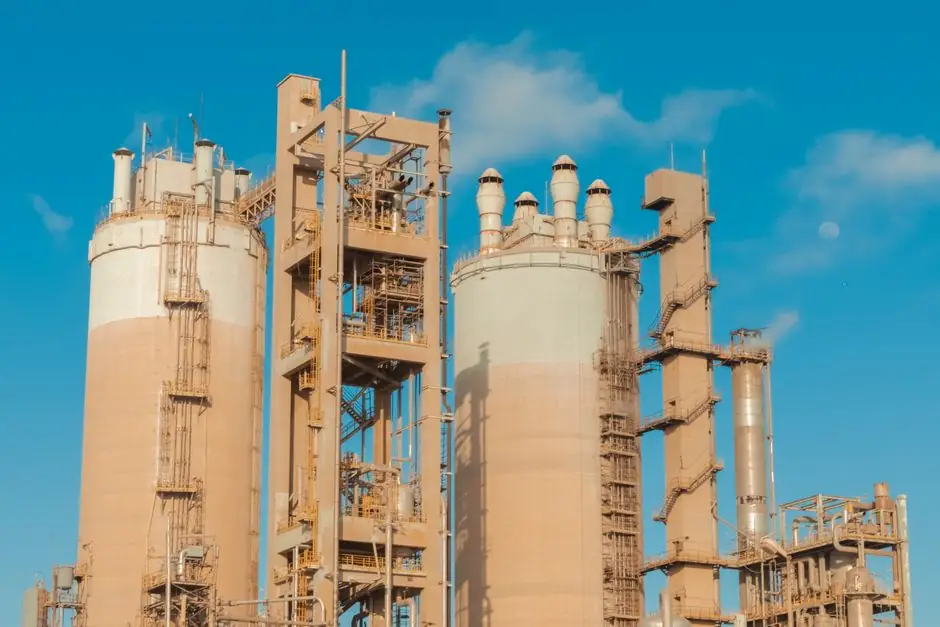
Cement-plant ball-bearing selection pivots on four failure drivers, namely abrasive dust ingress, sustained radial shock loads, ambient temperatures of 60-180°C around kiln and preheater housings, and water wash-down in raw-mill areas.
Process engineers typically standardise on spherical roller bearings (222xx and 223xx ISO 15 series) for >100 kN equivalent dynamic load, and on sealed deep-groove ball bearings (62xx and 63xx ISO 15) for auxiliary drives below 30 kN, per OEM product ranges active on 2026-08-08 [S1][S3][S4][S5].
Cement-Plant Service Conditions That Drive Bearing Choice
Raw-material crushing, vertical-roller grinding, preheater fans, rotary kilns, clinker coolers, and bagging conveyors each impose a distinct load, speed, and contamination profile. Vertical roller mills commonly operate with roll shafts running at 30-75 r/min under radial loads that scale with grinding pressure, which is why spherical roller bearings with a tapered bore (241xx CC/W33, 222xx series) dominate the roll-shaft specification, alongside cylindrical roller bearings (NU/NJ 10xx) on the reducer pinion end. [S4]
Dust exposure is the second driver: a ball bearing in the cement industry must seal to at least an IP6x level on the housing face, with 2RS or 2CS contact seals on the bearing itself for conveyor idlers, bucket-elevator pulleys, and apron-feeder shafts. Chinese miniature and precision bearing suppliers list 2RS (rubber contact on both sides) and ZZ (metal shield on both sides) as their default closure options in 2026 catalogues [S3][S5].
Typical Bore and Series Mapping for Major Cement Machines
Bore-to-series mapping is a useful short-cut: kiln-support rollers commonly use 22224-22236 (120-180 mm bore), preheater fan shafts take 22320-22326 (100-130 mm bore), raw-mill table rollers run 22320-22328, and clinker cooler idlers drop to deep-groove 6316-6322 (80-110 mm bore) [S1][S4].
Conveyor and bucket-elevator pulleys are the workhorse application, where deep-groove 6206-6212 (30-60 mm bore) with 2RS seals and a pressed-steel or cast-iron housing is the 2026 industry default; one Chinese bearing maker offers pillow-block and spherical-roller SK and SNB housings with 30-300 mm bore coverage [S1][S4]. For comparison, miniature precision ball bearing lines from specialist suppliers run from 2 mm to 30 mm bore, serving motors, gearboxes, and instrument gear, not main cement machinery [S3].
Material, Lubrication, and Clearance Choices

Through-hardening chrome steel (AISI 52100 / DIN 100Cr6) remains the case-hardened material of choice for kiln support rollers and reducer pinions, with case-carburised 20CrNiMo and 20Cr2Ni4A reserved for heavy-impact bearings above 200 mm bore, and 440C or full ceramic Si3N4 (silicon nitride) reserved for high-temperature or corrosive pockets (kiln inlet, preheater top stage) where temperatures can reach 200°C and cement-clinker dust becomes mildly alkaline [S1][S3].
Clearance: C3 is the cement-industry default for roller mills and fan shafts; C4 is added on solid-pillow housings where thermal expansion of the shaft is significant, while CN (normal) is held for precision conveyor pulleys. Grease selection typically shifts from lithium (up to 120°C) to polyurea or calcium-sulfonate (150-180°C) for kiln and preheater applications, with re-grease intervals of 2000-4000 hours at 150°C drop to 1000-2000 hours at 180°C under dust exposure.
Sealing and Contamination Control
Seal design is where most cement-plant bearing failures are won or lost. Labyrinth + 2RS dual-stage sealing is now routine on pillow-block units; the outer labyrinth throws coarse particles while the 2RS lip holds grease and blocks fines. For vertical-roller and kiln-support applications, hydraulic-cartridge seals (SKF Marathon or equivalent) extend service life where relubrication is hard to schedule. [S3]
Housings are mostly cast iron (GG-25 / GGG-40) with a primer top-coat, and 304 / 316 stainless for raw-mill water-wash zones. Bearing makers in the 2026 Made-in-China index list Auto, Motorcycle Parts, Construction & Decoration, Metallurgy & Mineral & Energy among their declared business ranges, which cross-cuts cement, mining, and aggregate duty [S1]. For motion-control duties inside the same plant (e.g. classifier vanes, gate drives), engineers cross-reference ball screw catalogues rather than rolling-element bearings, since the load case is reversed.
Selection Criteria Compared: Roller vs Ball vs Hybrid

The three families compare as follows on typical cement-duty metrics. Spherical roller (222xx/223xx): radial load capacity 100-500 kN dynamic, speed limit ~3000 r/min, misalignment tolerance up to 1.5°, strong shock absorption, default for kilns, VRMs, preheater fans. Cylindrical roller (NU/NJ): radial 80-300 kN, speed up to 4500 r/min, no misalignment, used on reducer pinions. Deep-groove ball bearing (62xx/63xx 2RS): radial 15-90 kN, speed up to 7000 r/min, no misalignment, low cost, default for conveyor pulleys and cooler idlers.
For low-speed, high-misalignment kiln-support and preheater applications, spherical roller bearings win on load + tolerance. For conveyor, cooler, and bucket-elevator duties, sealed deep-groove ball bearings win on cost and parts commonality.
Who This Bearing Map Is For, and Where It Fails
The map fits plant engineers specifying aftermarket or replacement bearings on existing lines, OEM skid builders standardising supplier lists, and EPC procurement consolidating part numbers across 60-180°C, dust-laden, high-shock service. It is not a substitute for a full bearing-life calculation per ISO 281, nor does it cover the super-large special bearings (>1 m bore) used on some kiln girth gears; those call for bespoke engineering. [S1]
Materials for adjacent bulk-handling equipment are covered in our bucket elevator vs conveyor chain selection map for vertical and horizontal bulk handling, and lifting hardware for kiln maintenance in the wire rope sling types and industrial applications 2026 spec reference. For structural steel supporting new cement-plant mezzanines, the steel section selection for warehouses grades profiles and failure modes reference applies directly.
Trackable Sourcing and Standard Signals
Verified at 2026-08-08: Shanghai Inr Industrial Co. Ltd, registered 2009, lists Auto, Construction & Decoration, Metallurgy & Mineral & Energy as business ranges, with Ball Bearing, Ceramic Bearing, and Bearing as main products on Made-in-China [S1]; NHBearing (Mosheng) confirms miniature deep-groove production capacity, with 2RS and ZZ closures, on its English site [S3]; Wishbearings publishes a deep-groove, miniature, thrust, and self-aligning catalogue including a 2026 contact channel at +8617771839412 [S5]; Konlonbearing lists deep-groove, pillow-block, spherical-roller, and thrust-ball families with an EU/US export bias [S4]. For fluid-handling equipment adjacent to bearing lubrication systems in cement plants, the ball valve and electric ball valve reference pages round out the spec set.