
Rolled ball screw assemblies for general automation are listed at US$30.00–68.00 per piece with a 5-piece MOQ by HZMotion (Shandong), a Diamond Member audited on Made-in-China.com as of 2026-05-20 [S4]. The same listing brackets a wide price band because the dominant cost drivers are diameter, lead, accuracy grade, and whether the nut is preloaded or flange-machined.
China-origin rolled units on B2B portals now span diameters from ~6 mm (miniature, for lab/medical stages) up to 80 mm (injection-moulding and press machine duty), with external-circulation nuts offered as the lowest-cost configuration [S6]. Buyers comparing sources should treat any single price tag as a sample, not a budget — total landed cost of a ball screw assembly is dominated by the support-bearing pair, the nut housing, and any end-machining (wiper, lubrication port, keyway) that the catalogue line does not include.
Price Tiers by Manufacturing Process
Rolled ball screws are produced by cold-forming a thread profile and then inserting a ball track — they are the lowest-cost option and are adequate for C5–C7 accuracy (typically ±0.05–0.21 mm / 300 mm travel) in non-precision automation [S1]. A C7 rolled 16 mm × 5 mm assembly in the Made-in-China 2026-05 listings sits in the US$30–68 / piece MOQ-5 band, which equates to roughly US$6–14 per piece at 100-piece volume [S4].
Ground ball screws are finished by grinding a pre-rolled blank on a thread grinder; they reach C0–C5 accuracy and command a meaningful premium. The "Competitive Price Ball Screw External Circulation Precise Ballscrew for Injection Molding Machine" line on Made-in-China 2026-05-28 is typical of the C5–C7 ground-for-injection-moulding segment, with per-piece pricing well above the rolled range [S6]. Buyers running injection moulders, vertical machining centres, or semiconductor handlers should expect a 5–10x multiplier over rolled when stepping from C7 to C5, and another step when going to C3 or C0 for grinder or EDM feed axes.
Accuracy Class and Preload Premium
ISO 3408 accuracy grades are the single largest non-obvious cost lever: every step from C7 to C5 to C3 to C0 tightens lead-error tolerance roughly 3–5x and adds grinding, straightening, and preloading work. JIS-equivalent grades (C0, C1, C3, C5, C7, C10) map closely to ISO 3408-1, and Thomson's 2026-06 product literature explicitly organises the ball-screw catalogue around grade, efficiency, and load rather than by diameter alone. [S1]
Preload is the second lever. A standard single-nut ball screw is the catalogue price; a preloaded double-nut (DB) or offset-preload (DO) nut configuration is roughly 1.5–2.5x the single-nut price because of the matched-bearing requirement and the additional shimming/gauging step. For machine-tool feed axes, a preloaded ground C3 unit is the minimum entry spec; for transfer lines and packaging axes, an unpreloaded C7 rolled unit is usually sufficient.
End-Machining and Support-Bearing Stack Cost
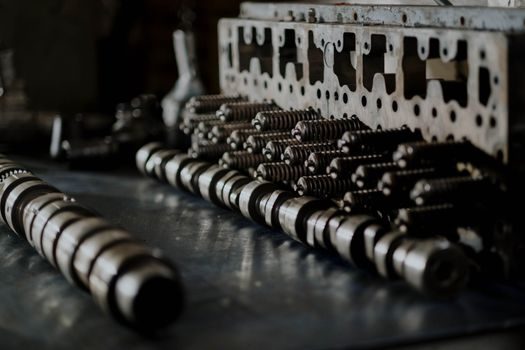
The screw shaft itself is typically 30–50% of a fully-finished ball screw assembly's cost. The other half is the support pair, the nut housing, and the end-machining on the journals. Made-in-China's 2026-05-20 catalogue for Ball Screw Support Units (BK/BF and EK/EF flanged blocks) lists these as separate line items, with prices for the support bearing block running from a few dollars to several hundred depending on bore size and fixed/floating configuration [S4].
End-machining — turning the journals to a specific fit, adding a lubrication nipple, drilling a wiper slot, cutting a keyway, and adding a safety bellows groove — is where low-cost Chinese catalogue prices become non-comparable. Two vendors quoting the same diameter and lead can differ by 40–60% on a fully-finished assembly purely because one includes end-machining and the other ships shaft stock only. This is also why Okorder's 2026-06-03 China-Main-Port ball-screw line states explicitly that the catalogue price is reference only, with final cost driven by size, grade, and end-machining scope [S2].
Lubrication, Seal, and Service-Life Adders
A ball screw without wipers, lubrication ports, and a sealed nut is a false economy in dusty, wet, or washdown environments. The cost adder for a wiper kit on the nut is small (typically under 10% of the assembly), but a missing wiper in a wood-working or foundry application can cut rated life to a fraction of the calculated L10 figure [S1]. Buyers comparing catalogues should always check the standard seal configuration and whether the wiper is felt, rubber, or metal scraper — the latter is mandatory for any application with hot chips or weld spatter.
Lubrication interval and grease type also feed into lifetime cost. A ball screw running on standard lithium EP grease at 25°C with proper wipers typically achieves the rated L10 life (1 million revolutions for general-grade rolled, up to 10 million for precision ground with preload); without wipers or with the wrong grease, life can drop by 5–10x even on the same part number. For a deeper read on adjacent mechanical-buying cost levers, the Tower Crane Buying Guide 2026: Spec, Sourcing, and Total Cost walks the same buy-vs-source logic in a heavier-machinery context.
Sourcing Channels and Quality Risk
Three sourcing channels dominate 2026-05/06 industrial buying data: (1) Asian B2B marketplaces (Made-in-China, Okorder, Alibaba) for catalogue-grade C7 rolled and entry-level C5 ground screws at the lowest price points [S2][S5][S6]; (2) regional distributors and OEM-direct channels (Thomson, NSK, AST Bearings) for certified C0–C5 assemblies with full traceability and a published L10 curve [S1]; (3) custom machine shops in Dongguan, Shandong, and Jiangsu for specialty sizes, large diameters (>63 mm), or short lead-time spares [S3].
The risk on channel (1) is grade inflation: vendors frequently label a C10 product as C7 because there is no third-party test report and the buyer's incoming inspection gear (laser interferometer, lead-measurement rig) is rarely available on a small-batch PO. Channel (2) closes that gap but at 2–5x the channel (1) catalogue price. For prototyping, channel (1) with a single-piece sample inspection is rational; for production lines and exported equipment, channel (2) is the right default. For a comparison of how a related industrial component's total cost of ownership breaks down across duty cycles, the Electric Pallet Truck Price & Cost Guide 2026: Battery, Capacity and Drive Class Levers applies a similar class-and-sourcing framework.
Comparison: Rolled vs Ground vs Ground-Preloaded
On the three most-cited decision criteria for 2026 sourcing, the three options line up as follows. Cost: rolled C7 (US$6–14 / piece at 100-PCS volume per HZMotion listings) is the cheapest, ground C5 unpreloaded is roughly 3–5x that, and ground C3 preloaded is roughly 8–15x [S4][S6]. Accuracy (lead error per 300 mm): rolled C7 = ±0.05–0.10 mm, ground C5 = ±0.018–0.025 mm, ground C3 = ±0.008–0.012 mm, with the ISO 3408 grade step being the binding gate. Lifetime (rated L10, with proper lubrication and wipers): rolled C7 = ~1×10⁶ rev, ground C5 = 2–5×10⁶ rev, ground C3 preloaded = 5–10×10⁶ rev — and these drop sharply without wipers or with the wrong grease [S1].
Buyers should select rolled C7 for packaging, transfer lines, AGV lifts, and non-critical axes; ground C5 unpreloaded for injection moulders, general-purpose machining centres, and CMM Z-axes; ground C3 preloaded for grinder, EDM, and high-precision lathe feed axes. For spec-pairing with linear guide rails in the same machine build, the linear guide selection (size class, preload, accuracy grade) should be chosen to match the ball-screw class — mismatched accuracy between the two is the single most common cause of lost-motion complaints in newly commissioned equipment.
Common Failure Modes That Drive Re-Order Cost

The three failure modes that drive the largest share of unplanned re-orders are: (1) brinelling from side-load or shock load on a non-preloaded nut (especially on vertical Z-axes without a brake); (2) flaking from contaminated lubrication, usually because the wiper was omitted or the wrong grease was used; and (3) backlash drift on a preloaded nut, almost always caused by thermal growth that was not accommodated in the original machine layout [S1].
A practical way to reduce total cost of ownership is to overspec the ball-screw accuracy by one ISO grade and to match it with a properly preloaded linear guide and a sealed nut from the first build. The price delta between C7 and C5 on the screw is typically recovered in 12–18 months of avoided downtime on a two-shift production line.
Trackable signals for the next 6–12 months: (a) Chinese rolling-mill capacity for 40–63 mm ground blanks — any reported capacity expansion will compress the C5 ground premium; (b) ISO 3408 revision activity, which historically drives a re-grading wave as OEM datasheets catch up to the new class boundaries; (c) lithium grease price trend, which feeds into the lifetime-cost calculation on every catalogue unit sold. For a structural comparison of how another high-mix mechanical component classes its accuracy and lifetime, the Slewing Drive Price 2026: Size, Gear Type and Application Tier Cost Breakdown covers the same trade space in a different motion-component family.
For component-level specifications, see crossed roller guide.