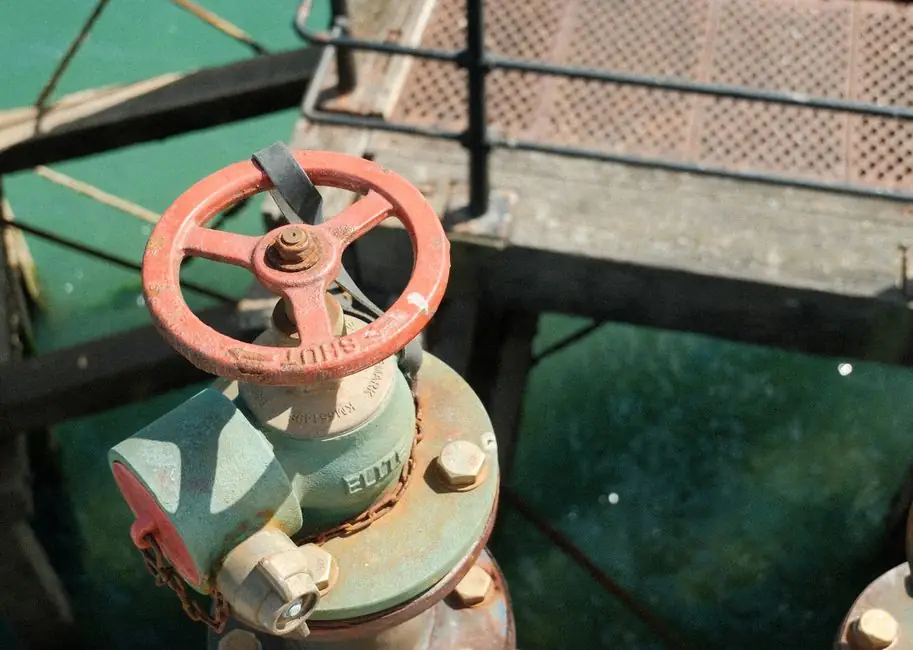
Across industrial procurement, ball valve TCO spans seven cost buckets: purchase, installation, energy, downtime, maintenance, spare parts, and end-of-life, with the purchase invoice typically representing 15 to 30 percent of 20-year lifecycle cost on remote or hazardous service [S1].
The trade-off shifts by size class. For 1 to 2 inch floating ball valve utility service, raw material and machining dominate the invoice and TCO. For 12 inch and above trunnion-mounted units, structural steel, freight, and outage exposure outweigh every other line item [S1][S4].
Cost Driver 1: Material Grade and Body Forging Cost
Carbon steel captured 31.50 percent of the ball valve market in 2025, and alloy grades are expanding at a 5.07 percent CAGR through 2031, confirming that buyers continue to pay a premium for corrosion resistance and higher ASME class ratings [S3]. A full port ball valve requires a larger, heavier body cavity than a standard port unit of the same nominal size, so the stainless or carbon steel blank cost climbs directly with bore geometry [S5]. For sour service conforming to NACE MR0175, the material surcharge stacks on top of special melt-practice documentation and traceability paperwork, neither of which appears on the unit price [S1]. Engineers should treat the per-kilogram alloy surcharge as a fixed markup and compute body mass from the face-to-face drawing before requesting quotes, because a 12 inch trunnion ball valve can exceed 1,500 lb (680 kg) while a 12 inch wafer butterfly at the same line class is closer to 120 lb (55 kg) [S4].
Cost Driver 2: Port Geometry and Lifetime Energy Penalty
A 2 inch full port ball valve typically delivers a Cv in the 350 to 450 range with negligible pressure drop, while a standard (reduced) port at the same nominal size can drop Cv by 30 to 60 percent depending on the body pattern, which forces the pump curve upward for the same process flow [S5]. The flow relationship Q = Cv × √(ΔP / SG) means a reduced bore that adds even 0.5 bar ΔP at design flow can consume several kilowatts of continuous pumping energy per valve, compounding across 20 years of service [S5]. For systems with frequent modulation or high duty cycles, a full port unit often pays back its higher invoice through pump electricity savings alone; for intermittent isolation, the standard port remains the economic choice [S1][S5].
Cost Driver 3: Two-Piece versus Three-Piece Maintenance Architecture
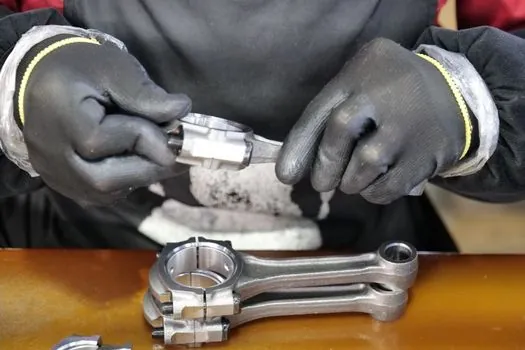
Two-piece bodies are compact, lower cost, and common in utility water service where maintenance frequency is low, but accessing seats, seals, or the ball usually requires cutting the valve out of a welded line, then realigning the pipe before recommissioning [S2]. A three-piece design adds a removable center section that swings out without disturbing the end connections, cutting labor hours and pressure-test time during planned shutdowns, and removing the risk of weld cut-and-rework on process lines carrying hydrocarbons [S2]. The TCO crossover shifts toward three-piece once expected maintenance events exceed roughly one seat replacement per five years, or whenever unplanned downtime cost exceeds USD 10,000 per hour, which is routine in LNG, refining, and offshore upstream service [S2][S3].
Cost Driver 4: Actuation Choice and Electrical Infrastructure
Manual gear-operated units held 37.40 percent of 2025 market share, but electric ball valve packages are tracking a 6.02 percent CAGR through 2031, the fastest growth among actuation classes, driven by LNG terminal DCS integration and water-utility digitalization programs [S3]. An electric actuator package routinely multiplies the bare valve cost by 1.5 to 4 times depending on torque, hazardous area certification (ATEX, IECEx), and network protocol (HART, Foundation Fieldbus, PROFIBUS PA), but it eliminates manual operator labor, supports partial-stem-position feedback, and shortens emergency-isolation cycles that would otherwise extend a process upset [S1][S3]. For remote or unmanned sites, electric actuation usually shows a lower TCO despite the higher capital line, because one avoided truck roll pays for the actuator within its first year.
Cost Driver 5: Size Class, Weight Scaling, and Structural Steel Cascade
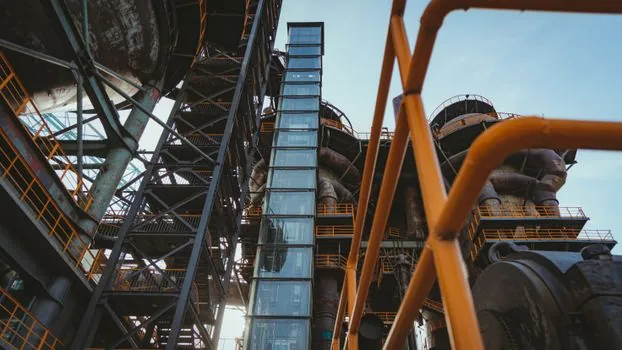
At 1 to 2 inch (DN25 to DN50), a ball valve weighs 5 to 15 lb, fits inside a standard pipe rack, and imposes no structural penalty; above 4 inch (DN100), body mass, face-to-face length, and support steel costs grow steeply enough to push procurement toward a butterfly alternative unless zero-leakage isolation is mandatory [S4]. A single 12 inch trunnion ball valve change-out can add a metric ton of live load to a piping rack, which in turn forces re-engineering of beam spans, concrete anchors, and crane capacity, a hidden multiplier that frequently doubles the apparent TCO of a large-bore decision [S4]. Specifying flanged versus butt-weld ends further moves installation labor by 2 to 6 hours per joint, and on offshore FPSO modules where hot work permits cost thousands per hour, welded ends can still beat flanged TCO despite higher weld qualification cost [S3][S4].
Cost Driver 6: Standards, Certification, and Documentation Overhead
Compliance to API 6D, API 608, ASME B16.34, and ISO 5208 for testing, plus fugitive-emission certification to ISO 15848 and fire-safe testing to API 607, all add direct certification cost and indirect documentation labor, and projects in the Middle East are absorbing the largest near-term premium as low-emission valve regulations tighten [S3]. Cryogenic service to -196 °C for LNG export trains adds extended bonnet length, special stem packing, and longer factory test programs, lifting unit price by 40 to 100 percent over standard ambient valves, but these units are non-substitutable in LNG and ethylene service [S3]. Procurement should treat certification scope as a fixed cost line and avoid double-specifying equivalent clauses from overlapping standards, which only inflates the audit burden without changing the valve's operating envelope [S1].
Cost Driver 7: Downtime Exposure and Spare-Part Strategy
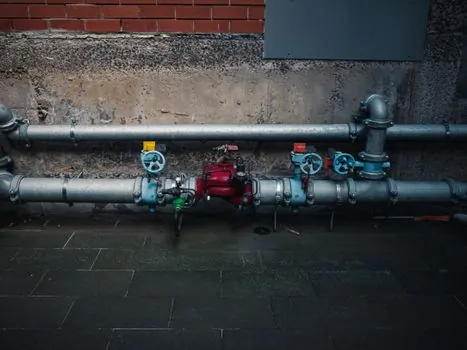
For a trunnion ball valve in a remote deep-shaft or offshore location, total cost of ownership favors premium designs even when the purchase invoice is 2 to 3 times the Chinese mid-tier alternative, because one unplanned shutdown event can erase the entire lifetime saving on cheaper units [S3]. Spare-part consolidation across sister plants, single-vendor standardization, and pre-staged seat-and-seal kits are documented as the most under-priced TCO levers, with operators routinely reporting 20 to 40 percent reductions in mean-time-to-repair after standardization [S1][S2]. For projects with fewer than 20 valves on similar service, a two-piece or three-piece standard-port floating unit is usually the right pick; above 50 valves in critical service, the trunnion three-piece with full-port bore and electric actuation tends to dominate TCO over 15 to 20 year horizons [S2][S3][S5]. Closing signal: watch LNG terminal sanction announcements in Asia Pacific through 2027 and the next round of Middle East low-emission valve regulations, both of which will reset premium-vs-standard TCO premiums across the floating and trunnion segments.
The underlying component specifications are covered under total station.
This topic is covered further in Shotcrete Machine Selection for Concrete Work: Output, Process, and Mobility Map.