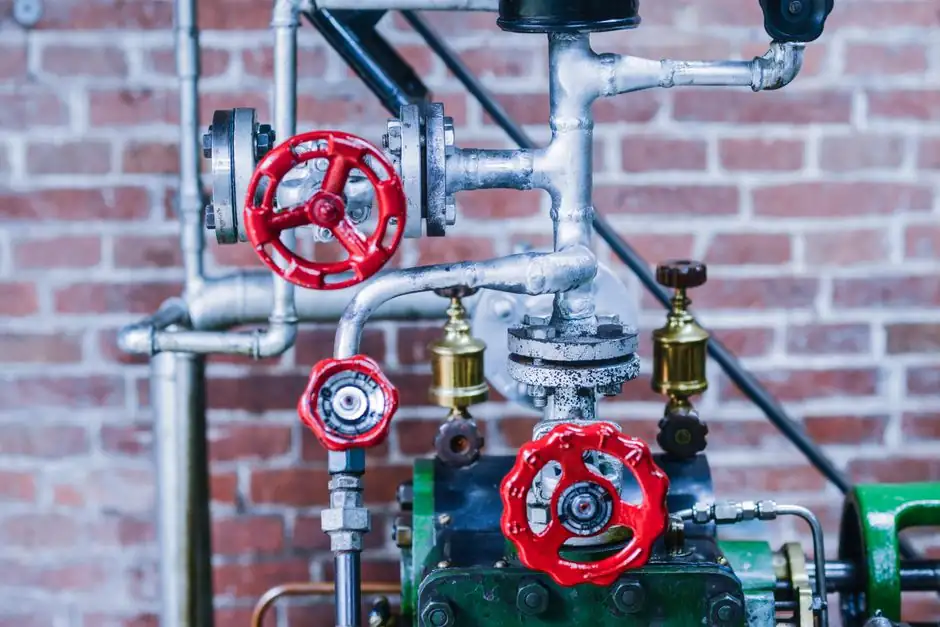
A ball valve is a quarter-turn rotary valve whose spherical closure element aligns a central bore with the pipeline to permit flow, then rotates 90 degrees to block it, delivering fast shut-off with full-bore pressure loss limited to the equivalent pipe length [S1][S4].
Standard soft-seated variants meet API 598 Grade 1 shut-off with bubble-tight leakage, while metal-seated versions extend usable temperature and tolerate abrasive slurries where PTFE would fail [S1][S4]. Selection centres on body style (one-piece, two-piece, three-piece), seat material, port geometry, and actuation method, with floating and trunnion constructions suited to different pressure classes [S3].
Core Advantages of Quarter-Turn Ball Valves
Ball valves deliver a 90-degree open-to-close cycle, giving operators a fast shut-off response that hand-operated gate and globe valves cannot match because multi-turn stems require many rotations to traverse the full travel [S1][S7].
Full-bore geometry aligns the bore diameter with the inner pipe diameter, so the through-path behaves like a straight pipe section and minimises pumping losses, a property that benefits long liquid and gas runs where each equivalent length of restriction costs energy [S1][S5].
Sealing performance reaches API 598 Grade 1 (bubble-tight) on soft-seated units and remains reliable across gases, liquids, slurries, and corrosive media when the body, ball, and seats are specified in stainless steel, carbon steel, alloy, or special alloys [S1][S3]. A compact envelope, with smaller face-to-face dimensions than gate or globe valves of the same line size, reduces piping footprint in skid packages and offshore modules [S1].
Key Limitations and Failure Modes
Ball valves exhibit poor throttling behaviour because partial opening exposes the soft seat to high-velocity flow, accelerating seat erosion and shortening service life; this is the single most cited weakness across manufacturer guidance [S1][S2].
Rapid closure in long liquid columns can generate water-hammer transients, and standard PTFE seats are generally rated near 200 degrees C, above which metal seats, Peek, or graphite are required to retain sealing integrity [S1][S4]. Trunnion and floating designs diverge in pressure handling: floating balls depend on downstream seat loading, while trunnion-mounted balls lock the ball on fixed pivots to reduce seat wear in high-pressure and large-diameter service [S3]. The lever position also gives a clear visual indication of open or closed state, parallel for open and perpendicular for closed, reducing the chance of an operator misreading a partially closed valve as fully shut [S4].
Ball Valve vs Gate, Globe, and Butterfly Options
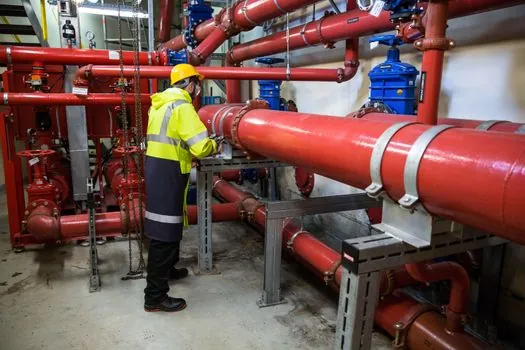
Against gate valves, ball valves win on cycle speed and footprint but lose on bi-directional sealing durability and large-size cost, since gate valves remain a lower-cost isolation choice in water distribution and power-plant cooling lines above DN300 [S1].
Against globe valves, the trade-off reverses: globes are designed for modulation with a contoured plug and seat, whereas ball valves are shut-off devices whose seat geometry erodes under sustained partial flow, so process control loops continue to favour globes despite higher pressure drop [S1][S2][S6]. Against butterfly valves, ball valves carry a price premium but offer tighter shut-off, higher pressure classes, and broader chemical compatibility, particularly when full-bore drainage or piggability is required [S1][S6]. For non-return duty, ball valves are not a substitute for electric ball valve check functions either; a swing, lift, wafer, or dual-plate check valve automatically prevents backflow on pump discharge, a job a manual or actuated ball valve cannot perform without a control signal and power [S3].
Selection Criteria, Materials, and Actuation
Specify the seat first: PTFE for general chemicals below roughly 200 degrees C, metal-to-metal for high temperature, abrasive slurry, or fire-safe service per API 607, and Peek or graphite for sour service to NACE MR0175 limits where the research confirms the standard applies [S1][S3][S4].
Match body construction to maintenance strategy: three-piece bolted bodies allow in-line seat and seal replacement without cutting the valve out of the line, while one-piece and two-piece designs lower cost but require line disconnection for service [S3][S4]. Port choice is a hydraulic decision: full port preserves the pipe bore, reduced port saves weight and cost at the price of a small added flow loss, and V-port or segmented balls are the only real options when throttling accuracy is mandatory [S3]. End connections (threaded, flanged to ASME B16.5, butt-weld, or socket-weld) must align with the piping class and the relevant ASME B16.34 valve specification for the design pressure-temperature envelope. For automated plants, pneumatic, electric, or hydraulic actuators add position feedback and ESD capability, and the lamps and light fittings on the local control panel usually mirror the valve's open-closed state to give operators a redundant visual check [S4].
Typical Applications and What Ball Valves Are Not For
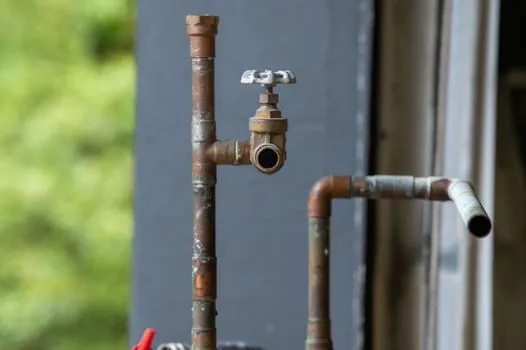
Ball valves dominate oil and gas transmission, chemical processing isolation, water treatment headers, and LNG or cryogenic service, where fast shut-off, low leak rate, and a compact envelope deliver the best life-cycle cost [S1][S3].
They are not the right choice for continuous flow modulation (use a globe or control valve), for processes that demand a globe's inherent flow-turning geometry, or for installations where water-hammer risk cannot be mitigated with slow-closing actuators, where a butterfly or globe may be safer despite higher pressure loss [S1][S2][S6]. In piggable pipelines, a full-port ball valve also acts as part of the pipeline geometry rather than an obstruction, which is a deliberate selection criterion for refined product and multiproduct lines [S1].
Standards, Sourcing, and Practical Trade-Offs
Design and test references for ball valves include API 6D for pipeline valves, API 598 for valve pressure testing and leakage classification, API 607 for fire-safe soft-seated units, ASME B16.34 for pressure-temperature ratings, and NACE MR0175 for sour service materials, with ISO 5211 governing actuator mounting interfaces [S1][S3][S4].
For procurement teams evaluating Asian supply chains, CNC machining sourcing from China covers tolerance, lead time, and supplier-qualification trade-offs that apply directly to valve body and ball machining, since the same multi-axis turning and milling capacity that produces precision ball bearing races also produces valve balls to ASME B16.34 tolerances. On packaging and process skids where valves are bundled with geared actuators, the gearbox selection for packaging lines map of torque, backlash, and washdown rating is the right companion read because quarter-turn actuator sizing depends on the same torque and service-life math. Watch for 2026 second-half API 6D revision commentary and rising demand for fire-safe and low-emission certified ball valves in hydrocarbon service as the next verifiable signal for spec changes in this category.