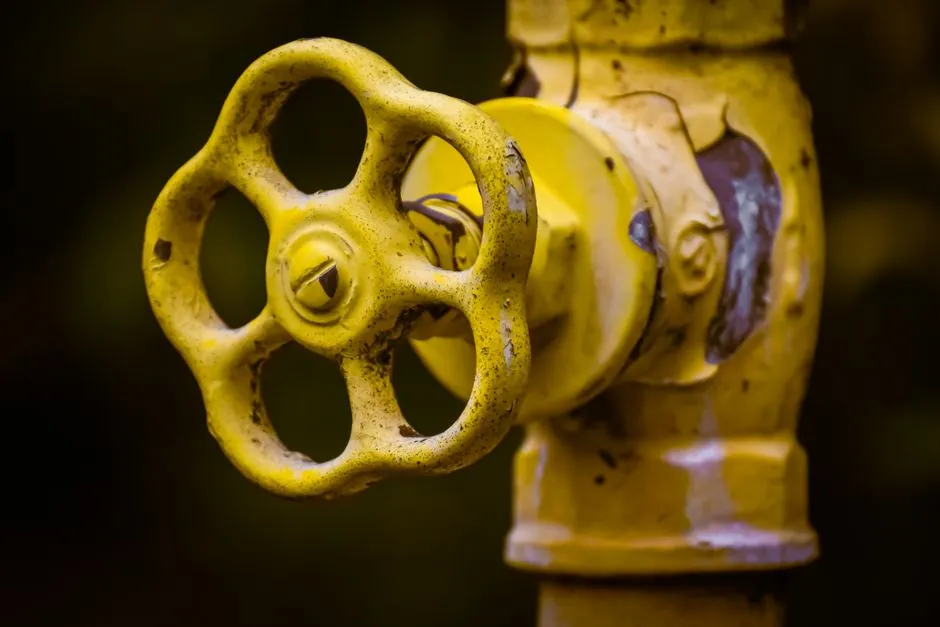
Ball valves are classified on at least six independent axes at once, including body construction (cast vs forged), ball support (floating vs trunnion-mounted), assembly (side-entry, top-entry, three-piece, fully welded), bore (full vs reduced), seat (soft vs metal), and actuation (manual, gear, pneumatic, electric ball valve, hydraulic) [S4][S5].
Engineers select by aligning those axes to API 6D for petroleum pipeline service, API 608 for metal flanged or threaded ball valves, and ANSI/FCI 70-2 Class VI for bubble-tight shutoff, rather than picking a single "type" name [S1][S4].
Body Construction and Ball Support: Floating vs Trunnion
A floating ball valve holds the ball only on the stem side; line pressure pushes the ball downstream into the seat, so differential pressure does the sealing work and operating torque rises with size and class [S4]. Trunnion-mounted designs fix the ball on upper and lower trunnions, so seats carry the load and stem torque stays low even at Class 1500 and 2500 ratings [S4].
Trunnion 2-piece bodies are commonly produced in NPS 2 to 16, Class 150 to 1500, while 3-piece trunnion bodies extend to NPS 48 and Class 2500 for pipeline isolation [S4]. Floating 1-piece and 2-piece bodies cover smaller isolation duties from NPS 1/2 upward and are dominant in HVAC branch lines and residential plumbing [S4][S5].
Assembly Architecture: Top-Entry, Side-Entry, Three-Piece, Welded
Top-entry ball valves allow the ball, seats, and stem to be removed vertically without breaking the line, which is the defining maintenance advantage in continuous oil, gas, and power service [S2]. The design uses a double-inclined sealing surface with the ball bore offset about 5° from the ball center and the body flow-port large end offset 3° to 5° from the body centerline, so a compression spring in the stem self-compensates for wear [S2].
Side-entry bodies split on a plane perpendicular to the pipe and are the conventional cast or forged configuration; three-piece bodies clamp the ball between two end caps for easy seat replacement; fully welded bodies are specified for buried and subsea pipelines to eliminate flange leaks [S4]. Soft seats are typically embedded in a metal seat ring, then backed by an inner metal ring to form a metal/polymer/metal sandwich that resists cold flow and erosion [S2].
Bore, Seat Material, and End Connection

Full-bore valves match the ball bore to the pipe ID for pig passage, low Delta-P, and clean-in-place service, while reduced-bore valves step the bore down one or two NPS sizes to cut mass and cost where full flow is unnecessary [S4]. Soft seats using PTFE and related polymers deliver ANSI/FCI 70-2 Class VI zero-leakage shutoff in compatible pressure-temperature envelopes; metal-to-metal seats are mandatory above roughly 400°C, with solids in the media, or in fire-safe API 607 duties [S1][S4].
End connections are flanged, butt-welded, or threaded on small-bore forged units, and the connection standard must match the pipeline pressure class and material of construction [S4]. Forged carbon steel and stainless bodies dominate high-pressure hydrocarbon duty; brass and bronze appear in residential and HVAC trim; duplex and super-duplex appear in seawater and offshore service where NACE MR0175 sour service also applies [S4].
Operation, Actuation, and HVAC Service Mix
Manual levers drive small ball valves through 90° in under 1 second; gear operators, pneumatic, electric, and hydraulic actuators are added when torque, remote operation, or fail-safe positioning is required [S1][S5]. In HVAC, ball valves serve as fast on/off isolation on branch lines, equipment isolation, and water-system tie-ins, while globe valves carry the throttling duty and electric control valves modulate 0–10 V or 4–20 mA loops on AHU and FCU coils [S5].
For procurement, specifying a manual ball valve requires lever vs gear, full vs reduced bore, end connection, seat material, body material, and pressure class on the same line item; dropping any one axis creates ambiguity, because one physical valve can simultaneously be a forged, side-entry, trunnion, full-bore, soft-seated unit or any other combination [S4].
Comparison: Main Ball-Valve Configurations on Four Selection Criteria
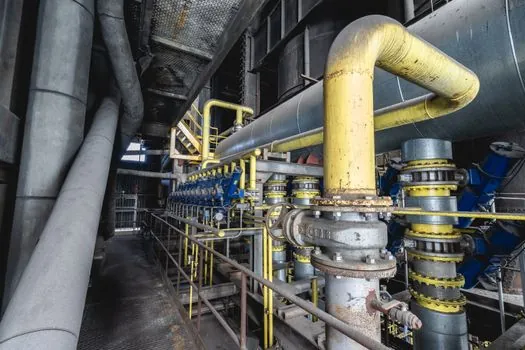
Floating soft-seated side-entry suits low-pressure, clean, small-bore service and is the cheapest option; trunnion soft-seated side-entry handles mid-to-high pressure hydrocarbon lines with lower torque; top-entry trunnion adds in-line maintenance for refineries and power plants at higher unit cost; fully welded trunnion is reserved for buried and subsea pipelines where flange leak risk dominates [S2][S4].
On shutoff tightness, all soft-seated variants target ANSI/FCI 70-2 Class VI (zero measurable leakage), while metal-seated variants accept Class IV to V but gain fire-safe API 607 rating and high-temperature capability [S1][S4]. On actuation, the floating design needs lever effort scaled to size and class, so anything above NPS 2 Class 600 typically shifts to trunnion or to a gear/pneumatic/electric actuator to keep manual handling within ergonomic limits [S1][S4].
Limitations, Failure Modes, and Cross-Reference to Other Valves
Ball valves are not recommended for throttling because partial-open operation erodes the soft seat, and sustained dead-end closure with thermal expansion of the trapped fluid can raise body pressure to the seat rating, so double block and bleed (DBB) or pressure-relief trims are used in critical lines [S1][S4]. Gate valves share the on/off isolation role but take 10 to 25 handwheel turns and stop at Class IV (0.01% of capacity) leakage versus Class VI for soft-seated balls, so they win on large-diameter lines where actuation time and cost matter more than tightness [S1].
Butterfly and plug valves are also quarter-turn designs but trade Cv, pressure rating, and bubble-tightness for lower cost and lighter weight in large lines, which is why field shorthand calls the ball valve the default "quarter-turn" without further qualification [S3]. Related procurement maps for upstream and process buyers are collected in the mining equipment sourcing spec map and the industrial relay spec map for power generation.
Track the API 6D 26th-edition errata and the next IEC 61508 SIL-rated actuator datasheets from the major Chinese forged-valve exporters for the next selection-cycle update. Also watch for the 2026 round of API 607 fire-test retests on metal-seated trunnion bodies sized NPS 16 and above, where test labs have flagged seat-coefficient variability.
The underlying component specifications are covered under lamps and light fittings.