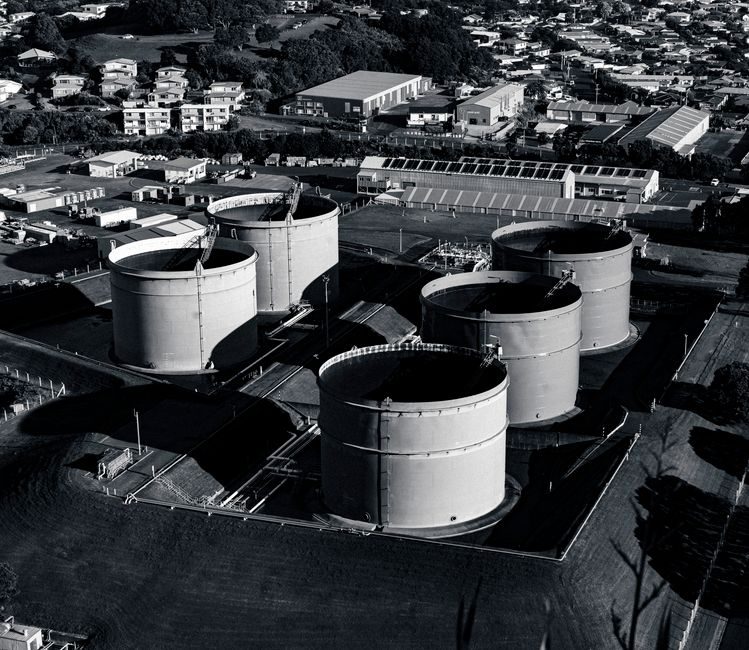
Industrial battery energy storage system (BESS) tenders in Q2 2026 are clustering around lithium iron phosphate (LiFePO4) cabinet footprints in the 1000 kW / 1.5 MWh to 2000 kW / 2 MWh band, with MOQ pricing on Made-in-China.com listed at US$0.15–0.18 per watt-hour as of 2026-05-30 [S3]. Cells and packs are almost universally LFP, the chemistry of choice for stationary storage above 100 kWh per cabinet, displacing NMC in new commercial and industrial (C&I) builds for thermal-runaway and cycle-life reasons.
TrendForce continues to publish a dedicated Lithium Battery and Energy Storage research stream covering cell pricing, ESS rack design and policy signals, with the page last indexed 2026-05-24 [S1]. The report series is the reference baseline for procurement teams benchmarking LFP cell spot prices, BMS reference designs and DC-block topologies against a rolling six-month average.
Cell Chemistry: Why LFP Now Owns the Stationary Stack
The case for LFP over NMC in stationary storage rests on three measurable advantages: thermal-runaway onset above 250 °C versus ~210 °C for NMC, cycle life typically 6,000+ cycles at 80% depth-of-discharge, and cobalt-free / nickel-free cathode bill-of-materials that insulates projects from the nickel-cobalt price band volatility flagged in the 2026 grid hardware outlook at Power Grid 2026: USD 487B 2031 Outlook, Hardware Spec Pivots, Sourcing Reality.
Sodium-ion cells remain a 2027+ watch-item for low-duty telecoms backup and small commercial racks under 100 kWh, but the 2026 tender book has not produced a confirmed grid-scale sodium procurement. For projects specified above 1 MWh per site, LFP remains the only chemistry with both UL 9540A large-scale fire-test data and bankable cycle-life warranties from tier-1 Chinese integrators such as SUNPAL [S3].
Cabinet Footprint and DC Architecture: 1000 kW / 1.5 MWh to 2000 kW / 2 MWh
The standard commercial-industrial BESS cabinet in mid-2026 is rated 1000 kW / 1.5 MWh to 2000 kW / 2 MWh with LiFePO4 cells, listed on Made-in-China.com at US$0.15–0.18 per Wh and 500,000 Wh MOQ [S3]. A second common configuration is the 5 MW / 5 MWh class containerised BESS, where the cabinet is replaced by a 20-foot ISO container holding eight 625 kWh LFP storage racks, with a 500,000 Wh MOQ at the same US$0.15–0.18 / Wh price band [S3].
Inter-rack DC connections increasingly use copper-aluminium composite (CAC) flexible busbars instead of pure copper cable, as supplied by Wuxi Rongfa Intelligent Technology for new energy vehicles, energy storage batteries, power plants, electric locomotives and high-speed rail [S2].
The CAC busbar is the quiet spec shift. Pure copper laminated busbars on a 1.5 MWh cabinet typically weigh 60–80 kg per phase and require silver-plated bolted joints to keep contact resistance below 30 µΩ; a CAC strip of equivalent ampacity drops that to 25–35 kg per phase, with the aluminium core carrying bulk current and a thin copper cladding on the contact face preserving the joint interface [S2]. For procurement, the lever is the copper content per MWh of installed cells, a metric tied directly to the Copper Supply Shortage 2026: Risk Vectors and Mitigation Levers discussion already in this stream.
Thermal Management: Liquid Cooling Becomes the Default Above 1 MWh
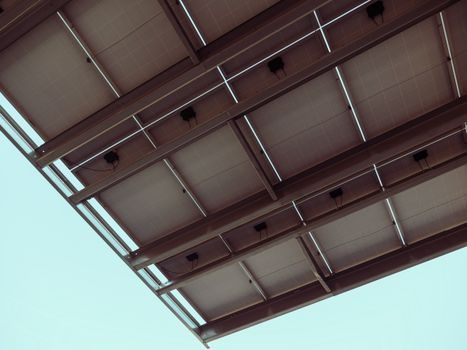
Liquid-cooled BESS cabinets were the show-piece category at InterBattery 2025 (COEX Seoul, 5–7 March 2025), with AVIC (China Aviation Optical-Electrical Technology) presenting rack-level coolant distribution units, immersion-compatible manifolds and quick-disconnect couplings specifically engineered for the new energy vehicle and ESS markets [S4]. The 2025 exhibition floor is the reference point for the 2026 liquid-cooling roll-out: integrators specifying 1 MWh+ cabinets now default to a 50/50 water-glycol loop at 15–25 °C supply, with each rack carrying its own CDU and a redundant pump per cabinet.
Air cooling still serves sub-500 kWh telecoms backup and small C&I racks, where the lifetime energy throughput does not justify the coolant-loop maintenance overhead. Above 1 MWh, however, the temperature delta across cells with air cooling exceeds 8 °C under peak charge, which forces a derating that no longer pays back. Liquid cooling keeps storage rack ΔT under 3 °C and unlocks continuous 1 C operation, which is the operating point most 2026 C&I BESS contracts are written to.
Who BESS Is For (and Who It Is Not For)
For: project developers building 1–20 MWh front-of-meter or behind-the-meter storage in 2026, microgrid integrators, EV fast-charging sites needing peak-shave capacity, and industrial plants aiming to arbitrage time-of-use tariffs where daily full cycles are expected. The 1.5–2 MWh LFP cabinet with CAC busbar and liquid cooling is the spec band that matches the duty cycle [S3][S2].
Not for: residential single-phase installs under 20 kWh, where a wall-mounted 5–10 kWh LFP pack with built-in hybrid inverter is the right product; remote off-grid telecoms sites under 10 kW continuous load, where the 1 C liquid-cooled architecture is over-spec; and any project where the duty cycle is less than one full cycle per week, because the LCOS math collapses at low utilisation. For these low-duty cases, a passively cooled 100–500 kWh cabinet on float charge is both cheaper and more reliable.
Sourcing Realities: MOQ, Lead Time and Tier-1 vs Tier-2
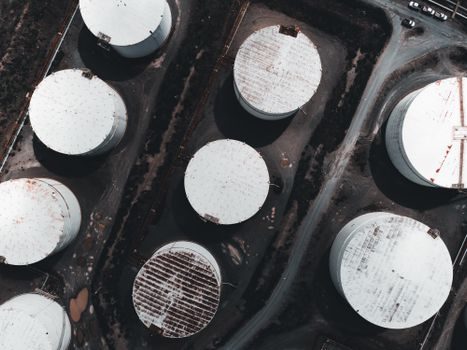
The Made-in-China.com 2026 industrial storage battery price index shows the indicative band at US$0.15–0.18 per Wh, with a 500,000 Wh MOQ — that MOQ alone is roughly US$75,000–90,000 of committed spend before a single cabinet ships [S3].
Lead time in Q2 2026 is 90–120 days ex-works China for tier-1 LFP cabinets, 60–75 days for tier-2. Containerised 5 MWh units add another 30 days for ISO certification and CSC plate stamping. Logistics cost is the swing factor: a 5 MWh container from Shanghai to Hamburg is in the US$28,000–35,000 range for 2026-Q2 sea freight, up from US$14,000–18,000 pre-2024, which is why a 2 MWh cabinet format is winning more European tenders where the project needs <2 MWh per node.
Standards, Fire Safety and Bankability Checklist
Any 2026 BESS procurement specification should call out the following four data points in the technical schedule, in this order: cell chemistry (LFP only, with UN 38.3 and UL 9540A large-scale fire-test certificates on file), cabinet-level UL 9540 / IEC 62619 compliance, BMS with Modbus TCP or IEC 61850 gateway for SCADA integration, and DC busbar spec naming the copper-aluminium composite construction with the copper-clad contact face [S2][S3]. Fire suppression is now standard as aerosol + water-mist hybrid inside the cabinet, with deflagration panels rated for 10 kPa overpressure relief on the roof.
For Korean-market projects, InterBattery remains the annual calendar anchor, with the 2025 edition drawing the AVIC-style connector and CDU supply chain to COEX Seoul [S4]. Korean fire code (NFPA 855-style spacing) currently requires 3 m clearance between 1.5 MWh+ cabinets unless they pass a full-scale unit-to-unit fire propagation test, which is why Korean tenders are favouring 1 MWh per-cabinet SKUs over the 2 MWh Chinese-standard format even at slightly higher cost per MWh.
Trackable Signals for the Next Two Quarters
Three signals are worth watching between now and end-Q3 2026: first, the next TrendForce Lithium Battery and Energy Storage research note release cadence (last index 2026-05-24) for any cell-spot-price reset below US$0.15/Wh [S1]; second, sodium-ion procurement RFPs from Korean utilities, which would mark the first utility-scale non-LFP chemistry buy; third, the announced InterBattery 2026 exhibition window — historically held in early March at COEX Seoul [S4] — where liquid-cooling CDU and CAC busbar suppliers are expected to refresh the 2025 product lines into 2026 production SKUs. Any of those three moving would reset the LFP / 1.5 MWh / liquid-cooled baseline described above.
For component-level specifications, see energy meter.