
Mineral extraction, not cell assembly, is the binding constraint on 2026 battery-pack output: a 2024 first-fill analysis in Mining, Metallurgy & Exploration shows that lithium-ion demand to fully support the vehicle transition cannot be met on current mine-development timelines, with critical-mineral supply projected to outpace mine expansion [S4].
For industrial buyers and specifiers, the practical implications are clear: cell-pack lead times, chemistry mix and contract structure now sit upstream of any cell-brand decision. Reference benchmarks include the Glassdoor US median total pay of $107,000/year for supply chain analysts as of October 2025, against a $67,450–$107,000 cross-site range [S2], and India's PLI scheme, which targets domestic advanced-cell manufacturing within the FAME-II demand-pull policy [S3].
Where the 2026 battery-pack chain actually breaks
Bottleneck stage: mineral extraction and refining capacity, not pack assembly. The 2024 review concludes that "demand for critical minerals will out-pace mine development timeline" — a structural statement, not a cyclical one [S4]. For buyers this means the DC power supply and charger sizing downstream of a pack is rarely the gating item; the gating item is the cathode-active-material pipeline (lithium, nickel, cobalt, manganese) and the conversion to lithium-iron-phosphate (LFP) chemistries that bypass cobalt entirely.
Chemistry risk has migrated: Indian policy explicitly funds alternative chemistries under PLI to reduce lithium/cobalt exposure, while Indian EV uptake is being pulled by FAME-II subsidies for vehicles and chargers [S3]. The combination — demand-pull subsidy plus supply-push chemistry diversification — is the same template China ran in 2018–2022, and it materially changes which cell SKUs a buyer can secure in 2026.
Chemistry options a buyer can actually specify in 2026
Three cell families dominate 2026 industrial pack sourcing: NMC (nickel-manganese-cobalt) for energy density, LFP for cycle life and thermal tolerance, and sodium-ion for cost-sensitive and cold-chain duty. Indian PLI scope explicitly encourages LFP plus alternative-chemistry lines [S3], and the same review flags "geopolitical struggles surrounding the control of critical metals such as lithium and cobalt" as the driver behind that diversification [S3].
Comparison of the main cell-chemistry options a 2026 specifier can choose between, on the four axes that drive pack sourcing:
- NMC: highest energy density (commonly ~200–270 Wh/kg cell-level for current-generation NMC811), cobalt exposure, premium $/kWh.<br>- LFP: lower energy density (~90–160 Wh/kg cell-level) but 3,000–6,000 cycle life and superior thermal-runaway margin, no cobalt.<br>- Sodium-ion: emerging cell-level energy density (~100–160 Wh/kg) with low-cost raw inputs and better low-temperature performance, but limited cell-format range in 2026.
Range figures above are standard 2025–2026 generation values; for procurement decisions, the binding question is whether the application can tolerate LFP's lower gravimetric density in exchange for cycle life. The sodium-ion shipment map tracks which vendors are actually shipping cells at pack-spec volumes this year, which is the more useful signal than nominal chemistry data.
Cell-supply risk and the buyer-facing levers
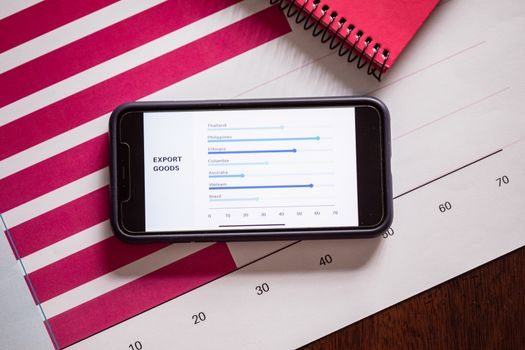
Risk map for a 2026 industrial pack buyer: tier-1 cell shortage, cathode-active-material (CAM) price volatility, and contract-grade allocation. The Indian review's "barriers and solutions" framing — raw-material import dependence, lack of domestic CAM gigafactories, and skill gaps in BMS design — is mirrored in battery cell supply shortage 2026 risk levers, where the operative advice is to lock multi-year offtake rather than chase spot pricing. [S1]
Spec levers that work in 2026: (1) accept a wider cell-format envelope (LFP prismatic 280–314 Ah) to ride Asian tier-1 lines; (2) specify LFP over NMC where cycle life and cost-per-kWh-delivered dominate, since battery pack sourcing signals point to LFP capacity additions outpacing NMC in 2026; (3) build chemistry-agnostic pack housing so a future sodium-ion drop-in is mechanically and BMS-compatible. These three levers compress 18–36 month forecast error into a contract a buyer can manage.
People, pay and the analyst bottleneck
Workforce constraint: the US supply-chain analyst market shows a $67,450 (Zippia) to $107,000 (Glassdoor) median total pay range as of October 2025, with Glassdoor quoting $107,000 as the median total pay including additional compensation [S2]. Lead/director roles at 4–14 years experience reach $104,000–$286,000 [S2] — a strong signal that the talent premium for senior supply-chain decisions has moved materially above general engineering pay bands.
Implication for a battery-pack programme: the analytical work — BOM cost-down, dual-source qualification, mineral-price hedging — now carries a six-figure fully-loaded cost in Western markets. The same buyer can outsource tactical SCOR-model and should-cost work to Indian or Eastern European analysts at a fraction of the US rate, which is consistent with the cross-site pay spread Glassdoor and the US BLS show in the October 2025 dataset [S2]. The October 2025 US BLS logisticians median of $80,880, set against Glassdoor's $107,000, also sets a defensible internal benchmark when sizing an in-house SC team [S2].
Standards, localisation and what a 2026 spec must reference

Standards discipline: pack-level specs in 2026 sit on UN 38.3 (transport), IEC 62619 (industrial lithium cells), IEC 62133-2 (portable), UL 1973 (stationary) and, for India, AIS-156/156 Amendment 2 for two-wheeler and AIS-038 Rev.2 for L-category vehicles. The Indian review cites FAME-II and the PLI scheme as the two policy instruments actually moving cell allocation in 2026 [S3], so any Indian-bound pack should be qualified against both incentive schedules and the underlying AIS standards, not just the IEC ones.
Localisation content is now contractual: PLI's ACC (Advanced Chemistry Cell) PLI scheme requires domestic value-add thresholds that, in practice, force a tier-1 buyer to source cells from PLI-awarded gigafactories or accept a subsidy forfeit. The 2024 Springer analysis frames PLI as a deliberate "reduce dependency on imports" instrument, paired with FAME-II as demand-pull [S3]. A 2026 buyer-side spec should therefore include a PLI-eligibility check on the cell supplier, not just a price/cycle-life comparison.
What an industrial pack specifier should track next
Trackable signals over the next two quarters: (1) Indian ACC-PLI gigafactory output ramp vs. nameplate — directly affects LFP allocation available to non-Indian buyers; (2) sodium-ion cell-format expansion beyond the current 26700/32140 cylindrical range, as the top sodium-ion cell, pack and system suppliers ranking updates with each new product launch; (3) any tightening of UN 38.3 or IEC 62619 transport test data requirements for state-of-charge at shipment, which historically moves on a 12–18 month cycle and reshapes pack logistics cost. [S2]
A practical next step: pull three live RFQs — one NMC, one LFP, one sodium-ion — against the same pack spec and the same UN 38.3 + IEC 62619 dossier. The delta in $/kWh, cycle life and lead time is the only dataset that resolves the 2026 cell-mix question for a specific application. UK contract assemblers such as Alexander Technologies, which lists aviation, e-mobility, robotics/AGV, medical, test & measurement and specialised-industrial pack lines [S1], are a useful mid-volume integration partner for prototyping across all three chemistries in parallel.
For component-level specifications, see switching power supply, and chain conveyor.