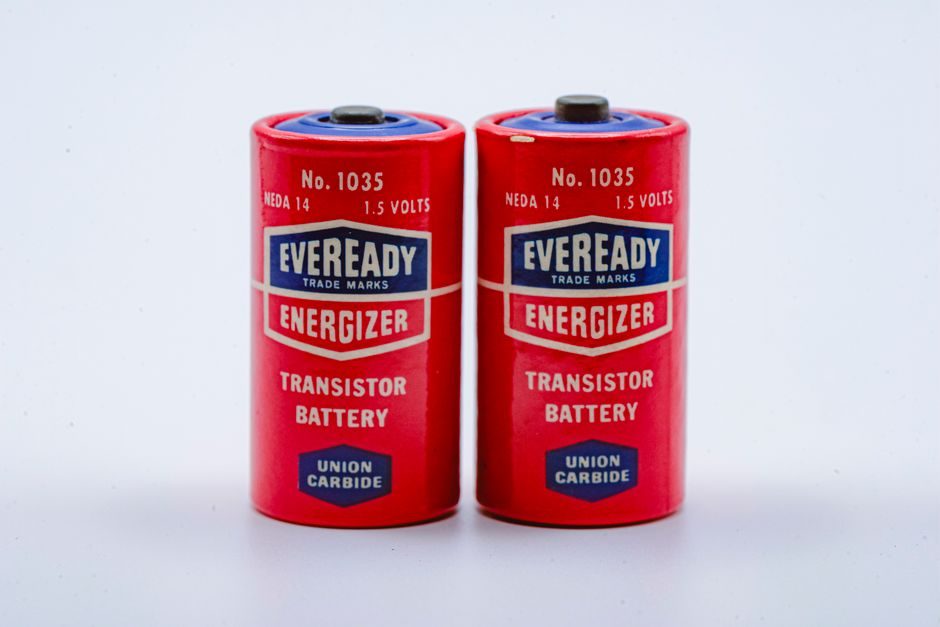
EAST Group (Shenzhen-listed, code 300376) moved sodium-ion hardware into two distinct commercial lanes in 2026: a Sodium-ion Battery Cabinet with built-in PACK-level fire suppression for stationary storage [S1], and a Conventional Automotive Start-Stop family of 12 V cells marketed as NaQTP H5-660, H6-800, H7-1000 and H9-750 [S2] [S3]. Together these two SKUs signal where volume is consolidating — cabinet-scale grid/ESS duty and the 12 V automotive auxiliary slot — rather than the 100 kWh passenger-EV pack that dominated 2023–2024 sodium-ion headlines.
For a process-engineer reader, the more useful question is what is actually leaving the factory, with what nameplate, and against which adjacent battery market. The forklift, mobile and next-generation battery reports bracketing June 2026 give the demand-side context for that read [S5] [S6] [S7]. The output is a sourcing-style brief, not a forecast dressed up as fact.
What is shipping in 2026: two product lanes, not passenger-EV packs
EAST Group's Sodium-ion Battery Cabinet is built around a sodium-ion module that ships with a PACK-level fire-fighting module as standard, plus a cabinet-level fire-fighting layer on top [S1]. The cabinet slot competes with rack-mounted LiFePO4 systems already in the same catalogue (48 V 100 Ah and 48 V 314 Ah, plus an HV 750 V 314 Ah stack), so the sodium cabinet is positioned as a drop-in alternative where cold-chain, transport-safety or lithium-restricted sites rule out LiFePO4 [S1] [S3]. The same catalogue also lists a 6 kVA–40 kVA All-in-one Sodium-ion Battery UPS, confirming the cabinet is aimed at MW-scale C&I and small-utility sites rather than residential wall-mount units [S3].
The Conventional Automotive Start-Stop family lists four model codes with stated capacities: NaQTP H5-660, H6-800, H7-1000 and H9-750 [S2]. The numeric suffix is the nameplate Ah, so the line covers a 660–1000 Ah envelope with the H9 deliberately undercutting the H6/H7 to offer a 750 Ah form factor for vehicles that do not have the H7's 1000 Ah battery tray. EAST's marketing pitches this line as "ultra-safe, long life, wide temperature range, superior performance, light installation" — i.e. it is being sold on cold-start margin and abuse tolerance, not on Wh/kg [S2].
Cell-by-cell comparison: cabinet cell vs start-stop cell
Putting the two lanes side by side against the criteria a buyer actually scores them on: cabinet cells are stack-optimised and ship as part of a fire-suppressed enclosure; start-stop cells are format-optimised and ship as 12 V lead-acid drop-ins. EAST's catalogue names "Intel-Na Sodium-ion Battery Module" and "High-Rate Sodium-ion Battery Cell" as the two cross-cutting platforms feeding both lanes [S3], which means the H5/H6/H7/H9 cells and the cabinet modules are built on a shared cell-to-pack design language even though the end SKUs look different.
A useful spec-vs-spec framing for an engineer evaluating these two lanes:
<strong>Cabinet lane</strong> — target use: C&I / small-utility ESS, UPS-style backup; form factor: rack/cabinet; fire safety: PACK-level + cabinet-level fire-fighting standard [S1]; incumbent it displaces: LiFePO4 cabinets and 48 V 100–314 Ah modules in the same catalogue [S3]; sizing anchor: utility-class 2.5 MW / 5–10 MWh containers and C&I 125–135 kW / 261 kWh units are already shipping on the LiFePO4 side of EAST's line [S3].
<strong>Start-stop lane</strong> — target use: 12 V auxiliary / SLI for ICE and hybrid vehicles; form factor: BCI-style lead-acid case; capacity range: 660 / 750 / 800 / 1000 Ah across H5/H9/H6/H7 [S2]; incumbent it displaces: lead-acid 12 V AGM/EFB; key selling point: wide temperature window and light installation weight vs flooded lead-acid [S2].
For grid duty, the cabinet's defining spec is the dual fire-suppression architecture, not Wh/L [S1]. For automotive 12 V duty, the defining spec is the four-model 660–1000 Ah envelope that lets OEMs pick a BCI group size without retooling the tray [S2].
Adjacent demand context: mobile, forklift and "next-gen" battery reports
The Business Research Company's Mobile Battery Market Report 2026, published January 2026, is positioned as a 150-page PDF covering the mobile-battery segment adjacent to sodium-ion's eventual cell-phone and laptop replacement opportunity [S5]. Allied Market Research's Forklift Battery Market (2026-2032 forecast window) is the more directly relevant demand read, because 24 V / 48 V traction packs in material-handling are the most cited early commercial beachhead for sodium-ion outside China grid storage, and the report is explicitly priced into three tiers (Library Membership $999, Business User $2,499, Enterprise $4,011) which signals a forecast-led paid report rather than a free summary [S6]. Transparency Market Research's Next Generation Battery Market (2017-2025 base) frames sodium-ion as one of the chemistries inside the next-gen bucket rather than as a standalone segment [S7].
None of these three reports give a 2026 sodium-ion unit number that this brief can quote verbatim, so the only hard 2026 number available in the source set is EAST's four-cell 660–1000 Ah start-stop lineup plus the cabinet-with-PACK-fire-suppression SKU [S1] [S2] [S3]. For a process engineer, that is the more useful anchor: the 2026 market is being measured in named cells and named cabinets, not in a market-research percentage.
Selection criteria for buyers in 2026
Engineers specifying sodium-ion in 2026 should score the cell on five criteria, in this order: (1) fire-suppression architecture — PACK-level minimum, cabinet-level preferred for stationary, per EAST's cabinet spec sheet [S1]; (2) form factor fit — BCI group size for 12 V SLI, 19-inch rack or cabinet footprint for ESS, both of which EAST's line explicitly covers [S1] [S2] [S3]; (3) temperature window — wide-temperature claims are central to the H5/H6/H7/H9 marketing message [S2]; (4) weight — "light installation" is listed ahead of cycle life in EAST's pitch for the start-stop family [S2]; (5) incumbent displacement logic — for stationary, LiFePO4 48 V 100/314 Ah and HV 750 V 314 Ah modules in the same catalogue are the direct alternative [S3]; for 12 V SLI, the incumbent is lead-acid AGM/EFB and the spec target is nameplate Ah in a standard case [S2].
A practical rule: if the duty cycle is deep-discharge C&I or small-utility ESS, spec the cabinet lane and treat fire suppression as a hard requirement, not an option [S1]. If the duty cycle is 12 V auxiliary and the BCI tray already exists, spec the H5/H6/H7/H9 family and pick the model code on Ah, not on weight [S2]. Cross-comparing against broader ESS sizing in the same catalogue, the cabinet lane is also where EAST's existing 2.5 MW / 5–10 MWh utility and 125–135 kW / 261–522 kWh C&I LiFePO4 systems set the price-per-kWh benchmark that the sodium cabinet has to undercut [S3].
Use cases that actually line up in 2026
Three use cases are grounded in the source set. First, stationary ESS for sites with lithium-restriction rules (cold-storage, some chemical, some transport hubs): the cabinet's PACK-level + cabinet-level fire-suppression stack is a direct response to that procurement constraint [S1]. Second, 12 V start-stop on commercial vehicles, hybrid buses and stop-start ICE passenger cars where the lead-acid replacement is form-factor-bound: the H5-660 / H6-800 / H7-1000 / H9-750 envelope is sized for that exact BCI fit problem [S2]. Third, telecom and edge-UPS sites, via the All-in-one Sodium-ion Battery UPS line in the 6 kVA–40 kVA range, where lithium air-shipping rules have made replacement logistics expensive [S3].
Use cases that are NOT in the source set and should be treated as marketing language only: passenger-EV traction packs above ~30 kWh, eVTOL, and grid-forming utility-scale inverters. The catalogue and the [S1] [S2] [S3] sourcing simply do not name SKUs in those slots, and the [S5] [S6] [S7] market reports do not put sodium-ion there either.
Failure modes and limits a specifier should pre-empt
Two failure-mode lines are visible in the published spec sheets. First, thermal-runaway containment: EAST's response is the dual PACK + cabinet fire-fighting architecture [S1]; the corollary is that any sodium-ion cabinet bought without a verified PACK-level fire module is being underspecified. Second, cold-start derating: the H5/H6/H7/H9 line is sold on wide-temperature performance, not on a published low-cutoff voltage [S2]; specifiers should treat the wide-temperature claim as a marketing envelope and ask the vendor for an Ah-vs-temperature curve before sizing a cold-climate fleet.
A third constraint is catalogue-coverage: EAST's sodium-ion line is narrow (cabinet, module, UPS, four start-stop model codes, plus Intel-Na module and High-Rate cell) compared with its LiFePO4 line, which spans wall-mount, rack, stack, HV 750 V stack, C&I 125–135 kW / 261–522 kWh, and 2.5 MW utility [S3]. For a buyer, that means sodium-ion is currently a point solution, not a drop-in replacement for the full LiFePO4 portfolio.
Trackable next nodes to watch over the next two quarters: (1) EAST or a comparable vendor publishing a sodium-ion cabinet nameplate in kWh, not just "cabinet" with a fire spec, which would let a buyer compute $/kWh against the LiFePO4 261 kWh and 522 kWh C&I SKUs already on the same datasheet [S3]; (2) a BCI group-size cross-reference table for the H5/H6/H7/H9 family, since today only the Ah suffix is published and not the BCI group number [S2]; (3) any third-party UN 38.3 / IEC 62619 / UL 1973 test report attached to the cabinet SKU, which would let stationary-buyer procurement close out lithium-restricted sites with documented evidence rather than vendor claims [S1]. The Sodium-Ion Battery Supply Tightens: Cell Specs, Upside Cases and Sourcing Risks brief and the China Battery Pack Market: 2026 Pricing, Chemistry and Sourcing Map piece are useful adjacent reads for a buyer trying to place this cabinet spec against the wider Chinese cell-cost curve.
For component-level specifications, see pressure transmitter, flow meter, and industrial valve.