
Specifying a filling line for chemical shipping is a four-axis decision, not a single purchase: wetted material, dosing accuracy, container geometry, and area classification. A 316L stainless steel or PTFE-lined piston filler with ±0.5% volumetric accuracy is the common baseline for aqueous acids and solvents below 5,000 cP, while a gravimetric (load-cell) drum and IBC station with ±400 g on a 1,000 L tote is the working solution for bulk shipping [S1][S2][S4][S7].
Volatile solvents and oxidizers push the spec further: ATEX-rated components, inert gas blanketing, and zero-drip sealed nozzles become non-negotiable, not optional. Powdered and granular products (catalysts, pigments, additives) route instead to servo auger or net-weigh scales with dust-tight housings and servo feedback [S2].
Wetted Material Compatibility: 316L, PTFE, Hastelloy
316L stainless steel is the workhorse for most aqueous acids, alkalis, and solvents in chemical shipping, with PTFE (Polytetrafluoroethylene) specified for highly reactive or halogenated formulas; Hastelloy and PEEK show up in the most aggressive service where 316L pitting or stress corrosion is documented [S2][S4]. Volumetric cup, piston, and pump chambers all share this material logic, because a single incompatible seal can contaminate an entire batch and trigger a recall. Sealing systems must be designed to prevent both external leak paths and fugitive emissions into the operator's breathing zone, which is why most OEM datasheets for chemical-service fillers explicitly call out EPDM, FKM (Viton), or FFKM (Kalrez) static seals rather than nitrile [S2]. For drum and IBC filling, the lance and nozzle assembly typically upgrades to PTFE-lined or Hastelloy wetted parts even when the rest of the skid is 316L, because the lance is the part that dips into returned or part-used containers and sees the highest contamination risk [S6][S7]. A working reference for the broader equipment class is the filling machine category entry.
Accuracy Bands and Dosing Method by Container
Pharmaceutical and high-purity reagent applications demand ±0.1% or tighter; industrial chemicals in shipping typically accept ±1% to ±2% volumetric, which a piston or flow-meter filler holds comfortably across the 10 mL to 50 L range per head [S1][S4]. For drum and IBC service, gravimetric dosing with load cells beats volumetric on accuracy (e.g. ±400 g on a 1,000 L IBC, per published IBC system guidance) because the actual delivered mass is what shows up on the bill of lading, not the displaced cylinder volume [S7]. The relevant weighting hardware is detailed under filling weighing scale for net-weigh and check-weighing configurations.
Viscosity and Pump Selection for Chemical Liquids

Viscosity drives pump selection more than any other single property: peristaltic pumps (product contacts only the tubing, no contamination, easy changeover) suit aggressive chemicals and shear-sensitive reagents; piston fillers handle medium viscosity pastes and gels at ±0.5% accuracy; progressive cavity (mono) and twin-screw pumps move extremely high-viscosity or abrasive products with minimal pulsation [S1][S3]. For foaming surfactants and solvents, overflow or pressure fillers that fill to a consistent level rather than a fixed volume are typically specified, because volumetric dosing on a foam-prone product over-fills the headspace and leaks on capping [S1][S5]. Carbonated or oxidizer-laden products need isobaric (counter-pressure) filling with snift valves to control CO2 breakout, and any volatile or flammable product requires ATEX explosion-proof electrical enclosures and vapor recovery, not just an XP motor [S3][S4]. A working reference for the chemical-handling side of the line is the chemical material and chemical reagent category entries, which scope typical container and compatibility requirements.
Container Geometry and Line Layout: Inline, Rotary, Monobloc
Container shape and neck design drive nozzle and conveyor choices as much as viscosity does: wide-mouth open-top pails need a bottom-up fill nozzle to reduce foaming and splashing, narrow-neck drums need a bung-hole targeting lance with vapor capture, and IBC totes require a heavy-duty platform with load cells rated for 1,500 kg or higher plus an extended lance that reaches the tote's fill port [S6][S7]. For the line architecture, rotary monoblocs (fill plus cap integrated) give the highest throughput and a small footprint, inline systems give the most flexibility and easiest changeover, and dedicated drum or IBC stations sit beside the main line as a separate skid [S5]. A useful framing for sales and engineering review is: rotary for speed, inline for flexibility, piston for thickness, overflow for appearance, flow-meter for highest accuracy, monobloc for integrated efficiency [S5]. Where high viscosity adhesives or two-part epoxies ship out as part of the chemical product line, a piston or meter-mix-dispense (MMD) head replaces the standard filler; the operating principle is covered under chemical anchor type dispensing hardware, which often shares the same pump bodies [S8].
Safety, Area Classification, and Regulatory Gates
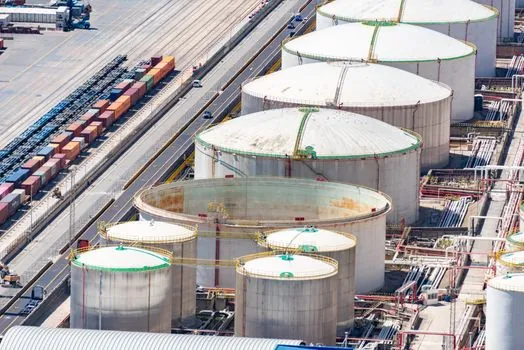
Three safety gates are non-negotiable for chemical shipping fillers: ATEX or IECEx zone rating matched to the product's flash point and vapor density, leak-tight sealed filling path with vapor recovery for volatile organics, and emergency stop plus interlocks wired to the conveyor and capping stations [S2][S3]. For oxidizers and any product with a dust-explosion hazard, auger and net-weigh powder fillers must be specified with dust-tight housings and explosion relief panels, because the dust cloud during container entry is the most likely ignition source [S2]. For drum and IBC filling of flammable liquids, grounding straps and bonding cables are part of the scope, not an accessory, and lance systems are typically specified with a vapor-recovery shroud that returns displaced vapor to a closed receiver rather than venting to the building [S6][S7]. Filling accuracy bands then align with shipping regulations: ±1% to ±2% volumetric for industrial chemicals in commerce, with the gravimetric drum and IBC lines providing the mass basis that customs paperwork and hazmat declarations actually need [S4][S7].
Selection Criteria Summary: When to Pick What
For low-viscosity aqueous chemicals (under 1,000 cP, non-flammable) shipping in bottles, cans, or pails, an inline piston or overflow filler with 316L wetted parts and ±0.5% accuracy covers most plants at 20–200 bottles/min per nozzle [S1]. For medium-viscosity solvents, surfactants, and any flammable liquid, specify a rotary or inline ATEX-rated system with PTFE seals, vapor recovery, and a flow-meter or gravimetric dosing head to keep accuracy independent of viscosity drift [S1][S5]. For bulk shipping in 60–250 L drums or 500–1,000 L IBC totes, route to a dedicated gravimetric station with load cells, lance filling, and bung-hole targeting, accepting ±200–500 g as the working tolerance [S6][S7]. For powders and granules, an auger filler with servo drive and weight feedback, or a net-weigh scale for highest-value products, sits beside the liquid line as a separate packaging cell with its own dust collection [S2]. For a side-by-side look at how the same selection logic applies to sanitary service, see the related Filling Machine Selection for Food and Beverage: Spec Gates, Accuracy Bands and CIP-Safe spec map.
Limitations and Failure Modes to Engineer Around

Three failure modes recur in chemical shipping lines and should be engineered out at the spec stage: (1) viscosity drift on temperature-sensitive products, where a cold morning or a hot afternoon pushes the dosing error past ±1% and the volumetric piston under-fills or over-fills; (2) seal swelling and creep on hoses and static seals exposed to hydrocarbons or halogenated solvents, which forces a planned replacement interval rather than a run-to-failure approach; (3) drum and IBC over-pressure during high-speed fill, where a sealed-head system without a vapor return path will buckle the container or pop the lid [S2][S3][S7]. For peristaltic and pump systems, tubing wear is a recurring cost line, and the OEM should publish a duty-cycle and a recommended tubing change interval based on the chemical family, not a generic "inspect monthly" [S3]. High-speed rotary systems also concentrate the maintenance burden on the indexing star wheels and nozzle synchronization, so the build-vs-buy question for a chemical plant that runs a few SKUs at high volume often favors inline or monobloc, while a contract packer running many SKUs at moderate volume favors the flexibility of an inline platform [S5].
For a broader decision framework on how the same spec gates apply to a different container and cleanliness regime, the Pharmaceutical Filling Machine Selection: 2026 Spec Map and Sourcing Gate article is a useful cross-read, because it tightens the accuracy band and CIP requirements that some chemical plants will also need to meet when they ship into pharma-adjacent customers. Watch for ATEX certification renewal dates on existing fillers, an uptick in servo-driven auger and flow-meter retrofit kits, and revised 2026 ISO 8317 child-resistant closure guidance as the next trackable signals on this category.