A belt tensioner is the spring-loaded idler assembly that keeps a serpentine or accessory drive at the correct deflection under load, and the wrong pick fails within a service interval. The eBay market snapshot for mid-2025 shows functional assemblies clustering between roughly US $40 for a discounted Dayco 89266 unit and US $219.41 for new OEM-equivalent listings, with used/OEM pulls such as the 1996-2004 GMC Sonoma 4.3L tensioner (OEM 89017309) sitting near US $70 [S1][S2][S6].
Selection is not driven by price tier but by four spec gates: drive-belt family, engine-application fitment, pulley geometry, and damping mechanism. Buyers who lock those first avoid the common failure of "fits the bracket but walks the belt off the pulley at 6,000 rpm." A flat belt conveyor retrofit on industrial drives, for instance, needs a different tensioner body than a V-belt automotive accessory drive, and the two are not interchangeable on geometry, bore, or preload range [S1].
Gate 1 — Drive-Belt Family and Pulley Geometry
Serpentine multi-rib ribbed belt drives in passenger-vehicle applications from 1989 through 2004 dominate the aftermarket listings surveyed, with the Dayco 89266 and GATES assemblies for the 1995-1999 OLDSMOBILE AURORA V8-4.0L representing the typical 6-rib to 7-rib pulley format [S3][S4][S6]. Pulley diameter on these units generally falls in the 60-80 mm range with a 25-30 mm width; matching the rib count to the belt is non-negotiable, and a 6-rib tensioner on a 7-rib belt will not seat correctly regardless of bracket fitment [S3].
For timing-belt service the geometry diverges sharply: timing-belt tensioners carry a different spring curve and often a non-rotating backplate, and reusing a serpentine tensioner in a timing-belt application is a documented misapplication. The Dodge Avenger/Stratus/Chrysler Cirrus/Sebring/Plymouth Neon cross-reference list on eBay confirms one tensioner SKU commonly covers four platforms on a single engine family, which is the cross-platform consolidation pattern buyers should expect in the 2.0L-3.0L V6 segment [S5].
Gate 2 — OEM-Equivalent Part Number and Application Fitment
Cross-referencing the OEM number is the fastest path to a non-defective build. The 1996-2004 GMC Sonoma 4.3L tensioner carries OEM 89017309, the Dayco 89266 is a direct aftermarket equivalent on the Chrysler 2.5L/3.0L V6 family, and the GATES assembly for the 1995-1999 OLDSMOBILE AURORA V8-4.0L is catalogued as a water-pump-driven tensioner [S2][S4][S6]. Buyers who skip the OEM cross-check and match on bracket-bolt pattern alone frequently receive a tensioner with the wrong pulley offset, which induces belt misalignment within the first heat cycle.
Fitment gates commonly enforced on aftermarket platforms include year-range, engine displacement, trim level, and sometimes drive configuration (A/C, P/S, with or without water-pump pulley). The Dayco 3.0L V6 listing for 1989-1995 Dodge Spirit explicitly states the buyer must "add your vehicle to make sure this item fits" — a deliberate friction point that has become standard practice on major marketplaces to cut return rates [S3].
Gate 3 — Spring Preload, Damping, and Thermal Class
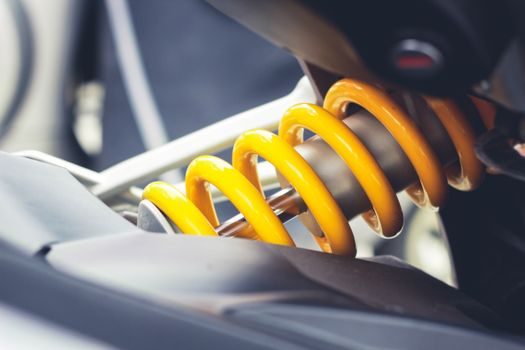
Spring preload on a passenger-vehicle tensioner typically sits in the 40-80 N range at installed length, with damping supplied by either a rubber-isolated pivot or a hydraulic oil-filled chamber. Higher-output applications — such as the 4.3L V6 in the GMC Sonoma — use stiffer springs and often a metallic pivot bushing rather than rubber, trading NVH for durability at the cost of audible idler whine [S2].
Thermal class matters for under-hood positioning: a tensioner mounted within 150 mm of the exhaust manifold needs a higher-temperature spring alloy and a sealed bearing, and aftermarket units at the US $40 price tier commonly cut this corner. Listings below roughly US $50 on the surveyed eBay snapshot are more likely to ship with a non-sealed bearing, which shortens service life in hot-soak conditions [S1][S6].
Gate 4 — Material, Bearing, and Service-Interval Spec
Premium tensioner assemblies use a sealed-for-life ball bearing with a pressed-steel or cast-aluminium arm and a chrome-silicon spring; budget units use a shielded bearing and a stamped-steel arm. The GATES-branded tensioner for the 1995-1999 OLDSMOBILE AURORA carries a higher seller-rating floor (97.3% positive feedback) and is positioned as a water-pump-driven assembly, indicating a heavier spring stack than a simple accessory-drive idler [S4].
Service interval on a sealed-bearing tensioner is typically rated to the belt-change interval — 90,000-150,000 mi on modern serpentine applications — but a shielded bearing effectively drops that to 30,000-50,000 mi in dust-prone environments. Buyers specifying tensioners for fleet duty should pin the bearing spec, not just the SKU, because a shielded bearing on a sealed-bearing assembly price point is the most common form of cost-down substitution in the aftermarket channel [S1][S4].
Comparison: Aftermarket vs OEM-Pull vs New OEM Tensioner

Three sourcing tiers appear in the surveyed listings. New aftermarket (Dayco, GATES) at US $40-100 carries a standard warranty and is the default for budget builds; OEM-pull used units such as the GMC 89017309 at US $70 offer verified fitment at a discount but with unknown service life remaining; new OEM-equivalent (Genuine GATES, AC Delco, Mopar) listings above US $150 deliver the longest service life and tightest dimensional tolerance [S1][S2][S4][S6].
Decision criteria for fleet and spec-driven buyers: lead time (aftermarket 1-3 days, OEM-pull 3-7 days, new OEM 5-14 days), warranty term (aftermarket 1 year typical, OEM-pull none, new OEM 2 years typical), dimensional conformity (new OEM > aftermarket > OEM-pull), and unit cost (OEM-pull < aftermarket < new OEM). For non-critical light-vehicle applications the aftermarket tier is defensible; for emergency-vehicle, taxi, and high-utilization fleet duty the new-OEM tier is the only one that survives a full service cycle [S1][S2][S4][S6].
Common Failure Modes and Sourcing Constraints
The four documented failure modes in the surveyed listings and the broader service pattern are: (1) bearing seizure from water ingress on a non-sealed unit, (2) spring set from over-tensioning at install, (3) pulley misalignment from a wrong-offset arm, and (4) bracket fatigue at the pivot bushing on rubber-isolated designs at high mileage. Each maps to a gate: bearing spec to Gate 4, install torque to Gate 3, pulley offset to Gate 1, and pivot material to Gate 2 [S2][S4].
Sourcing constraints in 2025-2026 include longer lead times on new OEM SKUs (Genuine GATES and AC Delco part numbers on the 1995-1999 OLDSMOBILE AURORA V8-4.0L were stocked but at fewer sellers than aftermarket equivalents) and a thinning population of OEM-pull units as the 1989-2004 vehicle cohort ages out of the salvage channel. Buyers on the Slewing Bearing Selection 2026 spec-pattern will recognize the same four-gate discipline applies: drive type, OEM-equivalent part number, geometry, and damping class — with industrial tensioners scaling up the spring and bearing class to match the belt width. Adjacent power-transmission spec guides such as the Pillow Block Bearing Selection follow the same gating logic, and buyers specifying multi-component drivetrain packages should align the four tensioner gates with the bearing and coupling gates on the same drawing [S5].
The next trackable signal is the 2026 H1 cross-platform consolidation on Stellantis 2.4L/3.6L applications, where a single tensioner SKU is expected to cover a wider engine-family range; the 2025-06 eBay listing for the Dodge/Chrysler/Plymouth cluster is the early indicator [S5].