
Industrial bench scales in 2026 are selected on five hard gates — capacity, readability, repeatability, ingress protection and connectivity — with OIML R76 accuracy class dictating the legal-for-trade ceiling in regulated lines [S1][S2].
For shop-floor weighing between 0.6 kg and 600 kg, buyers typically pair a resolution figure (0.01 g, 0.1 g, 1 g or higher) with a defined capacity, then verify the unit against the application environment (wet, dusty, cleanroom) before any brand shortlist. The decision matrix used in process-engineering spec work, weighting each criterion and summing the scores, applies directly: capacity, readability, repeatability ± tolerance, IP rating and interface type each carry a weight and a score per candidate unit [S3].
Capacity and Readability Pairing
Capacity-to-readability ratios of 100 000:1 to 600 000:1 are now standard on industrial precision bench scales, with a 6 kg capacity unit commonly specified at 0.01 g readability and 12 kg units at 0.1 g [S1]. Over-speccing readability against a modest capacity wastes budget; under-speccing it produces unreadable digits that a shop-floor operator cannot legally record.
For a checkweighing station on a 30 kg line, an engineer should typically specify at least 1 g readability and ±2 g repeatability; for incoming raw-material QC of 1 kg lots, 0.01 g readability is more common. The point of comparison: a filling bench scale running 0.5 kg fills needs roughly 200 000 d internal resolution, where a parts-counting bench scale running 0.1 g accuracy on 5 kg lots needs roughly 50 000 d — the difference changes the load-cell class and price band [S1].
Accuracy Class and OIML R76 Fit
Legal-for-trade bench scales for retail, pharmacy and food-pack lines must hit OIML R76 class II or III limits, with maximum permissible errors of ±0.5 e at verification and ±1 e in service for class III; internal QC-only units on the shop floor typically fall outside the regulated envelope and rely on manufacturer-stated repeatability figures [S1][S2].
European pharma and food buyers usually demand class II verification with a 2 × 5 000 e breakdown, while US regulated weighing defaults to NIST Handbook 44 Class II or III. When a plant runs both, the bench scale should be specified with dual approval so one device covers both jurisdictions — a cost lever, not a spec compromise [S1].
Repeatability, Linearity and Stabilisation Time

Manufacturer-published repeatability figures of ±0.02 g on 6 kg units and ±0.1 g on 60 kg units are typical for industrial precision bench scales; stabilisation times under 1.5 seconds for 0.01 g resolution units and under 1 second for 1 g resolution units are now baseline [S1].
Linearity is often the unsung spec: a ±0.05 g linearity on a 6 kg unit means the scale reads within that band at any test load, not just at zero and full capacity. For bench scales sitting in front of a bottling line, the practical engineering question is not "is it accurate at 0 g" but "does the second fill weigh the same as the hundredth" — and that is a repeatability test on the production lot, not the datasheet. Buyers comparing the bench scale type against an in-line checkweigher need to accept a 2-3× looser repeatability band on the bench unit because the static environment is cleaner than a moving conveyor [S1][S2].
Ingress Protection, Housing and Build
IP65 stainless-steel housings are now the default for washdown bench scales in food and pharma, with IP54 sufficient for dry production areas; ABS plastic housings remain common for parts-counting stations under 30 kg capacity at sub-$1 000 price points [S1][S2].
A short comparison for environment fit: IP54 ABS housing for dry assembly, IP65 stainless for washdown food lines, IP65 die-cast aluminium for chemical dosing rooms, IP67 stainless for outdoor loading bays. The criteria-based cut: wet process → IP65 minimum; dusty grinder cell → IP5x minimum; cleanroom → smooth stainless with no fans and captive cable. Buyers comparing a platform scale for pallet weighing to a bench unit on the same line should not reuse the bench spec — platform units take a different load-cell housing class and footprint [S1].
Connectivity, Data Output and ERP Integration
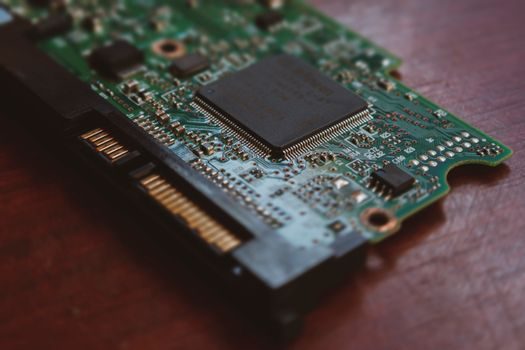
USB, RS-232, Ethernet and Bluetooth are the four interface options now sold as standard on mid-range industrial bench scales; legacy 4-20 mA analog output is increasingly displaced by Ethernet and wireless for direct ERP push [S2].
For an MES/ERP push, a bench scale with USB interface allows direct CSV logging and barcode-scanner pairing; RS-232 remains the most robust plug-and-play option for legacy PLCs; Ethernet and Wi-Fi reduce cabling cost in retrofit lines. The quote-density on the spec sheet is misleading — the engineering question is whether the protocol matches the receiving system: OPC UA over Ethernet for Industry 4.0 cells, Modbus TCP for older SCADA, plain CSV over USB for offline QA logs [S2]. For shop-floor traceability in 2026, the minimum bar is a timestamped, lot-numbered output that survives a network outage — local USB buffer plus push-on-recovery is the pattern most plants now ask for [S2].
Application Fit: When a Bench Scale is Wrong
Bench scales under-perform when the application needs continuous in-motion weighing (use an in-line checkweigher), when the part weight exceeds the unit's capacity at the required readability (use a platform scale or hopper scale), or when the environment exposes the unit to corrosive vapours beyond IP65 ratings (use a sealed electronic scale with stainless load-cell housing) [S1][S2].
Versus a filling scale, a bench scale is the right tool for batch QA, formulation weighing and small-lot production; a filling scale is the right tool for repeatable dispense at 30+ cycles per minute with ±0.5% fill tolerance. The crossover point is roughly 10 fills/minute — below that, a bench scale operator can keep up; above, throughput falls off and ergonomic injury risk rises. The decision matrix in such cases should weight throughput twice the weight of accuracy, since both units typically hit the same accuracy class [S3].
Standards, Verification and Sourcing

OIML R76 (accuracy class II/III), NIST Handbook 44 (US legal-for-trade), and ISO 9001 quality-system traceability are the three documents that govern an industrial bench scale purchase in regulated industries; for hygienic zones, EHEDG or 3-A sanitary standards apply on top of OIML R76 [S1][S2].
Fit-for-purpose scale selection, certified compliance and tailored equipment verification are now standard vendor deliverables on the major industrial weighing product lines, with worldwide approvals and pre-shipment verification certificates shipped with the unit [S1][S2].
A practical cross-reference on spec-driven selection is laid out in this Filling Scale vs Bench Scale cut for throughput, accuracy and footprint, and adjacent weighing-engineering decisions appear in this Truck Scale 2026 price and cost guide for heavier-duty lines.