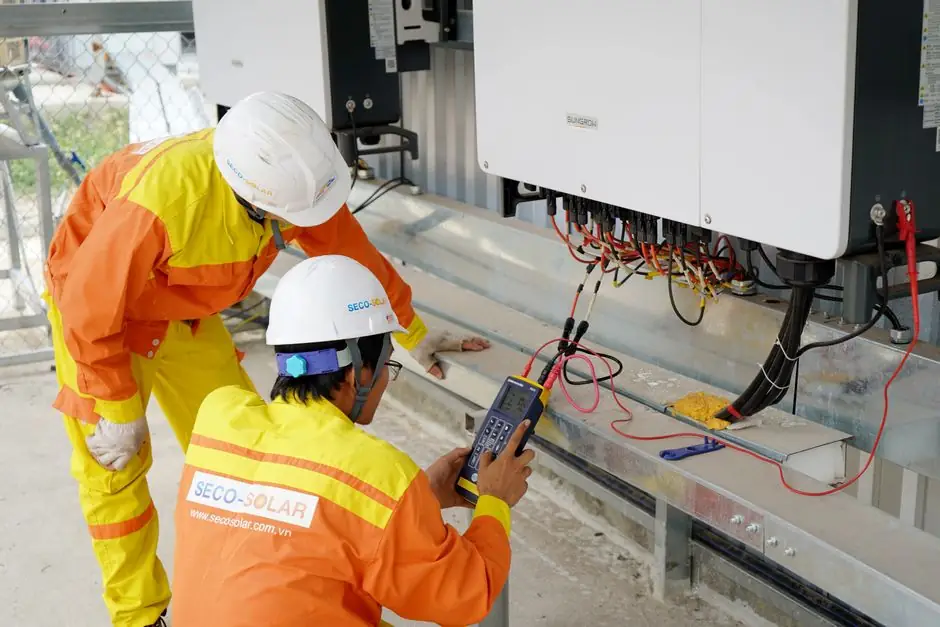
Procurement teams evaluating commercial and utility-scale battery energy storage in 2026 should anchor every decision in three measurable inputs: a documented duty cycle, a tariff-based revenue model, and a chemistry-locked cell spec, with the market converging on LiFePO4 (LFP) cells delivering 6,000+ cycles at roughly 95% round-trip efficiency [S3][S5].
U.S. utility-scale storage hit approximately 12 GW of installed capacity in 2024, with 2025 tracking toward 19 GW and roughly 93 GW expected across the next five years, while demand from AI and hyperscale data centers is now reshaping siting and offtake structures [S2]. Federal incentives, including the 30% Investment Tax Credit, remain the single largest economic lever for commercial buyers [S5].
Define the Use-Case Before You Spec a Container
Use-case definition must precede equipment selection, and the four high-value BESS applications are energy arbitrage, demand-charge management, solar self-consumption, and backup power, each with distinct sizing math and revenue logic [S5].
Energy arbitrage scales with the time-of-use spread: a 500 kWh system operating at 95% round-trip efficiency against a $0.15/kWh peak-to-off-peak spread generates roughly $65/day, or above $23,000/year, before degradation [S5]. Demand-charge management targets the 15-minute peak window and can move 30 to 50% of a commercial bill; shaving 200 kW off a 1,000 kW peak at $15/kW saves $3,000/month in typical C&I tariffs [S5]. For a project tied to behind-the-meter solar, the optimal state-of-charge window and depth-of-discharge limits are driven by the PV profile, not the battery nameplate. The 2024 Energy Storage Systems Act (R.I. Gen. Laws § 39-26.10) sets a statewide 90 MW storage target by 2026 and routes incentives through programs like ConnectedSolutions, a useful reference point for state-level demand-response stacking [S1].
Cell Chemistry, Cycle Life, and Thermal Stability
LFP has displaced NMC and lead-acid across new commercial and utility procurements because of superior thermal stability, lower cell cost, and 6,000+ cycle life, which directly sets the $/MWh-throughput cost ceiling for the project [S3].
For C&I sites, the chemistry decision is now effectively single-option: LFP, with turnkey all-in-one cabinets integrating battery modules, Power Conversion System (PCS), thermal management, and fire suppression, replacing piecemeal component sourcing that drives on-site engineering risk [S3]. Residential cabinets now ship at 5 kWh, and utility-scale containerized systems ship at multi-MWh scale, with all vendors expected to support modular paralleling to match evolving load growth [S3]. Buyers should require cell traceability to a Tier 1 manufacturer (e.g., CATL, EVE) as a contractual clause, because supply-chain volatility in lithium carbonate and trade frictions with China continue to affect pricing and lead time [S3]. For readers mapping adjacent electrical equipment into the same control architecture, see the energy management reference for the EMS layer that dispatches the PCS. Cross-comparisons of cell types and bankable warranties are also covered in this solid-state battery OEM vs ODM 2026 decision map.
6-Gate Supplier Qualification and Contract Structure
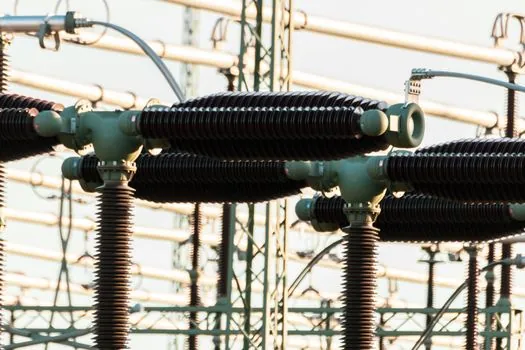
The 6-Gate BESS Procurement Framework covers use-case definition, supplier qualification, contract structure, certifications, integration plan, and commissioning acceptance, and it is the de facto checklist derived from the U.S. DOE FEMP BESS Procurement Checklist [S3][S7].
Utility-scale procurements in 2026 are increasingly structured as Power Purchase Agreements (PPA), Engineering, Procurement and Construction (EPC), Battery Tolling Agreements (BTA), or Battery Supply Agreements, with financeability terms (warranty step-down curves, parent-company guarantees, and liquidated-damages caps) treated as a first-class deliverable, not a legal afterthought [S2]. California and Texas together hold a large share of U.S. installations, but PJM is emerging as a high-growth region because of tightening reserve margins, generator retirements, and rising data-center load, which is shifting bid structures toward 4-hour duration products [S2]. A buyer-side decision matrix worth pinning on the wall reads: (1) target use-case drives duration (2 to 4 hours for arbitrage, 1 to 2 hours for demand charges, 4+ hours for resilience); (2) chemistry drives safety case and indoor siting permissions; (3) PCS round-trip efficiency drives lifetime revenue; (4) augmentation clause drives 20-year project IRR. Three of these four are contract clauses, not hardware specs, which is why the legal and engineering teams must review the same document. For a deeper view of how project-level economics interact with grid-scale dispatch, the energy meter reference explains the metering and telemetry inputs the EMS will require.
Sizing Math, Common Pitfalls, and Cost-Reduction Watchpoints
Undersized systems and mis-modeled load profiles are the most common and most expensive procurement mistakes, and the fix is a measured 12-month load curve plus a tariff-aware dispatch model before any RFQ is issued [S4].
Installed costs for lithium-ion BESS declined significantly between 2018 and 2024 and are expected to keep falling in 2026, but the rate of reduction may moderate as domestic content rules push manufacturing onshore and away from low-cost Chinese supply [S2]. The Morgan Lewis 2026 outlook states that "Prices are expected to continue dropping further in 2026. However, cost reductions may moderate, or rise, as batteries are increasingly sourced domestically due to ongoing trade restrictions with China" [S2], a quote that should be carried into any 20-year cost projection. Common procurement failures documented across vendor and integrator channels include: over-promising round-trip efficiency that ignores auxiliary load (HVAC, BMS, fire panel); ignoring transformer and interconnect upgrade costs; and skipping a fire-safety review with the Authority Having Jurisdiction, which can force container relayout late in the project [S4]. Sizing should target a usable state-of-charge window of 10 to 90% for LFP to balance cycle life against delivered energy, and the warranty should explicitly define the throughput MWh cap, not just the year count.
Codes, Certifications, and Bankability Documentation

Battery storage systems must clear a stack of safety and performance certifications before they can be financed, and the documentation pack is itself a procurement deliverable that should be required at bid time, not at commissioning. [S3]
At minimum, a 2026 BESS bid should include UL 9540 (energy storage system safety), UL 9540A (cell-, module-, unit-, and installation-level fire propagation test results), IEEE 1547 (interconnection), and UN 38.3 (transportation), with NFPA 855 siting compliance and, where applicable, IFC 2024 fire code alignment [S3][S7]. For grid-scale projects seeking a tax-equity investor, the documentation pack typically expands to include IEC 62619 cell testing, a vendor Parent Company Guarantee, and a guaranteed augmentation schedule that defines how capacity will be restored at years 10 and 15 [S2]. The EPRI Battery Energy Storage Handbook is the practical reference covering planning, procurement, deployment, and O&M, and it is the single most cited source for life-cycle acceptance protocols in North American utility procurements [S6].
Operations, Dispatch, and After-Sale Economics
Procurement does not end at hand-over, and the dispatch strategy plus O&M contract together determine whether the asset hits its underwritten IRR or quietly bleeds margin. [S3]
Solar PV plus BESS dispatch has become a standard research topic because the operational logic differs from a standalone BESS: the EMS must co-optimize against the PV curve, the tariff, and any demand-response event, not just charge and discharge on a clock [S8]. For C&I owners, a predictive dispatch layer that ingests weather, market, and facility load data measurably improves arbitrage yield over a fixed schedule, and most modern turnkey cabinets ship with this capability onboard [S5][S8]. On the storage and physical handling side, the relevant enclosure, cabinet, and racking decisions are covered in the storage cage and storage handling references for sites where indoor or containerized footprint matters. Long-term O&M contracts should lock spare-parts pricing for the PCS, define a 24-hour remote-diagnostic response SLA, and reserve augmentation rights, because the bankability of a 20-year storage asset depends as much on the service contract as on the cells.
Trackable signals for the next procurement cycle: the U.S. DOE FEMP BESS checklist revision and the 2026 PJM capacity-auction clearing prices, both of which will set the floor for 4-hour duration product pricing across new utility-scale bids [S2][S3].