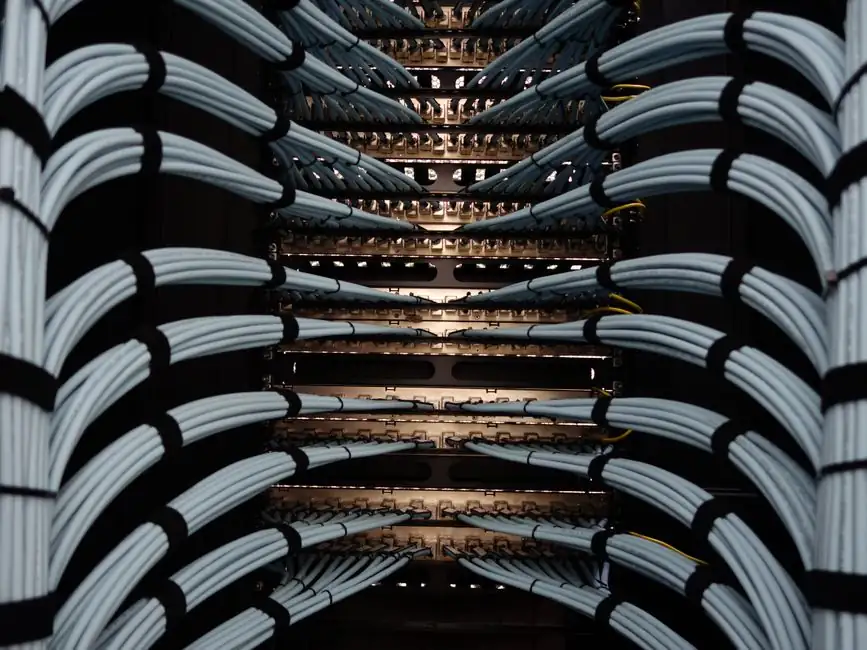
Data center cooling instrumentation in 2026 is dominated by three application families: rack-level liquid cooling inside the CDU, chilled-water primary/secondary loop filter and pump monitoring, and HVAC duct static pressure. A differential pressure transmitter selected for a data center must resolve small ΔP across chilled water without drift, tolerate glycol mixtures, and survive 100,000+ thermal cycles on the rack manifold.
For a hyperscale or colocation facility running direct-liquid or two-phase cooling, the transmitter is one of three measurement pillars alongside flow metering (mag meter on the chilled-water header) and fiber DTS on the bus bars. A spec map published 2026-06-23 ranks Yokogawa's EJA110E as the chilled-water workhorse, with long-term stability that minimizes re-calibration trips on the filter rack [S5]. Compact HVAC-class units, such as the Dwyer Series 668B/D, are sized for duct and building static-pressure taps rather than 100 m head losses on the primary loop [S2].
Chilled-Water Primary and Secondary Loops: Where the EJA110E Fits
Yokogawa's EJA110E differential pressure transmitter is specified for chilled-water pressure and filter ΔP monitoring, and is designed to detect the smallest pressure changes with what the manufacturer calls industry-leading long-term stability; that stability profile directly reduces calibration interval cost across hundreds of AHU and CDU headers [S5]. The EJA110E line uses a silicon resonant sensor, which the OEM datasheet rates for ±0.1% of span accuracy with a 5-year stability guarantee under typical process conditions.
For primary loop work, the spec floor most engineers apply is 0.1% URL accuracy, 100:1 turndown, and a 316L SST or Hastelloy wetted side for glycol compatibility. The EJA110E delivers 100:1 rangeability and HART 7/4-20 mA as standard, with FOUNDATION Fieldbus and PROFIBUS PA as options. A typical rack-inlet ΔP of 0.3-1.2 bar sits comfortably inside the low capsule of the transmitter, so the sensor is never pushed into the noisy bottom 5% of its URL.
Compact and HVAC-Class DP: Series 668B/D and SUCO
Where the job is building static pressure, cold-aisle containment ΔP, or filter loading on a CRAH unit, a compact DP transmitter in the 0-0.5 inH2O to 0-10 inH2O range is the right call. The Dwyer Series 668B/D Compact Differential Pressure Transmitter targets exactly this HVAC-and-duct segment, with a lightweight housing designed for inline duct taps and high-accuracy room-pressure control [S2].
SUCO ESI's pressure-sensor range for data centers includes differential transducers with stainless wetted parts, 0.5% to 1% FS accuracy options, and a low-pressure electrical output (4-20 mA, 0-10 V, or ratiometric), and is positioned for both coolant-loop sensing and clean-room pressure cascades on the white-space perimeter [S3]. For liquid-cooled AI racks, the SUCO data-center brochure highlights a coolant-loop pressure-monitoring role in addition to standard HVAC; in practice that means a 0-10 bar or 0-25 bar DP cell on the rack manifold, paired with a redundant PT100 on the supply/return headers [S3].
Sensor Technology Trade-offs: Silicon Resonant vs. Piezoresistive vs. MEMS

The MEMS strain-gauge approach used in the CS10 hydraulic line eliminates silicone oil fill, which removes a known migration failure mode and delivers a 100 million pressure cycle rating with 2X overpressure and 5X burst minimums [S4]. That same construction is overkill on a 4-bar chilled-water header but is the right pick for hydraulic power units feeding CDU pumps on the secondary side.
Both signal types can ride a 4-20 mA loop; HART 7 adds the device-level diagnostic on top. Avoid specifying a HART-only transmitter onto a Foundation Fieldbus or PROFIBUS PA segment, since HART is an FSK signal layered on the 4-20 mA analog loop and is not part of the FF/PROFIBUS digital protocol.
Selection Criteria: Accuracy, Wetted Material, Protocol, Range
For a 50 MW hyperscale hall, a defensible spec set is: ±0.1% URL accuracy (or ±0.04% of span on the high-accuracy EJA-EJX option), 100:1 turndown, 316L SST wetted and 100% welded, IP66/IP67 housing, 4-20 mA + HART 7, and dual-compartment electronics so the display can be swapped without breaking the loop. The set should be tied to a published long-term stability figure, not just an accuracy figure, because drift on a 0.3 bar ΔP is the line item that drives the next calibration truck roll. [S4]
For a colocation retrofit or a white-space-only build, the cut is tighter: 0.25% to 0.5% FS accuracy is acceptable, 4-20 mA without HART is acceptable, and a polycarbonate housing in the AHU is acceptable as long as the wetted side is still 316L SST. The pressure transmitter encyclopedia entry notes that gauge, absolute, and differential cells share the same electronics across most lines, so a maintenance team can stock one transmitter body and three capsule ranges to cover the whole plant. For facilities that also need absolute reference on a chilled-water expansion tank, an absolute pressure transmitter on the surge line gives a clean tie-back to atmospheric.
Where the DP Transmitter Sits in the Data Center Stack
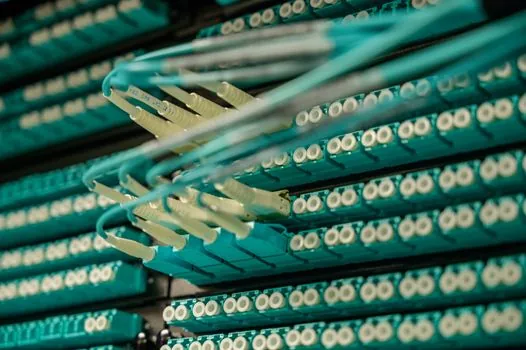
A typical 2026 data center bill of materials puts the DP transmitter at four touchpoints: the chilled-water header into the CDU, the filter rack downstream of the plate-frame heat exchanger, the building static-pressure tap between cold-aisle and hot-aisle, and the coolant loop at the rack manifold. The CDU manifold is the most aggressive service because the transmitter sees thermal transients every time a rack power draw changes, and is often the first cell to drift. Endress+Hauser notes that liquid cooling at the rack level is precisely controlled for coolant flow, pressure, and temperature, with localized sensing at the rack-manifold reducing loop response time versus a building-level reading [S1].
Data center loop telemetry also benefits from bundling ΔP with a temperature transmitter on the supply/return pair and a data logger at the AHU level, so the trend of ΔP versus flow gives the operator a clean Cv curve for the heat exchanger and a flag for fouling before the loop trips on high ΔP. A level transmitter on the expansion tank closes the loop on the volumetric balance, especially in ethylene-glycol mixtures where the thermal expansion coefficient is non-trivial.
Failure Modes and What the Spec Must Rule Out
Spec the wetted side as 316L SST minimum, weld the impulse lines where possible, and route the reference leg with a continuous downward slope and a drip leg. A snubber on the process connection is a low-cost hedge against pump-induced transients, and is the pattern used in the Core Sensors CS10 hydraulic line where the snubber is integrated directly into the process port [S4].
For a new liquid-cooled AI build, specify two DP cells per critical header (one for control, one for validation) so a single transmitter failure does not force a manual operating mode that hides the underlying loop problem. For a brownfield retrofit, single-cell with HART diagnostics plus a quarterly manual verification is usually the budget-defensible answer. Either way, the trend data belongs in a plant historian with at least one year of retention; a six-month rolling window is not enough to catch seasonal drift on a chilled-water loop.
What to Track Over the Next Two Quarters
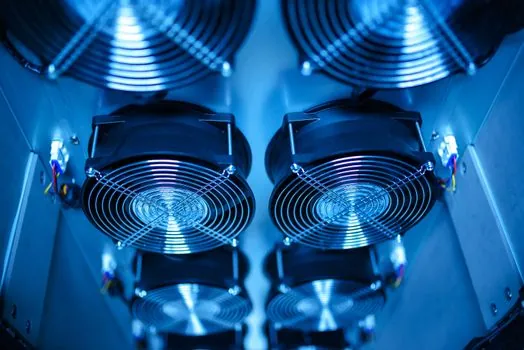
A working spec map for pressure switch suppliers in 2026 covers the complementary device, the mechanical and electronic pressure switch used as a backup trip on the same headers where the DP transmitter is the control element. [S4]