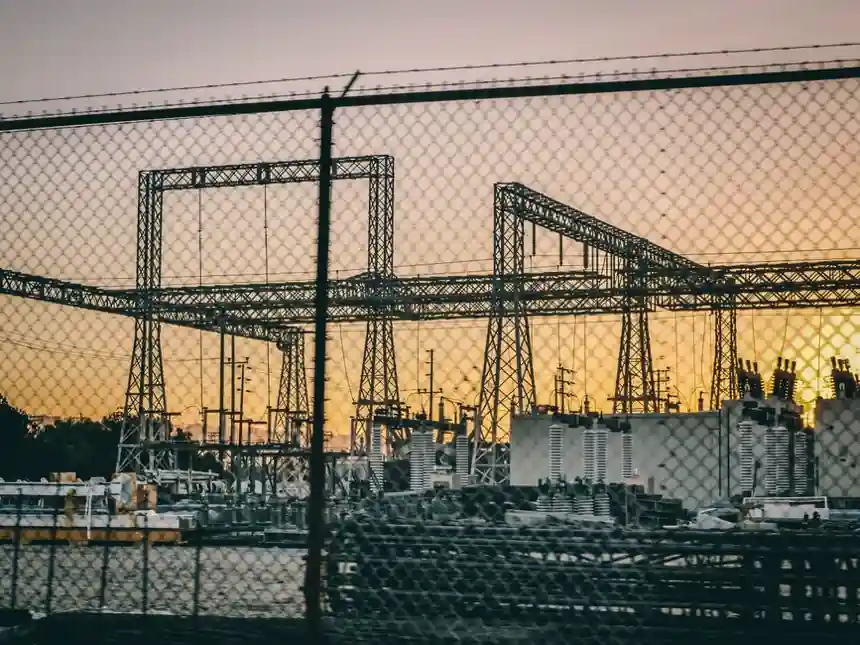
For HVAC-driven commercial and industrial projects, the most commonly specified dry-type transformers fall in the 50–2,500 kVA range with 6 kV, 10 kV, 11 kV, 22 kV, or 33 kV primary voltages and 0.4 kV secondary, IEC 60076-11 compliant, Class F (155°C) or Class H (180°C) insulation, and AN/AF cooling [S2][S3][S4].
HVAC electrical rooms, chiller plant feeders, and clean-room air-handling unit (AHU) MCCs almost always sit inside occupied buildings, which is why the oil-free, low-fire-hazard dry-type construction is the default spec, not the exception, for indoor substations serving mechanical loads [S1][S3]. For deeper background on construction and standards, the dry-type transformer reference page is the starting point, while power transformer basics remain useful for stepping up to medium voltage.
Define the duty: kVA, kV primary, and ambient envelope
HVAC transformer sizing is not "chiller kW x 1.25." A 2026 spec for a typical commercial chiller plant pairs one 1,000–2,000 kVA cast-resin dry-type transformer per 800–1,500 kW of chiller capacity, stepped from 11 kV to 0.4 kV with a Dyn11 vector group, leaving 20–30% headroom for inrush and harmonic-loaded VFDs [S2][S4].
Primary voltage in the HVAC segment is dominated by 6 kV, 10 kV, 11 kV, and 22 kV utility feeds, with 33 kV reserved for large campus or district cooling plants; dry-type products on the 2026 market cover 6 kV to 36 kV in the same enclosure family, so the same vendor can supply a 1,000 kVA 11/0.4 kV unit for a hospital AHU room and a 10 MVA 33/11 kV unit for a district cooling substation [S3][S4]. Ambient envelope matters equally: HVAC plant rooms routinely run 40–45°C, and Class F insulation rated for a 115°C average winding rise is the realistic minimum, with Class H (150°C rise) specified where AHUs sit above a ceiling void with no active ventilation [S1][S3][S4].
Cast resin vs VPI vs open ventilated: which one for HVAC
For indoor HVAC substations, cast-resin (CRT) dry-type transformers are the default 2026 pick because their epoxy-encapsulated windings tolerate up to 100% relative humidity, survive long shutdowns without pre-commissioning baking, and meet subway, hospital, and data-centre fire codes without added enclosures [S3][S4]. VPI (Vacuum Pressure Impregnated) dry-types share the same silicone-steel core and Class H insulation but use varnish-impregnated rather than fully cast coils, which makes them the cheaper option for vibration-loaded sites like plant rooms adjacent to chiller decks, but less tolerant of condensing humidity [S3][S4].
Open ventilated (AN/AF, sometimes called VPE) dry-types with Class F or H insulation are still specified where footprint and cost dominate, for example rooftop mechanical rooms, but they need an IP21 or IP23 enclosure to keep out dust and drips, and they are rarely used in occupied indoor air space today [S1][S3]. Across all three families, cooling is dual-rated AN/AF: natural convection handles the base load, and forced-air fans engaged by Pt100 or PTC sensors boost short-term capacity by 25–30% during chiller seasonal peak [S1][S4][S6].
Selection criteria ranked for HVAC plant rooms

Rank the spec sheet in this order for HVAC work: (1) IEC 60076-11 compliance and Class F or H insulation system, (2) kVA and kV primary matched to chiller/AHU feeder sizing with 20–30% headroom, (3) enclosure IP rating (IP20 minimum indoor, IP23 where sprinklers or wash-down exist, IP54 in dusty plant rooms), (4) winding material (copper for lower loss, aluminium for lighter weight and lower cost on 1,000 kVA and up), and (5) thermal monitoring (Pt100/PTC + temperature controller + fan contactor) so the AF boost engages on summer peak [S1][S2][S3][S4].
Side-by-side comparison for the three realistic HVAC options:
Cast Resin (CRT): 6–36 kV, 100 kVA–25 MVA, Class F or H, IP00–IP54, humidity-tolerant, lowest fire load, suited to indoor AHU rooms, hospitals, and clean rooms [S3][S4]. VPI: 6–24 kV, 100 kVA–10 MVA, Class H, IP00–IP54, vibration-tolerant, lower cost, suited to plant rooms near rotating equipment and mining-fed sites [S3][S4]. Open ventilated (AN/AF, VPE): up to 33 kV, up to 20 MVA, Class F or H, requires IP21–IP31 enclosure, lowest purchase cost, suited to dedicated substations and rooftop mechanical yards [S1][S3].
What the IEC 60076-11 envelope actually enforces
IEC 60076-11 is the governing product standard for dry-type power transformers and fixes the test regime that any HVAC buyer should be able to demand on the nameplate: routine tests (winding resistance, voltage ratio, short-circuit impedance, no-load loss, load loss, applied voltage, induced voltage, partial discharge), type tests (temperature rise, lightning impulse, noise, short-circuit withstand), and special tests on request [S2][S3][S4].
Partial discharge on cast-resin coils is the field-defining differentiator: premium 2026 cast-resin products specify ≤5 pC partial discharge at 1.1× rated voltage, which is the figure HVAC buyers should write into the procurement document, not "low PD" as a marketing line [S4]. For Indian projects IS 11171 runs in parallel with IEC 60076-11 and adds regional fire-test criteria, while UL 1562 covers North American HVAC projects that ship from the same supply chain [S1][S3][S9].
Vendor products on the 2026 HVAC short list
Schneider Electric dry-types cover 50–10,000 kVA at up to 36 kV with Class F/H insulation and IP00–IP54 enclosures, available through regional distributors with stock lead times on the smaller CR-series units [S3]. Eaton dry-types share the same 15–10,000+ kVA band and 34.5 kV ceiling, and are typically quoted for North American and East African HVAC jobs in the same commercial channel [S8].
CNEEG cast-resin and VPI units cover 6–36 kV, 100 kVA to 25 MVA, Class F or H, with Pt100 smart thermal monitoring, ≤5 pC partial discharge, and IEC 60076-11 type-test reports, and are a common pick for 2026 export projects requiring custom enclosures [S4]. Honcon three-phase dry-types offer 50 kVA–10 MVA, 6/10/11/22/33/35 kV primaries, Dyn11/Yyn0/Yd11 vector groups, and IEC/IEEE dual compliance, suiting HVAC skid builders who need flexible LV tap voltages [S2]. Taili cast-resin units pair epoxy resin casting with AN/AF cooling and are aimed at the 50–2,500 kVA indoor HVAC segment, with copper or aluminium windings on order [S6]. Marsons, IS 11171 and IEC 60076-11 dual-listed, covers up to 20 MVA at 33 kV with Class F/H cast-resin or VPI, an IP21–IP54 enclosure option, and an in-house NABL-accredited test lab for impulse and temperature-rise work [S1]. For North American rooftop or basement AHU rooms, UL/CSA-listed 300 kVA 12.47 kV or 13.8 kV Delta-to-480Y/277 V cast-resin units are the standard 2026 stock line [S9].
Limitations and failure modes specific to HVAC service
Dry-type transformers in HVAC service do not fail from oil; they fail from heat, dust, and harmonic distortion. Cast-resin windings in 40°C+ plant rooms with restricted airflow routinely run 20–30°C above the 155°C Class F limit if AF fans are not interlocked, and the failure signature is resin cracking rather than the dramatic short-circuit event seen on oil units [S1][S3][S4].
Dust and lint from mechanical rooms clog the AF fan path and force the unit to derate; an IP23 enclosure plus quarterly filter cleaning is the field-tested fix, not a redesign to a larger kVA [S3][S4]. Finally, partial discharge above 10 pC on a cast-resin unit is the early warning of an end-of-life epoxy insulation system, so trend the PD reading on a 6–12 month basis once the unit is past year 10 of service [S4]. For a related view on sizing a power transformer against actual load, see the power transformer sizing workflow, and for AHU duct and equipment room layout that drives transformer placement, the HVAC laser distance meter spec map is a useful field reference.
Sourcing, lead time, and what to write into the 2026 RFQ
Lead times on 2026 dry-type transformer RFQs split cleanly by rating: stock 100–2,500 kVA cast-resin units ship in 2–6 weeks, while 2,500–5,000 kVA VPI units sit at 4–6 weeks and custom 5,000–10,000 kVA outdoor units run 8–12 weeks, which dictates how HVAC plant rooms should be scheduled against the chiller delivery [S3]. For indoor HVAC projects buyers should keep the minimum spec line to: kVA rating, kV primary, V secondary, Dyn11 or Yyn0 vector group, Class F or H insulation, AN/AF cooling, IP23 enclosure minimum, IEC 60076-11 compliance, ≤5 pC partial discharge, Pt100 + PTC thermal monitoring, copper or aluminium winding material, and 50/60 Hz dual-frequency rating for export jobs [S1][S2][S3][S4][S9].
Two trackable signals for the next quarter: UL 1562 / CSA-listed 13.8 kV-to-480Y/277 V 300–1,500 kVA cast-resin stock is expanding across the Schneider, Eaton, and Energy Transformer channels for the North American data-centre HVAC market [S3][S8][S9], and 33 kV-class 10–25 MVA cast-resin units are moving from custom order to 8–12 week catalogue items at the major Chinese export brands [S4]. Both moves tighten the lead-time gap between oil-filled and dry-type for medium-voltage HVAC feeders, which is the single largest procurement change engineers will see through the rest of 2026.
Component reference pages worth checking: dry mortar.