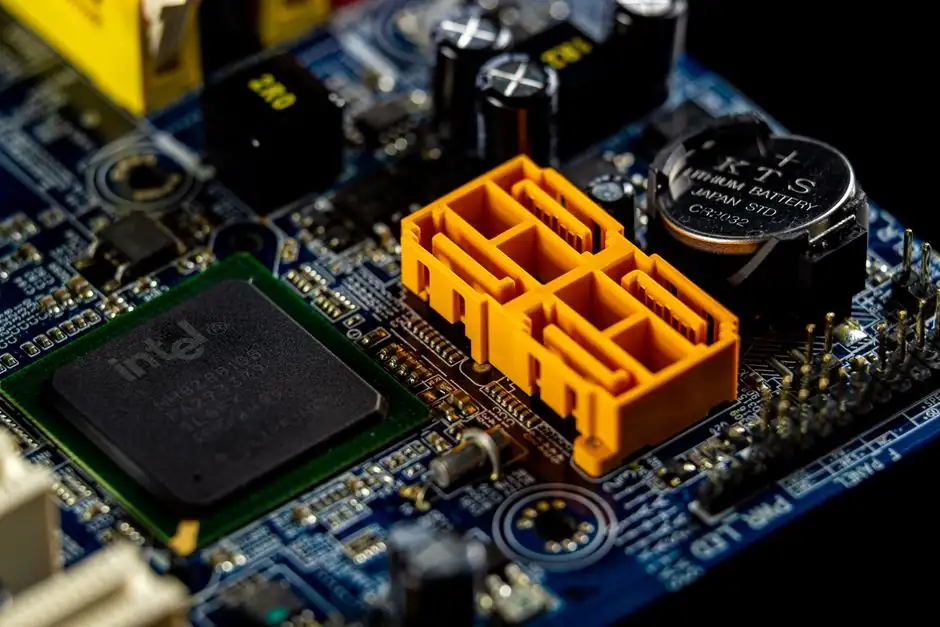
A semiconductor wafer fab drawing 50–150 MW continuous load cannot tolerate a 1% metering error, because a 1% reading gap on a 100 MW load is roughly 8.76 GWh per year, or close to USD 1.0 M at typical industrial tariffs [S4]. The baseline spec for any fab main-feeder or sub-feed electricity meter is therefore a 0.2S or 0.5S revenue-grade static meter, not a residential DIN-rail unit.
Selecting the meter silicon family before choosing the meter housing is the fastest way to avoid a 12-month retrofit.
Accuracy Class and Four-Quadrant Measurement
Any meter on a fab 22.9 kV or 4.16 kV feeder must meet IEC 62053-22 Class 0.2S for active energy, with reactive energy at 0.5S or better, because tool-level Power Quality (PQ) data is used to bill internal cost centers [S2]. Four-quadrant (4Q) measurement, i.e. import/export kWh and inductive/capacitive kVARh, is mandatory on sites with co-generation, fuel cells, or PV smoothing, and most modern STM32-based designs ship with this as a default firmware block [S2].
For comparison: a Class 1 meter is acceptable only on non-billed auxiliaries such as lighting or HVAC, while a Class 0.5S is the minimum on a tool-level sub-feed. A Class 0.2S unit is the right pick for the main incomer and any sub-feed tied to the energy meter backbone feeding Process of Record (POR) tools.
Semiconductor-Specific Electrical Stress
Fabs expose meters to harsh electrical environments, including high Neutral-Earth voltage from large single-phase loads (lithography stepper pumps, ion implanters), high di/dt from SCR rectifiers, and voltage transients from capacitor-bank switching [S1]. Specify a meter with 100 A continuous phase current, 120 A short-time overcurrent, and a 6 kV/3 kA surge withstand on the current inputs to survive these events [S1].
Harmonic content is also higher than in a typical plant: variable-frequency drives on chilled-water pumps and UPS front-ends push THD above 8% at the bus. A suitable fab meter must therefore sample at 4 kHz or higher and report individual harmonics to at least the 50th order, with most STM32-based reference designs supporting 63rd-order analysis out of the box [S2].
Communication Protocols and Data Integration
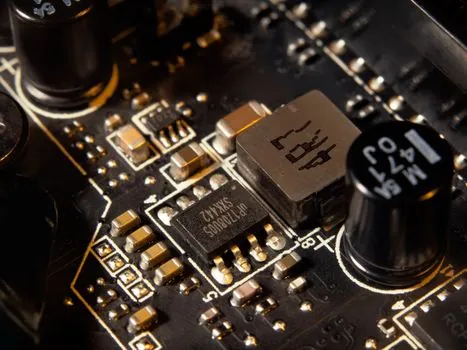
The meter must expose data to both the Building Management System (BMS) and the Manufacturing Execution System (MES) using isolated ports, because fab IT/OT networks run on a flat Layer-2 with strict zoning. Modbus RTU over RS-485 is the universal fallback, while DNP3 and IEC 61850 are required for any substation-grade deployment per IEEE 1613 and IEC 61850-3 [S1].
Wi-SUN, PLC, or NB-IoT are typical last-mile options for the AMI layer, but a fab should not route AMI traffic onto the metrology network; keep a hardware-isolated RS-485 port dedicated to the counter meter feeds for billing, and use a separate port for AMI. TI MSP430 and NXP Kinetis reference designs document both the metrology and the connectivity stack separately, which is why they remain the default picks [S1][S4].
Power-Quality and Event Logging for Tool Uptime
Semiconductor tools are extremely sensitive to voltage sags: a 50% sag lasting 50 ms can crash a scanner mid-exposure and scrap a wafer lot. A fab-grade meter must therefore record sags, swells, and transients with at least 1 ms timestamp resolution, and store waveforms for the most recent 100 events, per IEEE 1159.1 PQ guidance [S1][S2].
Look for COMTRADE or PQDIF export so event files can be replayed in tools like Dranview or PQView. Most STM32 metrology platforms export COMTRADE natively, which is the fastest path to root-cause analysis after a tool trip [S2]. Pairing the meter with a dedicated clamp meter walk-down during commissioning is still the cheapest way to catch CT polarity errors before energization.
Vendor Selection: Silicon and Meter Makers

For a fab spec, prefer TI MSP430FR6047, NXP Kinetis KW41Z, or ST STM32 metrology platforms, since all three ship reference firmware that already meets IEC 62053-22 0.2S at 25 °C and 50 Hz [S1][S2][S4].
End-meter OEM selection then drops to a short list: ELSTER (Honeywell), Itron, Landis+Gyr, Sagemcom, and EDMI. For Asian fabs, Chinese meter designs using the MAX71315 ZON M3 SoC have demonstrated significant bill-of-material savings (in the order of tens of millions of dollars annually for a national rollout) and shrinking of the meter form factor [S3].
Selection Criteria Comparison
Three realistic options line up against four fab criteria. Option A: Class 0.2S ANSI C12.20 / IEC 62053-22 static meter with COMTRADE export and IEC 61850 (TI or NXP silicon). Option B: Class 0.5S IEC 62053-22 meter with Modbus DNP3 and basic THD to the 50th order (ST or Renesas silicon). Option C: Class 0.5S Chinese-domestic static meter with MAX71315 SoC, Modbus only, and limited waveform export [S1][S2][S3][S4].
On accuracy, A is best and C is borderline. On PQ/ride-through event capture, A is best, B is acceptable, C is inadequate. On integration with fab MES, A and B are sufficient, C requires a custom OPC bridge. On cost, A is roughly 2.0–2.5x C, while B is in the middle. Pick A for the main incomer and any flow meter-style submeter tied to billing, B for non-billed sub-feeds, and avoid C on any POR tool circuit.
Installation and CT/PT Pitfalls
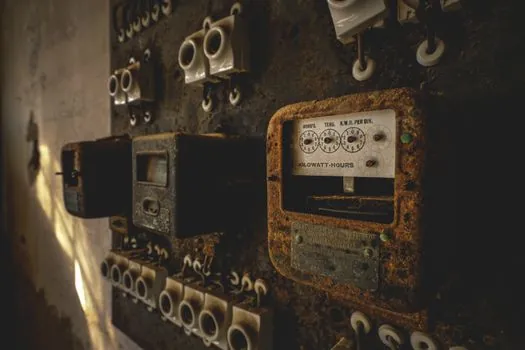
Even the best meter fails if the current transformer (CT) is mis-specified. For a 4.16 kV fab feeder, use 0.3 metering-class CTs (IEEE C57.13 standard), not 5P20 protection-class units, because the 5P20 has 5% saturation error at 20x rated current, which destroys the electricity meter accuracy class above 5 kA. A revenue-grade 0.15 metering CT is the right pick on the main incomer. [S2]
CT polarity, burden rating, and shorting blocks are the three most common field errors. Burden must be below 90% of the CT rated burden, and shorting blocks must be installed at the meter end so the CT can be safely disconnected for calibration. Annual calibration against a portable reference standard, with drift logged to within 0.05%, is the typical fab practice.
Procurement and Lifecycle Signals
Track three signals over the next 12–18 months. First, TI MSP430FR6047 and MSPM0G3507 reference designs continuing to ship 0.2S firmware updates, since TI's RFAB2 300-mm capacity expansion through 2025–2026 directly affects lead time [S4]. Second, NXP Kinetis KW41Z and i.MX RT1160 secure-element availability, since the EU smart-grid recovery funds are pulling NXP allocation toward European utilities [S4]. Third, MAX71315-based Chinese meter designs reaching IEC 62053-22 0.2S certification, since that would open a third low-cost source for greenfield Asian fabs [S3].
See also our earlier report, Gas Detector Sizing and Selection: A Spec-First Guide for Industrial Buyers.