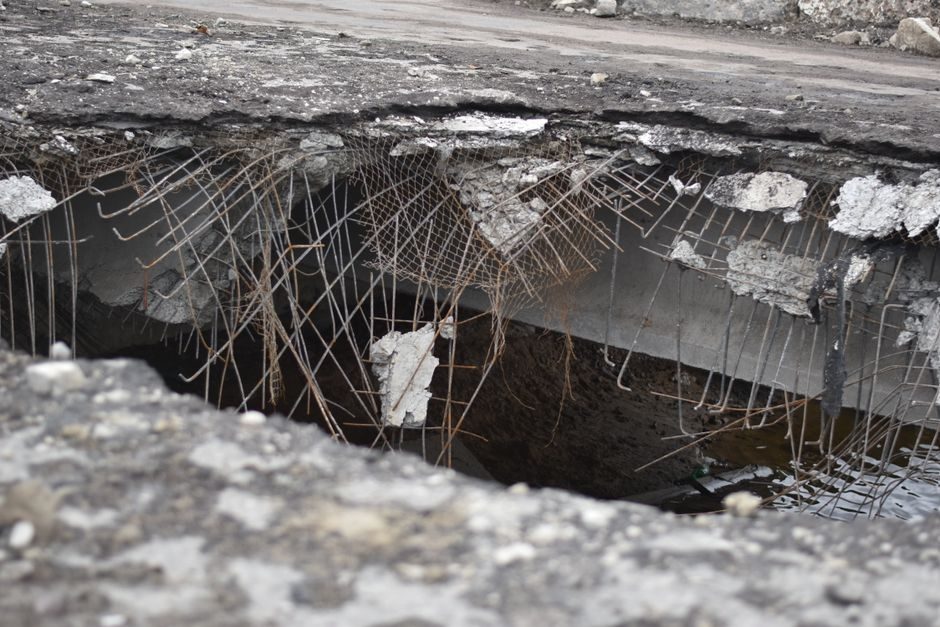
For water-treatment-plant (WTP) reinforcement, the practical pick is a CNC or PLC-controlled automatic rebar bender rated D10–D32 mm (sometimes up to D50 mm for thick foundation mats) with a mandrel range that covers 3d–6d bend radii, a continuous-duty bending motor in the 4–7.5 kW band, and an angle accuracy of ±1° [S1].
WTPs differ from a high-rise slab in three ways that drive the spec: bar diameters skew larger because of crack-control on hydraulic structures, corrosion exposure (often C3–C4 per ISO 12944) pushes buyers toward epoxy-coated or stainless-clad bar, and the cage/stirrup geometry is dominated by circular tank walls, hopper bottoms and pump-station base mats [S2][S3].
Why the WTP Bar Schedule Pushes the Bender Spec Higher
Water-treatment reinforced concrete is governed by crack-width limits tighter than building frames — typical hydraulic-structure codes cap crack width at 0.20–0.25 mm for liquid-retaining faces, which forces heavier bar (D16–D32) at closer spacing (commonly 100–200 mm) than a comparable office mat [S2]. A manual bender that maxes out at D16–D20 mm cannot keep pace with a tank wall of 200+ tons of rebar, so the floor for plant work is an automatic machine.
Clarifier and aeration tank rebar typically runs in Grade 60 (420 MPa yield) and Grade 75 (520 MPa yield) per ASTM A615, with a meaningful share of Grade 40 (280 MPa) in non-structural slabs [S1]. Higher-yield bar resists the springback that ruins angles on under-rated machines, which is why most WTP buyers skip straight to PLC-controlled benders with hydraulic-pinch and bend-pin geometry rather than semi-automatic alligator-style units.
The rebar bender category used in WTP work is the heavy automatic bender, not the portable site tool — sit-down operator, foot-pedal cycle, two-axis angle programming, and a bender head sized for the largest bar on the drawing.
Selection Criteria That Actually Matter on a WTP Site
Five specs separate a WTP-suitable bender from a site-grade unit: (1) bar-diameter range, (2) bend-angle accuracy, (3) mandrel-pin set, (4) continuous-cycle bending rate, and (5) corrosion-resistant finishes on the machine itself — WTP sites run wet and often near chlorine rooms [S1].
For bar diameter, look for a published range of D10–D32 mm as the WTP workhorse band; a D6–D25 unit is fine for slabs but stalls on tank-wall D32 stirrups. Bend-angle accuracy of ±1° is the typical OEM claim on PLC units, and it is the floor to ask for — WTP rebar inspectors reject radius and angle deviations that push stirrup legs out of cover. Mandrel pins should cover radii from roughly 2d to 8d, which gives the 3d–6d sweep called out in the common ACI 318 / ACI 350 family of practice for liquid-containing structures [S1].
Continuous-cycle bending rate of 8–12 bends per minute is the practical floor; below that, a 30-ton rebar cage becomes a 4-day job instead of a 1.5-day job. Wet-site corrosion is solved with IP54 enclosures and galvanized or epoxy-painted frames — chlorine off-gassing near a chlorination room will eat a painted-steel bender in two seasons [S2][S3].
Comparing the Three Benders You Will See Quoted
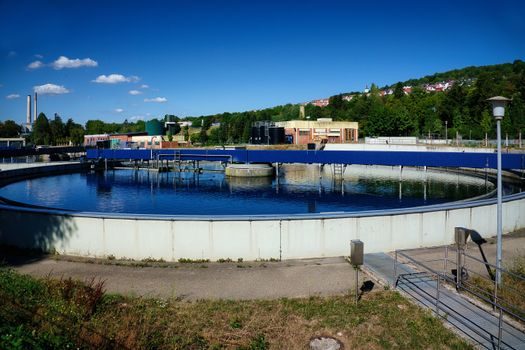
The market splits into three options: (a) manual/portable benders, (b) semi-automatic hydraulic alligator benders, and (c) CNC/PLC automatic two-head benders. On the WTP decision criteria of bar range, angle accuracy, throughput, and price, the ranking is clear: [S1]
Manual/portable: D6–D16 mm, ±3° accuracy, ~3–4 bends/min, lowest price. Useful for fit-up and odd angles, not for cage work.
Semi-automatic hydraulic: D10–D25 mm, ±2° accuracy, ~5–7 bends/min, mid price. Acceptable for small pump-station bases under 20 tons of rebar [S1].
CNC/PLC automatic: D10–D32 mm (some up to D50 mm), ±1° accuracy, 8–12 bends/min, highest price. This is the WTP workhorse for tank walls, hopper bottoms and thick mat foundations [S1].
For most WTP main contracts — clarifiers, aeration tanks, filters in the 10–50 ML/d range — the CNC/PLC class is the right pick. The semi-auto class is acceptable only on small skid-mounted pump stations or package plants under ~5 ML/d, where the total rebar tonnage is small enough that throughput does not dominate the schedule.
Matching the Bender to WTP Sub-Structures
Each WTP sub-structure stresses a different part of the bender. Clarifier tank walls and floors are dominated by curved D16–D25 mm stirrups and large-radius D20–D32 mm circular bars, so a machine with a wide mandrel-pin set (up to 8d) and continuous-bend programming wins [S2].
Filter beds and backwash tanks throw high-volume repetitive D10–D16 mm stirrup work — this is where the 8–12 bends/min throughput of a CNC bender pays back fastest, because a 50 m³ filter gallery can run 8,000–12,000 stirrups.
Pump-station base mats and chemical-building slabs are heavy D25–D32 mm at 100–150 mm centers, which requires the upper end of the diameter range and a bender with a motor in the 5.5–7.5 kW band. Sludge-thickener hopper bottoms are the hardest case: double-curved D20–D32 mm radial bars, often with non-standard angles (e.g. 22.5°, 67.5°), and that is the case where PLC angle programming is non-negotiable.
For cutting the bent cages to length, pair the bender with a matching rebar cutter on the same diameter range; mismatched cutter and bender capacities are a common site bottleneck.
Limitations, Failure Modes and What the Spec Will Not Catch
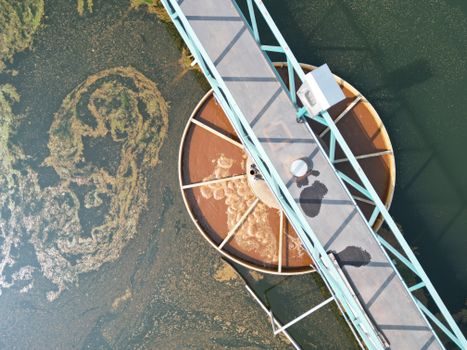
WTP rebar work exposes three bender failure modes that the sales sheet usually hides. First, springback on Grade 75 (520 MPa) bar — the bender's angle must be over-bent by 1°–3° to land on the as-built 90°; machines without programmable over-bend give a chronic 87°–89° problem on high-yield bar [S1].
Second, coated bar (fusion-bonded epoxy per ASTM A775, or stainless-clad) is slipperier than black bar and cracks the epoxy if the bend-pin is worn. WTP buyers should specify replacement pin sets and bend rollers suited to coated bar, and budget pin replacement at roughly 5,000–8,000 bends per pin in continuous production [S1].
Third, wet-site electrical safety: a bender near a chlorine room or in a flooded excavation needs at minimum IP54 enclosure and a GFCI/RCD on the supply, plus a stainless or galvanized frame. Painting over mild steel is not a corrosion strategy for a chlorine-adjacent asset [S2][S3].
For the larger picture on WTP process scope, the rebar reference covers the grades and finishes most commonly called out on WTP drawings, while rebar coupler is the companion spec for mechanical splices in tank-wall vertical bars where lap lengths would crowd the cover.
Standards, Sourcing and Price Bands
The governing standards on a WTP rebar bending job are typically ACI 318 / ACI 350 (US practice) or BS 8110 / EN 1992 (EU practice) for bend radii and crack control, ASTM A615 for bar material, and ASTM A775 for epoxy-coated bar [S1]. Bend radius is the most-checked number on inspection: 3d for stirrups and ties, 6d for main bars in seismic zones, and 4d for typical WTP main bars per ACI 350.
For sourcing, the main manufacturing clusters sit in China (the dominant exporter of CNC rebar benders, typically shipped in the 20-foot container range with power options 380 V / 50 Hz, 415 V / 50 Hz, or 220 V / 60 Hz for the Philippines and Latin America) and in Japan/Korea for the high-precision PLC class. Regional distributors — for example, the Philippines-based rebar machinery channel represented by [S1] — typically stock D10–D32 mm CNC units with 12-month warranty and on-site commissioning. Comparable machinery and steel distributors in the Middle East and South Asia cover the UAE, Saudi Arabia and India markets for WTP builds [S2][S3].
Price band reference (mid-2026, FOB China): manual portable benders sit at roughly USD 250–600, semi-automatic hydraulic units at USD 1,800–3,500, and CNC/PLC automatic D10–D32 mm units at USD 6,500–14,000 depending on motor size, mandrel-pin set and brand. Sourcing note: this is a machine price, not a turnkey line — add 10–15% for mandrel-pin sets, control upgrades and spares.
Decision Rule and Verifiable Next Signals
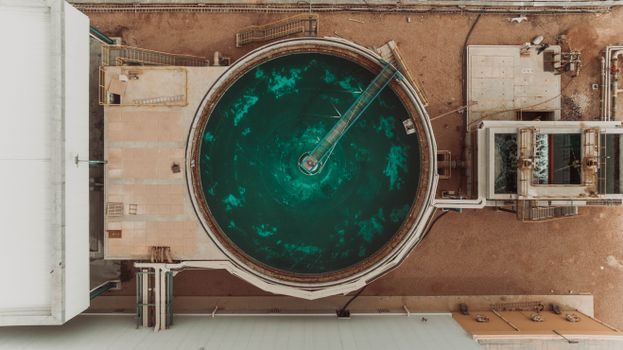
Rule of thumb for a WTP spec: if total rebar tonnage exceeds 15 tons or the largest bar exceeds D25 mm, specify a CNC/PLC automatic bender with D10–D32 mm capacity, ±1° angle accuracy, 3d–6d mandrel range, and a 5.5–7.5 kW continuous-duty motor; below those thresholds, a semi-automatic hydraulic unit is acceptable. Always confirm the bar grade (Grade 40 / 60 / 75), coating spec (black, FBE per ASTM A775, or stainless-clad) and the bend-radius table from the project structural notes before locking the machine order [S1].
Trackable signals to watch over the next quarter: rebar price movements (Grade 60 domestic and import), which shift the value-engineering pressure between Grade 40 and Grade 75 on a given tank wall; and any project release tied to the regional WTP build-out — for example, distribution-channel expansion in the Philippines and UAE that tends to pull CNC bender lead times down by 2–4 weeks in a busy quarter [S1][S2][S3].
For related coverage, see Gravity Die Casting Machine Picks for Semiconductor Tooling and Heat-Spreader Castings.