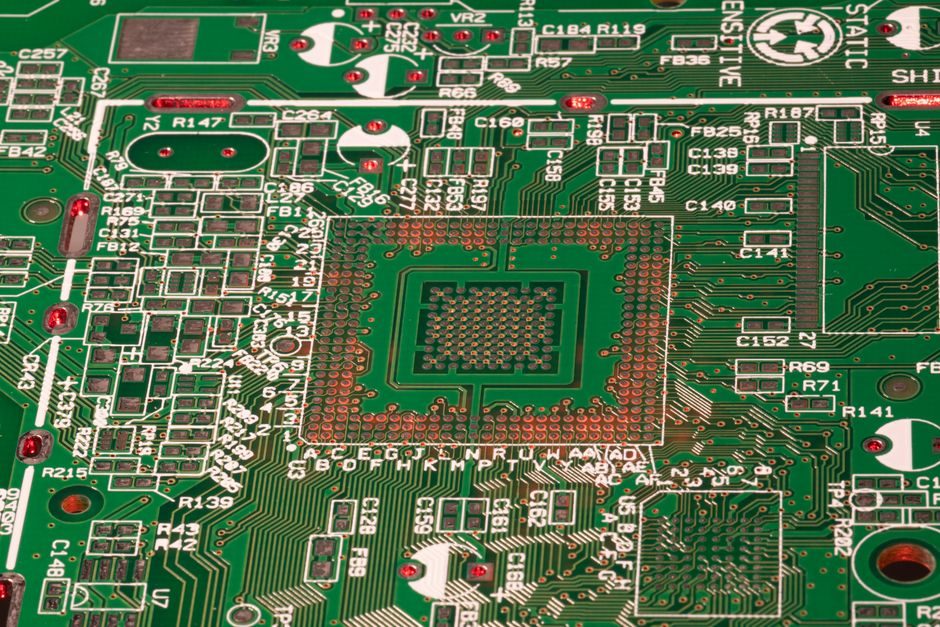
Semiconductor back-end tooling — heatsink covers, RF shield housings, and test-socket plates — is increasingly prototyped on vertical-parting gravity die casting machines delivering 80–250 kN clamp force, hardened H13 tool steel dies, and PLC-controlled tilt-pour, because the slow, gravity-driven fill keeps inclusion and gas porosity low enough for vacuum-leak screening [S2].
The market that supplies these cells sits inside the wider die casting machine ecosystem, where Chinese manufacturers publish OEM gravity-tilt cells in the 50–800 kN clamp range and price them in bands of roughly US$5,000–50,000 ex-works depending on platen size, hydraulic versus servo actuation, and shot-weight envelope [S1][S2].
Spec Bands That Match Semiconductor-Grade Work
Gravity cells suitable for Al and Mg semiconductor hardware typically span 80–250 kN clamp force, platen sizes from 320 × 320 mm to 630 × 630 mm, and shot weights of 0.5–5 kg per fill — small enough for heatsink-blade prototyping and large enough for RF enclosure covers [S1][S2].
Die material is hardened H13 (or equivalent hot-work tool steel, 48–52 HRC) with nitrided cavities, and the fill is metered by a hand- or PLC-tilted ladle rather than a high-pressure shot sleeve — a fundamental difference from a high-pressure die casting machine and the reason porosity stays below 1 % in well-gated runs [S1].
Cycle time is a deliberate trade-off: 30–120 s per shot is normal because the metal is poured, not injected, and additional dwell is added to feed shrinkage in the riser — a non-starter for consumer phone frames but ideal for prototype semiconductor thermal hardware where density and leak-tightness outweigh throughput [S2].
Alloy Choice: Aluminum, Magnesium, Zinc Trade-Offs
Aluminum A380 / A383 dominates the semiconductor gravity-die segment because it casts cleanly, machines to tight tolerances, and accepts anodising for electrical insulation, with typical pour temperatures of 680–720 °C and die temperatures held at 200–300 °C [S1][S2].
Where weight matters more than strength — handheld test fixtures, mobile RF shields — magnesium die casting machine cells running AZ91D at 640–680 °C pour drop component mass by roughly 30 % versus A380, but require SF6/N2 cover gas and tighter melt-handling discipline that a generic gravity-tilt cell may not provide out of the box [S1].
Zinc alloys ( Zamak 3 / 5 ) are occasionally specified for connector blocks and small fixture hardware because the lower 420–450 °C pour extends die life and tolerates thinner walls, with zinc die casting machine cells typically built as smaller 30–100 kN bench-top units [S2].
Why Gravity Beats Pressure for Tooling, and Where It Loses
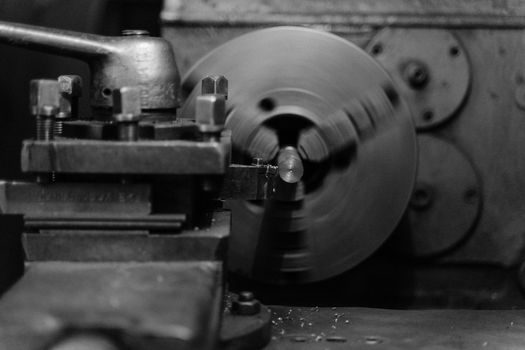
Gravity tilt-pour fills a die in roughly 1–3 s from a hand- or ladle-tilted crucible, but the head pressure is below 0.1 MPa — orders of magnitude below the 30–100 MPa injection pressure of a vacuum die casting machine — which is precisely why entrapped gas and oxide inclusions fall, not rise, when the part is gated correctly [S1][S2].
The cost of that cleanness is throughput: a single 100 kN gravity cell typically delivers 80–200 shots per shift versus 800–1500 from a comparable cold-chamber pressure cell, and thin walls below 1.5 mm are difficult to fill without a vacuum assist or a switch to aluminum die casting machine pressure cells [S1][S2].
Control Architecture and Sourcing Realities in 2026
Most OEM gravity-tilt cells ship with PLC + 7–10 in HMI, servo proportional hydraulics for clamp and tilt, optional 4-zone die heating, and a thermocouple tree inside the die; Ethernet / OPC-UA gateways are available on premium cells, while entry-tier units still rely on RS-485 Modbus [S1][S3].
Made-in-China.com lists gravity-die product prices clustering between US$100 and US$5,000 per die (the consumable, not the machine) and full machine inquiries routed through Alibaba's 1,246 die-casting supplier base, of which a meaningful slice builds gravity cells alongside hot- and cold-chamber pressure units [S2][S3].
Spec-vs-spec sourcing therefore reduces to: clamp force envelope, platen size, shot weight, die-heating zones, and whether the OEM offers local commissioning — rather than chasing a brand name, since several of the larger Chinese gravity-cell builders offer A380 / AZ91D process recipes on commissioning for an additional US$3,000–8,000 [S1][S2][S3].
Selection Criteria Versus Use Case

For heatsink-blade prototypes and RF-shield covers in the 0.5–5 kg shot band, a 100–250 kN vertical-parting tilt-pour cell with H13 die and PLC HMI is the right fit; volumes above roughly 5,000 parts per month justify stepping up to a 500 kN+ cold-chamber aluminum die casting machine or a vacuum cell instead [S1][S2].
For semiconductor equipment builders prototyping test-socket plates, robot-arm structural members, and vacuum-chamber bases, the same gravity cell still works, but buyers should ask the OEM for shot-weight repeatability data (±2 % is realistic on a tilt-pour, ±0.5 % requires a vacuum or pressure cell) and confirm tilt-axis servo response before sign-off [S1].
Across all of these use cases, a 6-axis criteria compare — clamp force, platen, shot weight, alloy, control bus, price band — usually narrows the field to two or three OEM models in 30 minutes and lets the buyer trade density for throughput on data, not marketing [S1][S2][S3].
Standards, Validation and Failure Modes to Watch
Gravity-cast parts for semiconductor back-end tooling are typically validated by helium leak testing to internal sensitivity of 1×10⁻⁹ atm·cc/s, radiographic or CT inspection for internal porosity above 0.5 mm equivalent, and dimensional CMM against ISO 2768-mK or tighter per the customer's drawing [S1].
Common failure modes are mis-runs from cold dies (pour below 200 °C die surface causes mis-runs and surface folds), inadequate risering (shrinkage porosity clustering in thick sections above 12 mm wall), and die-coating wear that drives solder-flux penetration in subsequent downstream processes — all three are caught by a 50-shot commissioning run before production release [S1][S2].
For buyers building a comparison shortlist, the working matrix is: 80–150 kN entry cells at US$5,000–15,000 ex-works, 150–400 kN mid-range at US$15,000–35,000, and 400 kN+ heavy cells at US$35,000–80,000 with servo tilt and full process recipe — each tier is served by overlapping OEM sets, so RFQ at two price points is the fastest way to bracket a fair market number [S1][S2][S3].
Buyers who already run pressure cells and only need a complementary gravity line for low-porosity prototype batches should cross-check platen height and ladle-pour geometry against existing dies, and confirm the supplier can ship FOB Ningbo or Shanghai with 60–90 day lead time for the cells documented in the 2026 Made-in-China and Alibaba listings [S2][S3]. Squeezing the right-sizing decision onto data — shot weight, leak-rate target, alloy, and monthly volume — keeps the gravity cell in its correct lane rather than overpaying for pressure-cell throughput the part will never use, an approach that lines up with the broader OEM landscape mapped for low-pressure die casting machine suppliers in 2026 and the force/shot-weight decision gates in squeeze casting machine sizing.