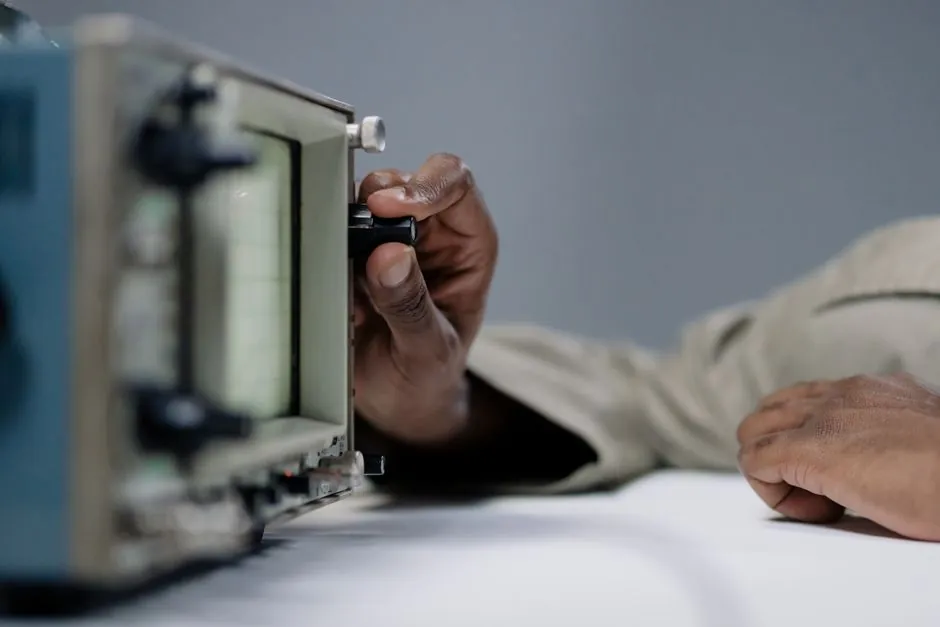
Mining process plants run on 4-20 mA loops for level, pressure, flow, and weight transmitters, so a signal calibrator must source, read, and simulate current and voltage while surviving dust, vibration, and temperature swings. The 4-20 mA standard uses 4 mA as live zero and 20 mA as 100% span, meaning 12 mA always represents the 50% engineering unit regardless of whether the variable is psig, °C, or liters per minute [S2].
Calibration work in mining covers pressure gauges, pressure transmitters, RTDs, thermocouples, gas detectors, and torque wrenches, so a single handheld loop calibrator is rarely enough for a processing plant. The pragmatic answer is a bench-grade multifunction calibrator for the instrument shop plus a portable mA/voltage/thermocouple unit for field loops, both sourced from the same vendor to keep traceability and spares consolidated [S1].
Defining the Mining Signal Calibration Scope
Mining sites calibrate pressure gauges, manometers, pressure transmitters, switches, temperature transmitters, RTDs, thermocouples, multimeters, clamp meters, power meters, and power supplies, alongside environmental instruments such as gas detectors, analysers, and leak detectors [S1]. A signal calibrator in this context is any instrument that can source or read a process signal (mA, V, Ω, TC, RTD) to verify or trim a transmitter, indicator, or controller.
The dominant loop in mining is a 2-wire 4-20 mA current loop, where the transmitter regulates current proportional to the measured variable and receives its operating power from the same pair of wires from a 24 VDC supply [S2]. Because the DCS or PLC measures voltage across an internal or external 250 Ω shunt, the same 4-20 mA signal is also presented as 1-5 VDC inside the controller, and a 200 ft run of 20 AWG copper adds roughly 1 Ω per 100 ft, which is why a calibrator in source mode is the only practical way to trim loop error in the field [S2].
Selection Criteria That Actually Matter Underground
Accuracy is the first hard filter: a portable loop calibrator with ±0.02% of reading on the 0-22 mA range (such as the Time Electronics 1048, with three source ranges 0-22 mA and 0-22 V plus three measure ranges 0-70 mA and 0-50 V) will trim most 4-20 mA loops well inside the transmitter's own reference accuracy [S1]. For shop-grade work, multifunction calibrators with 15 ppm or 40 ppm precision, 0-1050 V AC/DC, 0-22 A AC/DC, and resistance from 1 Ω to 1.1 GΩ cover the wider mining instrument list including Pt100 simulation, capacitance, and inductance [S1].
Signal coverage comes second: the unit must support mA source/read, mA sink (transmitter simulation), voltage source/read, thermocouple types K/J/T/E/R/S/B/N, RTD (Pt100/Pt1000), and ideally frequency for vibration sensors on crushers and conveyors [S1][S2]. A calibrator with selectable slow ramp, fast ramp, and step output lets the technician exercise high and high-high level alarms by simulating 90% and 95% tank level without opening the vessel, which is the safest way to validate interlock logic in a slurry tank or thickener [S2].
Environmental rating is the third filter: coal dust, silica dust, diesel fumes, and water spray are routine, so an IP54-rated enclosure, a rubber holster, and an operating temperature window of at least -10 to 50 °C are practical minimums for a portable unit. Intrinsic safety is required only when the calibrator is carried into a classified area; most mining plants run bench calibration in the instrument shop and only take a portable into Zone 1 or Zone 2 with a hot-work permit, so documenting ATEX/IECEx certification of the calibrator matters more than the box itself.
Comparing the Three Real Options on Site

Three calibrator classes cover almost every mining calibration job, and the choice between them is set by where the work is done and what is being verified. A criteria-based comparison reads: a portable mA/voltage/TC loop calibrator (Time Electronics 1048 class) is small, battery-powered, and accurate to ±0.02% on 0-22 mA, but cannot source high voltage or simulate Pt100 with high stability; a portable multifunction calibrator adds TC and RTD simulation, frequency, and often HART communication in a field-ready body, at higher cost and weight; a bench-top multifunction calibrator (5025C/5025E class) offers 15 ppm or 40 ppm precision, 0-1050 V AC/DC, 0-22 A AC/DC, 1 Ω to 1.1 GΩ resistance, capacitance, inductance, and oscilloscope option, but requires AC power and a stable bench [S1].
For a single-site mineral processing plant with 200-500 loops, the standard configuration is two portable units plus one bench unit shared between the electrical and instrument workshops. For a remote exploration camp, a single IP65 multifunction portable with HART and TC/RTD covers the bulk of commissioning. For a concentrator with on-site gas detection calibration, add a gas-detector calibrator (such as a bump-test station for CH₄, O₂, CO, H₂S) because a general signal calibrator will not generate the certified gas mixtures used for sensor verification [S1].
Use Cases Across the Mining Value Chain
Open-pit and underground mines use signal calibrators primarily on ventilation gas detectors (CH₄, O₂, CO, NO₂), conveyor belt weigh scales (4-20 mA from load cells), and slurry density meters, where density is often inferred from a differential pressure transmitter across a calibrated spool. A loop calibrator in source mode lets the instrument technician simulate 4 mA and 20 mA into the belt-scale controller to re-trim zero and span without stopping the belt, which would otherwise cost production at the rate of a large haul-truck payload every few minutes [S1][S2].
Mineral processing plants add crusher vibration sensors, cyclone pressure transmitters, and reagent dosing flowmeters to the calibration roster. For flow, the 4-20 mA trim procedure is identical to pressure or temperature, but the technician must wait for damping to settle because flow loops often carry a 5-10 second time constant to smooth pulsation. Mill and flotation cell level loops run on guided-wave radar or ultrasonic transmitters, and here a calibrator with HART communication lets the technician read tag, range, and engineering units directly from the transmitter head rather than climbing the tank with a ladder and a printout [S2].
Limitations, Failure Modes, and What a Calibrator Will Not Do
A signal calibrator cannot substitute for a dead-weight tester on a high-accuracy pressure gauge, a thermal block on a process thermometer, or a certified gas cylinder on a catalytic-bead gas sensor; each of those references owns its own traceability chain. A loop calibrator sourcing 4-20 mA will also fail to verify Foundation Fieldbus or PROFIBUS PA segments, which are digital protocols running on a different physical layer than the 4-20 mA analog loop, so a mining plant running both analog and digital fieldbus needs at least one segment checker dedicated to the bus [S2].
Common field errors include forgetting that 24 AWG instrumentation wire adds roughly 2.6 Ω per 100 ft (versus 1.6 Ω for 22 AWG and 1.0 Ω for 20 AWG), so a 500 ft run on 24 AWG will introduce around 1.3% error at 20 mA if the loop is not trimmed in place [S2]. Another failure mode is calibrating a transmitter while it is still connected to the controller: the parallel path can either back-feed power or split current, producing an apparently correct trim that drifts as soon as the calibrator is removed. The correct procedure is to break the loop at the transmitter terminals and connect the calibrator in series, or to use the calibrator's mA sink (transmitter simulation) mode to replace the transmitter entirely while the controller remains in service [S2].
Accessories, Loop Support, and Shop Setup
A calibrator rarely works alone in a mining CalBench: it is paired with decade resistance boxes for Pt100 simulation, pressure hand pumps for 0-700 bar gauges, thermocouple reference junctions, and a HART communicator for smart transmitters. Resistance decade boxes covering 0.01 Ω to 1 MΩ or 1 Ω to 100 MΩ, with safety terminals and a low temperature coefficient, are the standard support items for RTD work and are typically mounted in the same workshop console as the multifunction calibrator [S1].
Signal isolators, splitters, and loop-powered conditioners sit on the other side of the loop and are often confused with calibrators, but their job is to clean, split, or isolate a running 4-20 mA signal in place, not to verify it. Selecting an isolator or a signal conditioner with the same accuracy class as the calibrator (0.02-0.05% of span) keeps the measurement chain honest, and pairing the bench calibrator with a signal isolator on long cable runs to the DCS reduces common-mode noise that would otherwise chew up the loop trim [S3]. For mines with vibrating screens, SAG mills, and variable-frequency drives, an isolator with 1500 Vrms isolation and 50 Hz/60 Hz common-mode rejection is a sensible match for the typical 250 Ω shunt inside the controller [S3].
For a deeper selection framework that spans data loggers, RTDs, and shop-side electrical test gear, the engineering sourcing map in data logger suppliers 2026 lines up with the same vendor shortlist and traceability rules used for loop calibrators. Where the calibration work touches high-voltage drives, crusher motors, or mill power, the criteria in best multifunction power meter for power generation extend the same ±0.02% accuracy discipline to the electrical side of the same instrument shop.
Procurement Signals Worth Tracking
Two trackable signals will tell a maintenance planner when to refresh the calibration fleet: a rising count of transmitter trim tickets that fail the first pass (a sign the loop calibrator is drifting or that the wrong reference standards are in use), and the introduction of a new fieldbus or wireless Hart segment on a project, which forces a segment checker or wireless gateway into the kit alongside the analog calibrator. For gas detection, monitor the expiry dates on bump-test gas cylinders, since a calibrator cannot manufacture a 50% LEL methane mixture on its own. [S2]
Two adjacent reference resources sit one click away in the encyclopedia: a signal calibrator primer for technicians transitioning from analog to HART/Fieldbus work, and a loop calibrator page that expands the mA source/measure, sink, and step-ramp functions used in every mining 4-20 mA loop trim.