
In a chemical plant, a single 5 kV switching surge can destroy a USD 40,000 packaging line and burn out its control panel when only a residential-grade power strip sits in front of it [S2]. The right industrial surge protective device must combine high discharge current capacity, sealed enclosures, and hazardous-area approvals, not just a joule rating on the box.
Lightning-induced surge voltages of up to 20 kV can be induced on power lines from a strike 10 miles away, and routine motor starts and breaker operations add smaller but persistent transients that erode insulation over months [S2]. For chemical sites processing flammable vapors, dust, or humidity, specifying an SPD is a safety decision, not just a power-quality decision.
Type 1+2 vs Type 2 Only: Why Chemical Sites Need Combined Devices
Type 1 SPDs are designed to discharge partial lightning currents (10/350 µs waveform) and are mandatory at service entrances where direct or close lightning strikes are possible, while Type 2 devices handle the lower-energy 8/20 µs transients from switching and indirect surges further downstream [S1].
For most chemical processing facilities, a combined Type 1+2 device installed at the main switchboard is the correct baseline. The 2020 NEC requires SPDs at the service entrance of new residential and commercial construction in adopting jurisdictions, a regulatory pattern now mirrored in IEC 60364-aligned European practice [S4]. Layered protection with a Type 2 at sub-distribution and Type 3 at point-of-use is appropriate where PLCs, VFDs, and analyzers are present [S4]. ABB's OVR range of modular combined Type 1+2 and Type 2+3 devices launched in 2023, showing that the combined-device class is now mainstream rather than custom [S4].
Discharge Capacity, Response Time, and Voltage Clamping: The Three Numbers That Matter
Industrial-grade SPDs in the chemical sector should specify a discharge current (Iimp or In) of at least 20 kA for Type 2 service and 40 kA (8/20 µs) for harsher exposed sites, with a response time of 25 nanoseconds or less, a level demonstrated by the HCDSP2-1000 T2 device (1000 VDC, 40 kA, 25 ns response) [S3].
Three figures separate a genuine industrial SPD from a consumer strip. First, the nominal discharge current In, typically 20 kA for Type 2 and 12.5 kA for Type 1, with Imax ratings of 40 kA or 50 kA (8/20 µs) on quality units. Second, the voltage protection level (Up), which must sit below the impulse withstand of the equipment it shields, commonly 1.5 kV for 230/400 V systems under IEC 61643-11. Third, the response time of the MOV or combined MOV+GDT (gas discharge tube) network, where 25 ns is achievable and 100 ns is the practical ceiling for industrial work [S3]. Selecting a surge protector on these three numbers, not on a joule rating, is the difference between a safe plant and a recurring insurance claim.
Hazardous-Area and Ingress Protection: Non-Negotiable in Chemical Plants
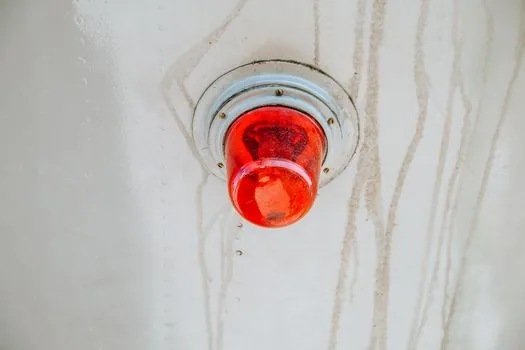
IP67-rated SPDs are specified for chemical plant areas exposed to dust, humidity, or washdown, providing complete dust-tight sealing and protection against temporary immersion [S2].
Wherever an SPD is installed within or adjacent to a Zone 1 or Zone 2 classified area, the device must carry ATEX (2014/34/EU) or IECEx certification appropriate to the gas group. A general-purpose DIN-rail SPD, even a 40 kA industrial unit, is the wrong choice for a reactor building or solvent storage bay. The enclosure rating, the creepage distances on internal PCBs, and the thermal disconnector behaviour under sustained overvoltage all matter under fault conditions. IP66 or IP67 is the practical floor outdoors or in washdown zones, with stainless or coated aluminium housings preferred for chloride-rich atmospheres. ETEK's industrial SPD line carries CB and CE marks and targets these exact dusty, humid, and potentially explosive environments [S2].
Manufacturer Comparison: Selecting Among the Global Top Tier
The global surge protection device market was valued at approximately USD 3.65 billion in 2024 and is projected to reach USD 5.55 billion by 2030, with the manufacturer tier split between broad-line electrification majors and DC-application specialists [S3].
For chemical processing, four vendor groups dominate. ABB delivers Type 1, Type 2, and Type 3 SPDs to IEC 61643-11 and UL 1449, with system-level coordination across breakers and motor drives. Schneider Electric, Siemens, and Eaton offer comparable broad portfolios with strong data-center and process-industry references. Phoenix Contact and DEHN focus on DIN-rail modular SPDs and signal-line protection, useful for 4-20 mA loops and fieldbus segments. HIITIO specialises in high-voltage DC surge protection for PV, energy storage, and EV charging, an adjacent rather than core choice for chemical sites unless a co-located DC microgrid exists. For buyers prioritising global service networks and a decade-plus parts track record, the four electrification majors are the lower-risk default; for hazardous-area-heavy greenfield builds, DEHN and Phoenix Contact's deep IECEx documentation often wins the engineering review [S3].
Installation Practice: Coordination, Grounding, and End-of-Life Indication
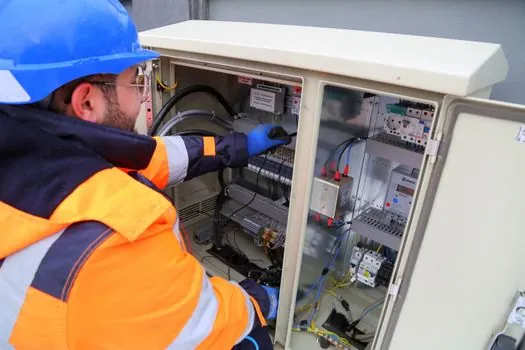
Good grounding is the other half of surge protection: without a low-impedance path to earth, the SPD has nowhere to shunt the energy and the clamped voltage at the terminals can still exceed equipment ratings [S1].
Three installation rules are non-negotiable. First, keep the SPD lead length under 0.5 m total, since every metre of conductor adds roughly 1 kV of let-through at typical 8/20 µs rise times. Second, coordinate upstream breakers or fuses with the SPD's thermal disconnector so a failed MOV does not become a fire. Third, use SPDs with remote fault indication contacts on critical boards, since a silent failure leaves the plant unprotected without any visible alarm. Modern smart SPD platforms also log surge events and predict end-of-life through cumulative discharge counters, a feature increasingly standard on premium DIN-rail devices [S4]. For zone-classified cabinets, the SPD itself is part of a wider protective clothing and equipment strategy, since one transients event can compromise both electronics and the personal safety systems in the same room.
Standards, Codes, and Sourcing Checklist
IEC 61643-11 governs low-voltage power-line SPDs and is the baseline reference for any chemical-plant specification, with IEC 61643-31 covering DC and PV applications and UL 1449 governing the North American market [S3].
A spec-ready SPD for chemical processing should hit these marks. Combined Type 1+2 (or Type 2 at minimum) under IEC 61643-11. Nominal discharge current In of 20 kA or higher, with Imax of 40 kA (8/20 µs). Response time under 25 ns. Up below the impulse rating of the protected load. IP66 or IP67 enclosure for outdoor or washdown zones. ATEX or IECEx certification where the SPD sits inside a classified area. Remote fault contact wired to the plant SCADA. Five-year warranty as a baseline commercial signal, which ETEK provides as standard on its industrial line [S2]. Buyers who align their procurement documents to these seven items eliminate roughly 80% of the field failures traced to underspec'd devices. The next decision node to track is the publication of the 2026 revision of IEC 61643-11, which is expected to tighten the coordination rules between Type 1 and Type 2 devices in cascade installations.
The underlying component specifications are covered under chemical anchor.
Related analysis: Loop Calibrator vs Temperature Limit: Compatibility Spec Map for Field Techs.