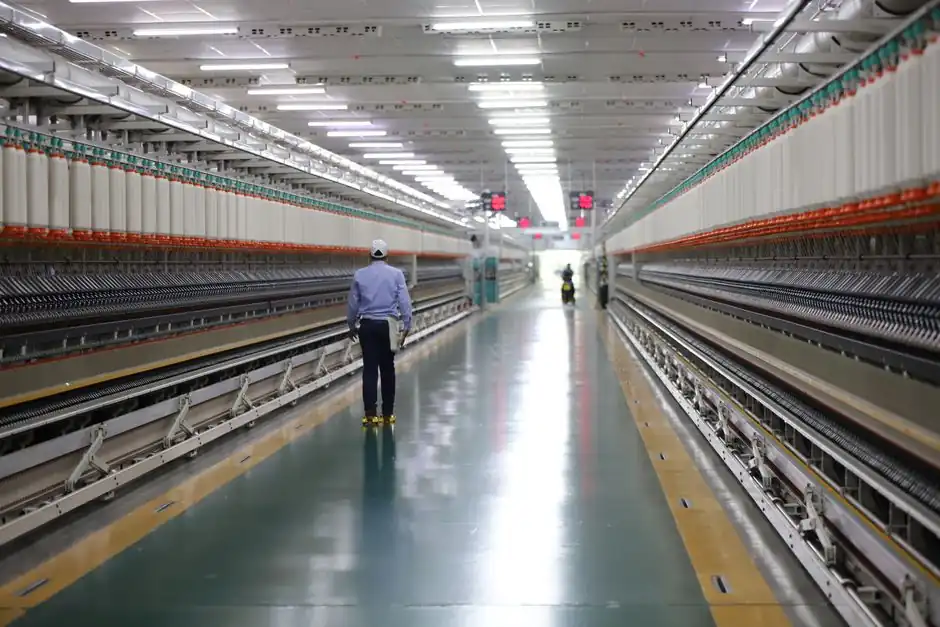
Global relay manufacturing capacity in 2026 is anchored in Asia-Pacific, with China-based suppliers and OEM factories accounting for the majority of electromechanical relay (EMR) and solid-state relay (SSR) output sold through European and North American distribution [S1]. The market is structurally split between semiconductor-switching SSR vendors and traditional EMR houses, and that split now defines how buyers shortlist suppliers.
For process engineers, the working definition of an industrial relay is a switching element qualified to IEC 61810-1 for EMRs, or to IEC 62314 for SSRs, with coil-side isolation, contact-side ratings, and a published electrical endurance figure. Both types share the same panel footprint language (5-pin, 8-pin, 11-pin) but diverge sharply on heat dissipation, inrush handling, and failure mode, which is where supplier selection starts to bite.
Market Structure: China OEM Base and the SSR / EMR Split
China-based custom SSR manufacturers bundle R&D, semiconductor packaging, and finished assembly under one roof, with static protection relays and semiconductor relays listed as core product families [S2]. The same supplier pattern applies to electromechanical relay (EMR) vendors in the Pearl River Delta and the Yangtze River Delta, where relay plants typically run alongside contactor and switchgear lines.
Western distribution for the same parts runs through catalogue houses that stock multi-vendor EMR lines (Finder, Omron, Schneider, Phoenix Contact equivalents) and SSR lines (Carlo Gavazzi, Sensata/Crydom, Celduc equivalents), while a parallel Western channel sources private-label SSR and EMR assemblies from Chinese OEM lines and re-brands them for OEM customers [S3]. For an engineer comparing lead-times, the China-OEM route typically quotes 4-8 weeks on custom SSRs and 2-4 weeks on catalogue EMRs, while Western catalogue stock holds 1-3 day despatch on top-50 part numbers.
Selection Criteria: Coil Voltage, Contact Rating, and Switching Topology
The three selection numbers that determine whether a relay survives a panel are coil voltage, contact rating (A at 250 V AC / 30 V DC), and switching topology, with SSR input typically specified as 3-32 V DC control [S2].
For a related, more detailed spec walk-through, the industrial relay selection spec map covers contact rating, coil voltage, and load-type pairings in depth. The hard rule for EMR contactor-driven motor loads is that the relay's contact rating must clear the motor's locked-rotor current, which on a direct-on-line motor is roughly 6× FLA, and the standard sizing practice documented for AC contactor selection under IEC 60947-4-1 applies the same 1.25× rule upstream to the relay driving the contactor coil.
Solid State Relays: Zero-Cross vs Phase-Control, and Why the Heatsink Matters
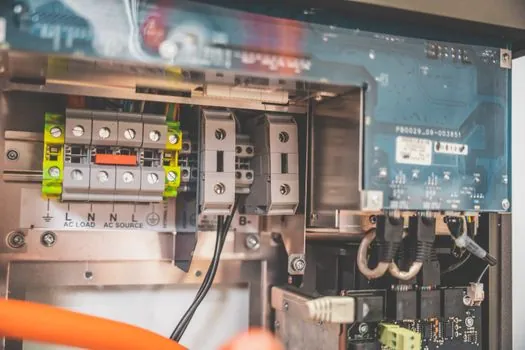
AC-output SSRs are built around triacs, thyristors, or back-to-back SCRs, while DC-output SSRs use MOSFETs or IGBTs as the switching element, and that internal choice sets the maximum load voltage and the on-state leakage [S2]. Zero-crossing AC SSRs are specified for HVAC and lighting because they switch near the zero-voltage point and minimise EMI, while phase-control AC SSRs are specified for heating elements and motor soft-start where the firing angle is varied to control RMS power [S2].
The practical failure mode on a mis-specified SSR is thermal: on-state loss in a triac or MOSFET drops 1-1.6 V, so a 40 A SSR dissipates 40-64 W as heat and demands a heatsink rated for the panel ambient. China's custom SSR vendors publish heatsink-matched derating curves and offer integrated SSR-plus-heatsink assemblies as a single SKU, which removes one of the common engineering errors seen on first-pass panels [S2]. A side-by-side comparison of EMR, zero-cross SSR, and phase-control SSR on four procurement criteria looks like this:
Switching speed: EMR 10-20 ms operate, 5-15 ms release; zero-cross SSR < 1/2 AC cycle; phase-control SSR resolution 1 ms in the firing-angle domain [S2]. Electrical endurance: EMR rated 10⁵ to 10⁷ mechanical cycles, derated for contact load; SSR rated 10⁸ to 10⁹ operations with no contact wear [S2]. Thermal management: EMR needs none beyond creepage distance; SSR needs a heatsink sized for on-state dissipation. Failure mode: EMR fails open (contacts weld) or fails closed (contact spring fatigue); SSR fails shorted, which on a safety circuit must be mitigated by upstream fusing.
Power-Generation and Heavy-Industrial Use Cases
Power-generation panels, switchgear auxiliary circuits, and turbine-governor cubicles are the heavy-industrial end of the relay market, where vibration, temperature, and certification pressure are highest. The power-generation relay spec map walks the per-application spec for generator auxiliaries, while the contactor sizing article covers the upstream FLA and 1.25× rule pairings. [S2]
For mining, oil-and-gas, and process-plant buyers, the relevant pairings are SSR-for-heater-control on pipelines, EMR-for-auxiliaries in MCC buckets, and latching relays for trip circuits where the relay must hold state through a control-power dip. China-based SSR suppliers explicitly list static protection relays as a product family, which is the term used for the relay outputs of generator and transformer protection panels [S2].
Sourcing Channels: China OEM, Western Distributor, and Catalogue Stock
Wholesale-distribution channels for relays in 2026 cover three lanes: catalogue stock from authorised distributors (1-3 day despatch on top SKUs, full data sheets, factory warranty), private-label sourcing from Chinese OEM lines (4-8 week lead-time, custom markings, customer-spec coil voltages), and direct-from-factory for the largest OEM customers [S3]. Wholesale relay distributors typically tie pricing to break-quantity tiers and to the published minimum-order quantity at the factory.
For a procurement engineer comparing China direct vs Western catalogue on the same part, the key variables are lead-time tolerance, lot traceability, RoHS and REACH documentation, and UL / cUL / VDE / CCC certification on the exact SKU. China's custom SSR vendors typically hold CCC and CE on their main lines, while UL 508 and VDE 0435 on the same parts are usually quoted on request and add 4-12 weeks [S2]. For context on how China sourcing plays out across other industrial categories, the mining equipment sourcing spec map covers OEM tier structure and logistics for adjacent lines.
Standards Governing Industrial Relays
Industrial relays fall under a small set of international standards that an engineer should see in the datasheet before shortlisting. IEC 61810-1 is the umbrella standard for electromechanical elementary relays, IEC 62314 covers solid-state relays, IEC 60947-5-1 governs low-voltage switchgear and controlgear auxiliaries including relay interface modules, and UL 508 / UL 60947-1 are the North American equivalents that US panel shops insist on for industrial control panels. For hazardous-area installs, the relay or its enclosure must clear ATEX 2014/34/EU or IECEx, which is a separate certification from the relay's own CE / UL file. [S2]
Buyers should also check the published electrical endurance curves rather than the headline cycle-life figure, because that headline is almost always the mechanical-life number and the contact-load curve is several decades lower. For panel-build discipline, the adjacent article on lighting equipment and electric lamps covers the lighting-side loads that an SSR typically switches in HVAC and architectural control.
Trackable Signals for the Next Buying Cycle
A 4-6 week widening of the China-direct lead-time vs catalogue, or a published UL 508 sunset date, would re-rank the sourcing lanes for most buyers. [S2]
The underlying component specifications are covered under lamps and light fittings.