
A high-speed rotary beverage filler running 36,000–72,000 bottles per hour is now the standard reference point for new PET and can line builds, with 54,000 bph demonstrated on a single aseptic PET system at the Asahi Nagoya plant in Japan [S4][S7].
Entry-level beverage lines sit in a 2,000–6,000 bottles/hour envelope, while rotary flow-meter fillers are documented at 300 bottles per minute (18,000 bph) on smaller footprints, and case packers reach 500 bottles per minute downstream of the filler [S6][S7][S9].
Speed bands: entry, mid, and high-speed rotary fillers
Three operating bands dominate the spec sheet: entry lines at 2,000–6,000 bph for water, juice, and small craft beverage plants; mid-range rotary fillers at 12,000–24,000 bph for regional CSD, dairy, and ready-to-drink tea; and high-speed rotary fillers at 36,000–72,000 bph for national PET water, CSD, and aseptic juice programs [S7].
On the high-speed ceiling, the Asahi Nagoya line runs 54,000 bph on 500 ml or smaller PET and drops to 20,000 bph when switching to 1.5 L PET, a 2.7:1 ratio driven by container volume and vacuum recovery time [S4]. This dual-speed behavior is typical on aseptic PET lines where the UHT sterilizer flow is sized to 30 m³/h, so larger formats simply take longer per cycle [S4].
Flow-meter dosing, which uses magnetic flow meters to measure exact dispensed volume, is the dominant technology for high-speed carbonated and still beverage lines because changeovers between formats do not require mechanical re-calibration of pistons or weighing cells [S2].
Changeover time: the SMED frontier on multi-format lines
A bottle-format or product-recipe changeover on a typical filler line burns 60–90 minutes per transition, and with five to ten changeovers per shift, the loss is structural rather than incidental [S3].
SMED (Single-Minute Exchange of Die) programs on beverage filling lines have reduced changeover times down to 12 minutes per transition from a 60-minute baseline [S3]. Aseptic PET systems add a layer of complexity: the DNP system at Asahi Nagoya achieves under-2-hour aseptic changeovers through CSIP (simultaneous CIP and SIP), which overlaps cleaning and sterilization rather than running them in series [S4].
World-class OEE on beverage lines sits at 85% or above, against a 55–65% industry average, and most plants leave 20–30 OEE points on the table through micro-stops, slow cycles, and changeover losses rather than machine speed limitations [S1]. One mid-size bottler running two PET lines at 85% schedule adherence logged 312 unplanned stops in a single quarter, with 61% traced to filler valve leaks, capper jams, and labeler glue faults; a structured PM program cut those stops 38% in 90 days [S1].
Throughput cost of unplanned downtime

Downtime on a filler running 600 bottles per minute at a $0.40 contribution margin costs $240 per minute, or $14,400 per hour, and a three-line plant losing one major breakdown per week plus chronic micro-stops can burn $1.5M–$3M per year in lost throughput, scrap, and overtime [S1].
Filler valve and capper faults drive 42% of beverage line stoppages, and reactive repair runs 3–5× the cost of a planned preventive intervention, which is why valve PM scheduling is treated as the highest-leverage maintenance activity on rotary fillers [S1]. On a 72-head rotary filler, a single failed valve quietly cuts effective speed by 1.4% before operators notice, which is enough to drop OEE two to three points over a shift [S1].
Technology selection: which filler for which product
Gravity fillers suit still water and tea at low viscosity and low cost, but cap out on speed; isobaric (pressure) fillers are mandatory for carbonated soft drinks, beer, and soda water because the bottle and tank are held at equal pressure to prevent CO₂ breakout and foaming [S5].
Piston fillers handle high-viscosity products and suspended particulates, including dairy drinks, concentrated juices, and viscous beverage bases, with the trade-off being higher maintenance due to seal and piston wear [S5]. Peristaltic pump fillers dose by compressing flexible tubing with rotating rollers, so product never contacts mechanical pump parts, which gives typical dosing accuracy within ±1% and clean-in-place advantages for sensitive beverage formulations [S5].
For CSD and beer on a national footprint, isobaric rotary fillers dominate; for aseptic juice and sensitive dairy, the choice narrows to peristaltic or electromagnetic flow-meter dosing where changeover flexibility is a primary spec driver, not a secondary benefit [S2][S5]. Flow-meter filling also handles the broadest container mix: glass, PET, HDPE, and aluminum cans can run on the same dosing principle without mechanical re-tooling of pistons or weighing buckets [S2].
Filler and capper as a coupled reliability system
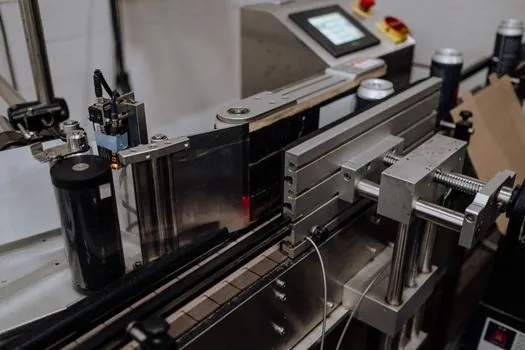
Filler and capper faults are the dominant failure cluster on beverage lines, and they cannot be reliability-engineered in isolation: filler-to-capper timing, transfer star alignment, and capper chute geometry are coupled variables that drift together [S1].
A practical PM regime layers operator daily rounds (seal and vent tube inspection, fill-level checks on three random heads per shift, micro-stop logging above 30 seconds), weekly technician work (two to three valve pulls on rotation, O-ring replacement, flow-meter calibration, cam-follower grease), monthly reliability tasks (10% valve-bench teardown, vibration checks on the main drive gearbox), and quarterly overhauls (full valve-set rebuild, centering bell and snifter valve replacement, thermographic motor and panel scans) [S1]. For plants running filling weighing scale checks against rotary fillers, the same valve-bench teardown discipline applies because volumetric drift on the rotary head reads directly as weight drift on the checkweigher.
Lead time and capital planning for a new line
Standard beverage filling line lead times run 12–18 weeks from order to commissioning, while custom-engineered (ETO) lines with aseptic capability, integrated blow molding, and CIP skids can run over six months, and major aseptic PET builds have stretched past 26 weeks on recent installations [S8].
Specifying lead time, line speed, and SMED target together is the right sequence: changeover goal dictates servo count and recipe-driven adjustment hardware, and that choice feeds back into both the control cabinet scope and the field-device count on the variable speed drive network, which in turn drives cabinet build time and FAT duration [S3][S8].
For plant engineers planning 2026–2027 capex, the realistic target is a 36,000–54,000 bph aseptic or CSD rotary filler with documented under-2-hour changeover, paired with a 500 bottles-per-minute case packer downstream, and a maintenance program benchmarked against 85% OEE rather than nameplate speed [S1][S4][S7][S9]. Plants still running entry-level gravity lines under 6,000 bph should expect a 6–10× throughput step when moving to a mid-range rotary, with changeover capability the binding constraint, not raw speed [S5][S7].
For the relevant spec sheets and selection criteria, see filling machine.
For related coverage, see Outrigger spread and stability zones on lorry-mounted cranes.