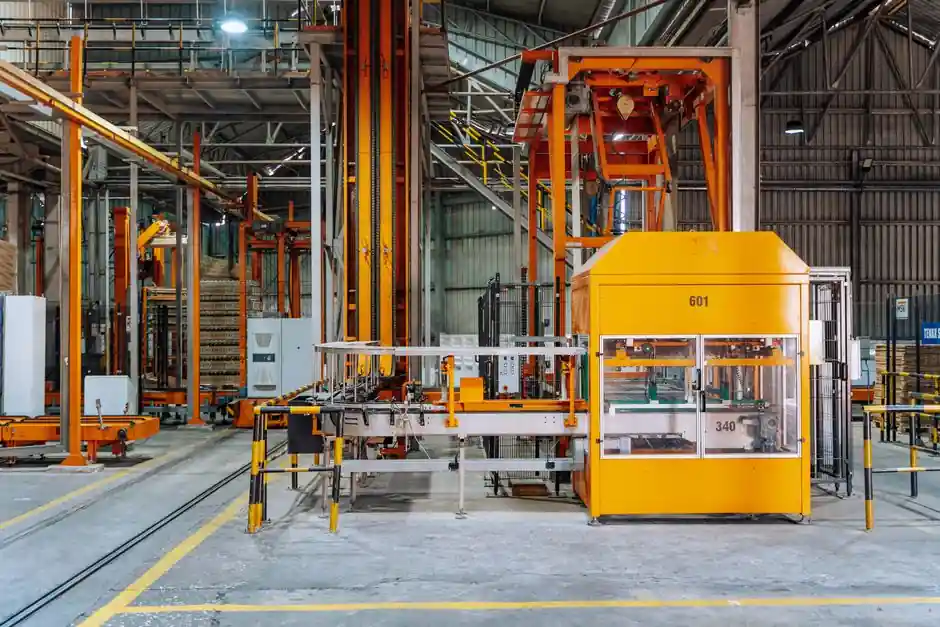
Belt and chain drive monitoring for conveyors now combines current-signature drivetrain analysis, distributed belt-condition sensors, and AS-i Safety at Work wiring, targeting a 4-8 hour unplanned-failure window in mining per Samotics field data [S4].
The scope covers three failure classes: drivetrain defects (motor, gearbox, drive roller, idler bearings), belt-condition events (misalignment, rip, splice wear, slip), and chain-specific degradation (elongation, pin wear). Coverage gaps between electrical and structural sensing define the selection trade-off [S2][S4].
What the monitoring stack actually measures
Electrical signature analysis (ESA) reads current and voltage at the motor control cabinet and extracts torque modulations, speed variations, and spectral patterns; bearing defects in the drive roller, idler bearings, and gearbox create characteristic BPFO and BPFI frequencies that modulate motor current, while misalignment between motor, gearbox, and drive roller produces a 2x running-speed component, per Samotics [S4]. Vibration monitoring handles imbalance, misaligned pulleys, unbalanced rollers, and structural looseness, where excessive vibration accelerates wear on belts, rollers, and drive components per ifm [S2]. Belt-condition hardware includes belt misalignment switches, belt rip and tear sensors, rope-operated emergency stops, speed sensors, radar sensors, ultrasonic level sensors, and encoders per ifm [S2], with ABB portfolio adding tramp metal detection, slip detection/control, belt wear monitoring, and belt rip and splice damage coverage per [S3].
Belt versus chain: distinct failure modes, shared drivetrain risk
Belt monitoring programs typically focus on belt condition: scanners, cord-break detectors, and alignment sensors, since the belt is the highest-cost consumable on most lines per Samotics [S4]. Chain drives carry additional failure modes (pitch elongation, pin/bushing wear, sprocket tooth hooking, lubrication breakdown) that no belt sensor stack detects, while sharing the same drivetrain-bearing risks. ABB cites 700+ kilometers of belt conveyor systems operating worldwide in its installed base, with a 13 km overland belt at the Collahuasi high-altitude copper mine in Chile as a benchmark downhill-conveyor design with electric power regeneration [S3]. For chain conveyors, the encoder and vibration channels apply unchanged; the chain-specific signal lives in current signature as chain-joint impulses modulating torque, a pattern distinguishable from smooth belt loading.
Comparison: which monitoring type covers which fault class
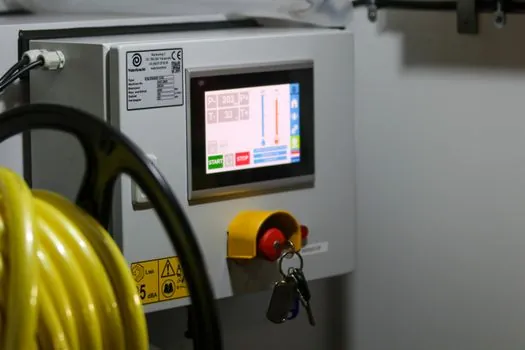
Coverage of the four main monitoring approaches against three decision criteria: drivetrain-bearing fault detection, belt/chain condition (splice, rip, elongation), and install cost on long runs. ESA (electrical signature): strong on drivetrain bearings, blind to belt splice and rip, lowest install cost since it uses existing MCC wiring per [S4]. Vibration sensors (accelerometers on bearings/structure): strong on drivetrain bearings and pulley issues, blind to belt rip and splice integrity, medium install cost per [S2]. Distributed belt sensors (loops, magnetic imaging, digital x-ray, rip loops): blind to drivetrain bearings, strong on belt rip/splice/alignment, medium-to-high install cost depending on cable-tray versus buried routing per [S7][S5]. Integrated safety network (AS-i Safety at Work): partial on drivetrain and belt events via integrated safety devices, strongest on E-stop and misalignment switching with reduced wiring complexity for long runs per [S2]. Selection rule: pair one electrical or vibration channel for the drivetrain with one distributed channel for the belt/chain; the two stacks do not overlap.
Selection criteria and who it is for
For greenfield or retrofit mining conveyors over 1 km, the cost-of-wiring argument dominates: AS-i Safety at Work reduces installation cost and complexity by integrating safety devices into a plant-wide safety network and minimizes the need for multiple cable runs per ifm [S2]. For brownfield sites with existing MCC infrastructure, ESA from the cabinet delivers bearing and drivetrain coverage with no new field wiring per [S4]. It is NOT for tail-end components, idlers, and belt splices: Samotics states that idlers, belt splices, and tail-end components require complementary monitoring beyond ESA, and that 35% of conveyor drive failures are bearing-related degradation developing over weeks, not hours per [S4]. A Yokogawa DTSX-based distributed fiber-optic sensing approach supports long conveyor runs as a third complementary layer for belt-condition events per [S1].
Real use cases and quantified outcomes
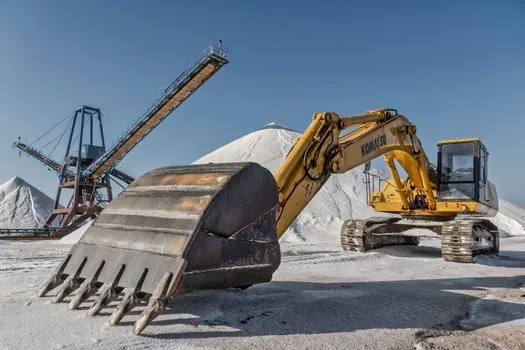
ABB's gearless conveyor drive (GCD) targets minimum wear and maximum efficiency for high-demand long-distance overland conveyors, paired with frequency-converter-driven AC motors for energy savings and life-cycle extension per [S3]. Samotics reports 30 scored cases across belt, roller, and chain conveyors in the prior 12 months, with an average unplanned downtime of 4-8 hours per conveyor belt or drive failure in mining per [S4]. The same vendor reports 35% of conveyor drive failures as bearing-related per [S4]. MDPI research on belt conveyor monitoring and control systems (Kozhubaev, 2025) highlights load bearing capacity and dynamic response time as key indicators for control system tuning [S6]. For chain conveyors, the MK North America March 2025 review frames chain, belt, and direct drive selection against load, speed, environment, and maintenance access per [S8].
Limitations, failure modes, and sourcing
ESA does not see what happens between the drive roller and the tail pulley; vibration sensors add mechanical health but not belt rip or splice; distributed belt loops do not see drivetrain bearings, per [S4]. Hawk Measurement's conveyor condition monitoring runs from the electrical equipment to the sensing cable on the belt, supporting either cable tray or buried routing per [S5]. Roxon (2025) compares integrated sensor loops against magnetic imaging and digital x-ray as the two main belt-condition technology families per [S7]. Yokogawa's DTSX-based digitalization pitch ties distributed temperature/strain sensing into a predictive maintenance layer for conveyor belts per [S1]. For maintenance planning, the dominant failure mode covered is bearing degradation developing over weeks, and the dominant uncovered mode is sudden belt rip or splice separation, which is exactly the gap the complementary sensor stack is designed to close.
Closing signal: watch for ESA vendors extending coverage claims to idler and tail-pulley assets (Samotics' stated boundary today per [S4]), and for distributed-belt vendors integrating IO-Link or AS-i Safety wiring to cut the long-run cable count, as the ifm [S2] and ABB [S3] portfolios already do. Both are trackable in vendor datasheet revisions through 2026. For related drivetrain reference material, see the chain drive fundamentals and the condition monitoring system encyclopedia pages; for broader industrial deployment context, see construction machinery and equipment.
Background reading: Small cupola furnace capacity sizing for job shop foundries.