
Browguard-mounted and headgear-mounted face shields are the two dominant platforms for industrial facial protection, and the choice between them is driven by hazard class, helmet integration, and certification path rather than by price alone.
Both configurations use polycarbonate or mesh windows, but the supporting cradle is the deciding spec: a browguard is a headband-and-crown assembly worn without a hard hat, while a headgear-mounted shield clips or brackets onto a compatible safety helmet [S3]. Standards diverge accordingly, with mesh variants tested under EN 1731 and solid polycarbonate variants typically referenced to EN 166 [S3].
Mounting Geometry and How It Changes the Fit
A browguard sits directly on the wearer's forehead with a headband, and a snug forehead-to-shield contact is the documented acceptance criterion, since any gap defeats splash and droplet deflection [S1]. Browguards are common in chemical handling, healthcare, and light fabrication where no hard hat is required.
Headgear-mounted shields rely on helmet slots or brackets, and the shield is engineered around the helmet crown, not the forehead. Danmar's Face Guard 7630, for example, "CAN ONLY be mounted onto a Hard Shell Helmet" and ships with model-specific hardware, illustrating that the mounting pattern is proprietary, not generic [S4]. Paulson tactical shields add a liquid-seal interface between visor and helmet to prevent chemical ingress along the brim [S2]. The face shield itself, the polycarbonate window with chin foam, remains functionally similar across both platforms.
Standards Map: EN 1731, EN 166, and Impact Letter Codes
Mesh visors in either mounting style are tested to EN 1731, the European mesh eye and face protector standard, with selected safety references back to EN 166 for general eye protection requirements [S3]. Solid polycarbonate visors default to EN 166 mechanical and optical classes, while browguard-only systems without a chin guard may fall outside full face-shield scope per task.
Within EN 1731, an "F" mechanical rating is the maximum impact level permitted for mesh visors, and an "S" marking denotes increased robustness without qualifying the product for hard or sharp flying objects [S3]. Luminous transmittance must clear 20% for safe visibility through mesh, regardless of browguard or helmet mount [S3]. These letter codes are stamped on the visor frame and are the quickest audit check on site.
Comparison Matrix: Browguard vs Headgear Mount
Across four decision criteria drawn from the sources, the two platforms diverge sharply. Mounting interface: browguards use a headband and forehead contact, headgear variants use helmet slots or proprietary brackets [S3][S4]. Helmet compatibility: browguards are standalone; headgear-mounted shields require a matched safety helmet and cannot be retrofitted to a non-compatible shell [S4]. Typical hazard class: browguards suit splash, droplets, light impact, and bioaerosol exposure, while headgear-mounted shields dominate forestry, construction, and tactical applications with combined head-and-face impact risk [S1][S2][S3]. Standards path: mesh variants in either format carry EN 1731, solid polycarbonate variants carry EN 166, and headgear systems often add helmet-side certifications such as EN 397 for the shell itself [S3].
Use Cases by Industry
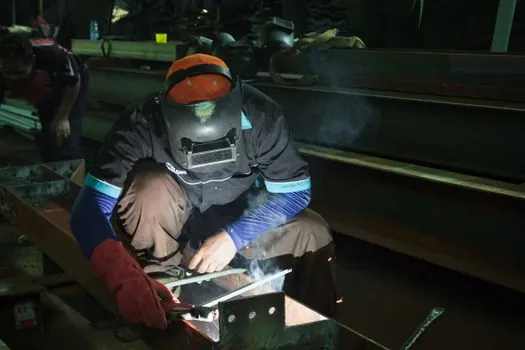
Healthcare and clinical bioaerosol work uses browguard-mounted polycarbonate shields where the perimeter seal and forehead contact are the priority, and EN 166-rated visors dominate this segment [S1]. Forestry, landscaping, and grounds maintenance use helmet-mounted mesh visors under EN 1731 to gain ventilation and visibility while accepting the 20% transmittance floor [S3]. Welding and gas work use flip-up browguard visors with IR-rated windows, including 16x8x.060 inch flip-front formats paired to headgear brackets [S5]. Tactical and combat applications pair ballistic helmets with Paulson-style shields that add a liquid seal for chemical splash continuity at the helmet brim [S2]. The platform follows the hazard envelope, not the other way around.
Limitations and Failure Modes to Watch

Mesh visors, browguard or helmet mounted, do not block UV or sunglare, and additional eyewear is required for solar exposure [S3]. The "S" robustness marking on a mesh visor does not extend coverage to hard or sharp flying objects, which is a common misread on site [S3]. Mixing a browguard shield with an incompatible helmet, or mounting a proprietary shield on the wrong shell, is a documented failure path: Danmar explicitly disallows cross-mounting of the 7630 to non-Item# 9821 helmets [S4]. Liquid-seal interfaces like Paulson's are specific to combat-helmet brim profiles and are not universal accessories [S2].
Selection Checklist and Sourcing Signals
Specify mounting platform first (browguard or helmet), then window type (polycarbonate solid or mesh), then EN 1731 / EN 166 letter codes, then chin-guard and ventilation options. For procurement, ARC3 lists browguard assemblies with IR flip-front visors at the 16x8x.060 inch window size, while Danmar's helmet-specific Face Guard 7630 is priced at $201.00 base with $42.00 premium color upcharges and 7-10 business day fabrication lead times [S4][S5]. Paulson's October 2025 product note confirms that helmet-side compatibility is the deciding factor for tactical shields, not generic "fits most helmets" claims [S2].
Track two signals over the next quarter: any EN 1731 or EN 166 amendment affecting mesh transmittance floors, and vendor disclosures on helmet-slot standardization, which would finally let a single headgear-mounted shield cross between competitive hard-hat shells. For related head-impact protection comparisons, see angle-head vs pistol-grip air impact wrenches and hydraulic vs strain gauge load cells; for the broader face shield category specification, the encyclopedia entry covers window materials, optical classes, and head-strap geometry.
The underlying component specifications are covered under shield machine, and truck mounted crane.