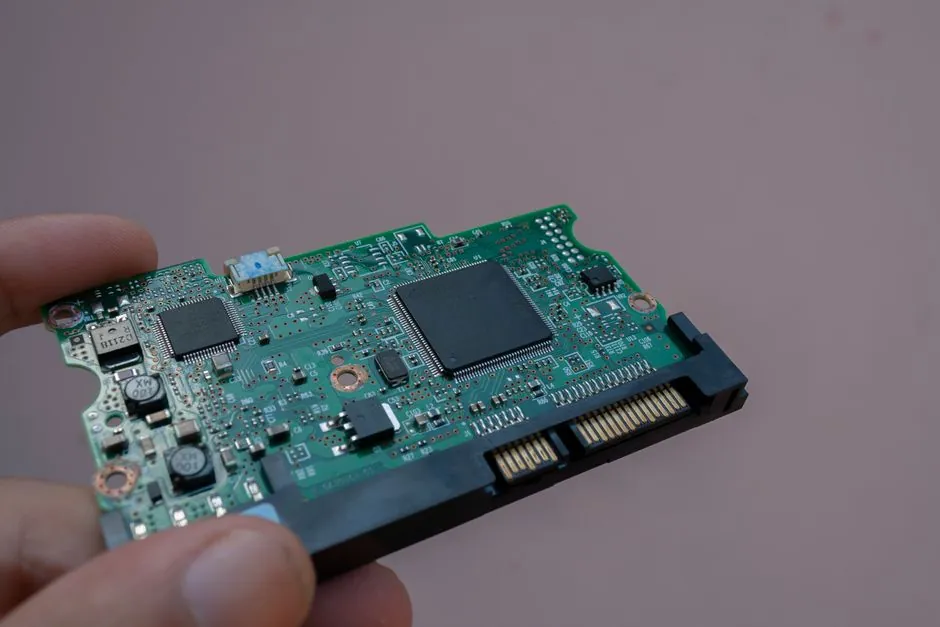
Bucket elevators for finished electronics, PCB substrates, and small-component handling diverge sharply from bulk-mineral specs: capacity is small (often 13 to 136 MTPH per Chief CBE-class designs [S5]), lift height is short, and bucket/surface material must address static charge and contamination rather than abrasion. The standard Screw Conveyor data sheet expects you to declare bulk density, lump size, moisture, and material temperature [S1], and electronics plants should treat each of those as a constraint first and a sizing input second.
For anodized aluminum enclosures, FR-4 laminate offcuts, or packaged IC trays, the priority order is surface compatibility, then discharge geometry, then capacity. Floveyor and FEECO both confirm that continuous and positive-discharge buckets are the right starting point when friable, sticky, or contamination-sensitive parts are moved [S4][S6]. IS 7167 (1974), reaffirmed in 1997, remains the most explicit written selection code, and it directs the engineer to choose centrifugal, continuous, or positive-discharge based on material lump size and shape, not on throughput alone [S2].
Why centrifugal discharge is usually wrong for electronics
Centrifugal discharge elevators rely on a single bucket throwing material at the head pulley at 60 to 125 fpm tip speed, and that throw path generates dust and chip migration, which fails cleanroom-adjacent electronics lines [S1][S3]. The Screw Conveyor spec sheet groups centrifugal as the default for free-flowing, non-fragible bulk like grain or aggregate, the opposite of the controlled environment an electronics bay requires [S1]. For PCB scrap, epoxies, or aluminum enclosure trimmings, centrifugal action also creates static charge on non-conductive buckets, which is precisely the failure mode the design must avoid.
Where centrifugal elevators can still be specified is upstream of the electronics area, in a separate non-classified zone that feeds pre-processed raw stock (ingot, bar stock) into the clean line, isolated by an airlock. Martin Sprocket's catalog pages H-128 to H-132 treat centrifugal and continuous as parallel selections, but the decision pivot is always material lump size and friability, not capacity [S3]. Electronics components and PCBs are at the far end of the friable/sensitive scale, which forces the selection away from centrifugal by default.
Continuous and positive-discharge: the right envelope for PCBs and components
Continuous bucket elevators carry the material up the inside face of the casing and tip it out by gravity as the belt turns the head pulley, with tip speeds typically below 60 fpm, which preserves both chip geometry and dust control [S6]. FEECO's super-capacity continuous bucket line is offered in fabricated carbon steel, stainless steel, and aluminum, with stainless (typically 304 or 316) as the default for any contact with electronics or anodized surfaces [S4]. A continuous design also matches IS 7167's "where confinement of material to bucket path is necessary" clause, since the bucket never throws clear of the casing [S2].
Positive-discharge elevators add a fixed deflector at the head, which physically scrapes each bucket clean. This is the right geometry for sticky, cohesive, or oversized parts (think FR-4 panels, epoxies, or sealed IC trays with overhang). Floveyor lists this style as the standard recommendation for materials that must not be reoriented in flight [S6]. Throughput per CBE-class continuous elevator typically maxes around 1,000 BPH (27 MTPH) at small casing sizes, with the CBE48 frame starting at 500 BPH (13 MTPH) [S5]. Most electronics-handling duties fall well below the 500 BPH floor, so the selection is really about bucket material, casing seal, and grounding.
Material, finish, and ESD control on the wetted surfaces

Bucket material for electronics handling should default to 304 or 316 stainless steel with a 2B or electropolished finish; aluminum buckets are lighter and ESD-conductive but gall against stainless hardware and shed metal fines into the part stream [S4]. FEECO's continuous bucket offering explicitly lists fabricated carbon steel, stainless steel, and aluminum as the three stocked material families, with stainless typically used where contamination or corrosion is a concern [S4]. IS 7167 calls out that bucket specification is a separate standard in its own right, and the casing standard is also separate, which means each wetted surface needs its own material callout rather than a single global spec [S2].
Belting should be a static-dissipative carcass, with surface resistivity in the 10^6 to 10^9 ohm range, paired with a grounding path on the head and boot shafts. Without that, the moving belt itself becomes a charge generator that can damage bare PCBs and sensitive ICs. The Screw Conveyor data sheet lists "environmental temperature range" and "material characteristics" as required inputs, and ESD is a material characteristic in this context, not an afterthought [S1]. For sealed IC trays, also specify a bucket lip radius and a bucket projection above the belt that does not exceed the smallest component height, or the bucket edge will chip the tray flange.
Capacity, lift, and footprint constraints inside an electronics plant
Most electronics lines need 5 to 50 tph at lifts of 4 to 12 m, which puts the design into the small end of the CBE48 class at 500 BPH (13 MTPH) to roughly the 1,000 BPH (27 MTPH) frame [S5]. Going larger than necessary hurts you twice: the wider belt runs faster to hit rated capacity, and the faster belt re-introduces the dust and static problems continuous design is supposed to eliminate. Floveyor's general guide is to size the elevator first by bucket cross-section, then by belt speed, never the reverse [S6]. IS 7167 mirrors this by making bucket selection the central deliverable of the whole code [S2].
Footprint in a plant mezzanine is usually the binding constraint, not capacity. CBE-class continuous elevators from Chief are documented at standard frame sizes that scale roughly linearly with BPH, so a 500 BPH (13 MTPH) unit will fit where a 5,000 BPH (136 MTPH) unit physically cannot [S5]. For a typical 6 m lift, expect a head-height-to-lift ratio close to 1.6:1 once you include the boot pulley, the take-up, and the drive package. The Screw Conveyor data sheet calls out "discharge height" and "drive package required" as mandatory fields, which forces the engineer to fix the head-pulley diameter and reducer size before quoting [S1].
Sealing, dust, and cleanroom interface
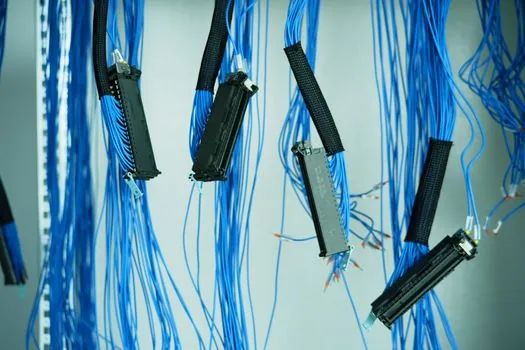
For lines adjacent to ISO Class 7 or cleaner zones, the casing should be gasketed at every flange, with a continuous nitrile or EPDM gasket rated for the casing's full thermal range; Screw Conveyor's data sheet makes "material temperature" a required input for exactly this reason [S1]. The boot section should be sealed with a flexible boot sleeve around the inlet, and the head section should include a transition hood that mates to a ducted exhaust, even if the exhaust is only sized for ambient relief rather than active dust collection. IS 7167 specifies that casing selection is governed by a separate standard, which in practice means you treat the casing as a documented sub-assembly with its own drawing and material callout [S2].
Where the elevator crosses a wall between a non-classified feed zone and a cleanroom, specify a double-sealed pass-through with a positive-pressure air purge in the wall cavity. Floveyor treats the casing as the dust-containment boundary of the whole system, and any leak in that boundary is treated as a process defect, not a maintenance issue [S6]. For PCB scrap containing solder residue, also plan for wash-down capability: 316 stainless casing, electropolished welds, and a drain port at the boot.
Selection criteria comparison for electronics-handling elevators
For a direct side-by-side, the three candidate elevator styles line up against electronics-handling criteria as follows. Centrifugal discharge scores poorly on dust, ESD control, and friable-part preservation, but scores well on cost and simplicity for upstream, non-classified zones [S1][S3]. Continuous discharge scores well on dust, friable-part handling, and casing seal, moderately on cost, and is the default selection for most electronics bay duties [S4][S6]. Positive-discharge scores best on sticky or oversized parts, equally well on dust, but costs more and is physically larger for the same throughput [S6]. For an electronics plant, the decision is rarely between continuous and positive; it is whether the upstream raw-stock elevator (often centrifugal, in a separate zone) and the downstream finished-parts elevator (continuous or positive, in or adjacent to the cleanroom) need to be different machines, and in most plants they do.
What the spec sheet should not let you forget
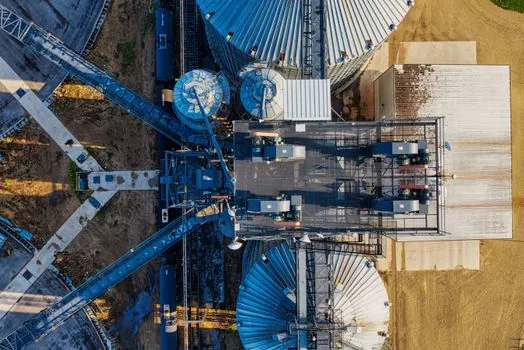
The Screw Conveyor pre-selection data sheet requires nine inputs before it will return a preliminary sizing: material type, density, capacity in cubic feet per hour, discharge height, material temperature, moisture, max lump size, percent of lumps, and environmental temperature range, plus duty hours and drive package [S1]. For electronics work, the engineer should also add four electronics-specific lines to that sheet: surface resistivity target, cleanroom class at the discharge, ESD-bonding requirement, and wash-down frequency. IS 7167 reinforces the lump-size and shape inputs, and explicitly excludes sharp-cornered pieces from fixed-bearing boot designs [S2], which is the boot style most often quoted for small-frame continuous elevators.
For a related reference on selection logic when the material shifts from raw stock to finished parts, the automotive-parts logistics map covers a similar split between upstream bulk and downstream handling, and the chemical-shipping map covers the discharge and casing choices that overlap with electronics wash-down specs. For a comparison contrast in the opposite direction, the dust-detector selection map is the right companion read for any electronics plant that also runs welding or confined-space entry upstream of the cleanroom. Floveyor's bucket-elevator guide is the most concise public summary of the type-and-component trade-offs, and FEECO's bucket-style page is the most direct public source for material-of-construction options on continuous and super-capacity buckets [S4][S6].
The underlying component specifications are covered under bucket elevator, pressure transmitter, and flow meter.
Background reading: Bucket Elevator Selection Map for Automotive Parts Logistics.