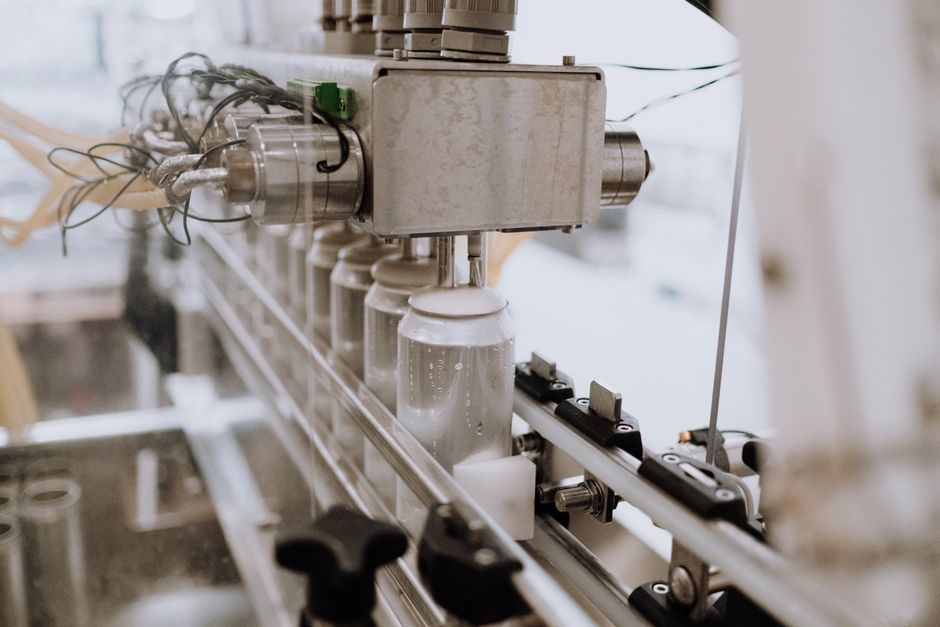
A bucket elevator lifts dry bulk vertically by means of buckets bolted to a carrying belt or chain, with industrial units quoted for clinker lifts of 200 m and above [S2]; a belt conveyor transports continuous loads horizontally or on shallow inclines and remains the workhorse for run-of-mine ore, aggregate, grain and packaged goods [S1][S3].
Both equipment classes sit inside the same bulk-material-handling envelope, share belt-tensioner take-up principles, and are routinely sourced side-by-side on the same plant (cement, fertilizer, mining, power, feed, grain) [S1][S4][S5]. The decision between them is therefore not a brand question but a geometry-and-material question: lift height, particle size, abrasiveness, temperature and feed control determine which one wins on a given duty.
Working Envelope and Material Fit
Bucket elevators are purpose-built for vertical or near-vertical transport: BEUMER positions its belt-bucket range as the economical solution for vertical lift, with hot or cold clinker cited as a typical duty and 200 m+ lifts as a market reference [S2]. AUMUND similarly markets its bucket elevators for any kind of bulk material and offers both central-chain and belt designs selected by material, application and local conditions [S9].
Belt conveyors, by contrast, dominate the horizontal-leg envelope and shallow-incline duty. Indian EPC supplier Jignesh Engineering, in the business since 1993, packages its coal-handling system around a belt conveyor / bucket elevator combination, with belt conveyors used to transfer coal from truck or wagon-tippler hopper and bucket elevators feeding boiler bunkers [S7]. The split — horizontal by belt, vertical by bucket — is the rule rather than the exception in coal, cement and grain plants.
Selection Criteria You Can Quantify
Four specifications drive the choice more than any marketing line. First, lift height: anything over roughly 15-20 m of vertical rise starts to penalize inclined belt conveyors on energy and floor area, and pushes the spec toward a bucket elevator [S2][S4]. Second, particle size and airdraft: bucket elevators handle controlled-size lumps in discrete buckets, while belt conveyors tolerate a wider size distribution including fines and irregular shapes when fitted with the right flat-belt cover and cleat profile [S1][S3].
Third, temperature and abrasiveness: Shandong Longyuan's bucket-elevator belt is sold as the best solution on technical and cost-efficiency grounds for building materials, mining, power, cement, concrete, chemical, light industry and grain duties, with high working tensions, low elongation, and high bucket-attachment values called out as the engineering selling points [S1]. Fourth, capacity versus footprint: a belt conveyor scales capacity with belt width and speed, a bucket elevator scales with bucket volume and belt speed, so at high lift the bucket elevator typically wins on footprint per tonne-per-hour lifted [S2][S9].
Options Map: Centrifugal vs Continuous, Belt vs Chain, Belt vs Screw
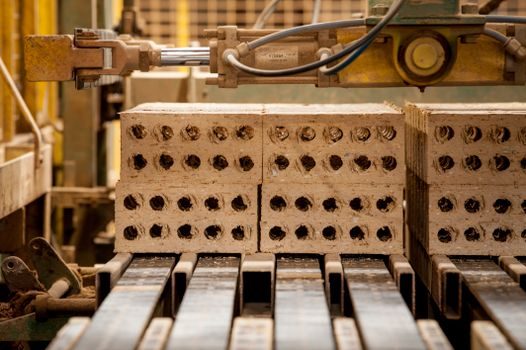
Inside the bucket-elevator family, the centrifugal-discharge design is the default for free-flowing fine to medium material at moderate speeds, while the continuous-bucket and positive-discharge designs are used for sluggish or friable material where degradation must be minimised [S9]. On the drive element, belt-bucket units dominate for capacities up to several hundred t/h on light-to-medium bulk, while chain-bucket (central chain or double-chain) units take over for heavier lump, higher temperature, or more abrasive duties per AUMUND's design split [S9].
Inside the belt-conveyor family, the engineer still has to choose between a mesh-belt conveyor for parts washing or food cooling, a ribbed-belt variant for steep-angle inclined runs in place of cleated belt, and a conventional fabric belt for the long horizontal hauls. A typical conveyor-belt supplier, Lanxi Welly Rubber, lists cotton (CC), nylon (NN), EP, steel-cord, corrugated sidewall and bucket-elevator belt constructions under one roof, which is itself a signal that the spec, not the equipment class, is the primary decision [S8]. Where the duty is a controlled inclined lift, a high-angle cleated belt conveyor is the third option that sits between bucket elevator and standard belt — Zeus Engitech lists it as a core product alongside flat belt conveyors and screw conveyors [S4].
Where Each One Wins — and Where It Fails
Spec a bucket elevator when the duty is: vertical lift above ~15 m, free-flowing or controlled lump size, no requirement to inspect or pick from the stream, and a clean dry bulk that does not smear or pack. BEUMER's stated use cases — cement, fertilisers, building materials, mining, power plants — are the canonical win list [S2]. AUMUND adds that bucket elevators carry a long service lifetime and low operating cost, which is the economic case for a heavier first cost [S9].
Spec a belt conveyor when the duty is: long horizontal or shallow-incline run, mixed or irregular lump sizes, need to inspect/reject on the line, or a requirement to handle wet, sticky or hot material that would foul bucket geometry. Failure modes to keep in mind: bucket elevators fail on bucket detachment, belt splice, and on overfeeding that pushes material back down the up-leg, while belt conveyors fail on belt tracking, idler roll-up, and on cover wear at the loading point [S1][S4]. For very short vertical lifts in a feed-pellet plant, screw feeders (SLLX50YP at 1.5 kW, 0-1000 kg/h on a 2.5 m cylinder) compete with both options and often win on capital cost despite higher wear [S3].
Comparison Table: Bucket Elevator vs Belt Conveyor on Four Decision Criteria
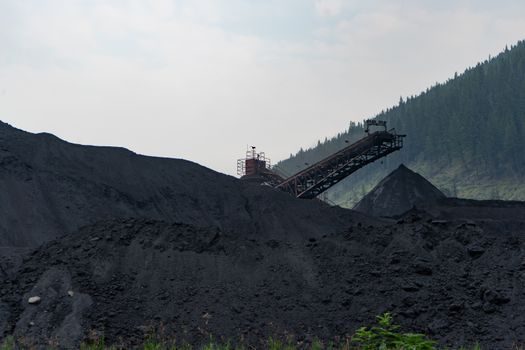
On lift height, the bucket elevator is rated for 200 m+ vertical lifts per BEUMER's clinker reference, while a belt conveyor is typically capped at inclines up to about 18-20° (clined or with chevron cleats higher) [S2][S4]. On footprint per tonne lifted vertically, the bucket elevator wins; on footprint per tonne moved horizontally, the belt conveyor wins by an order of magnitude. On maintenance, both are dominated by belt/chain and idler/sprocket wear, with bucket-attachment integrity a unique bucket-elevator item called out in the supplier literature [S1][S9]. On first cost for low-lift low-tonnage duties, screw conveyors and short belt conveyors undercut a bucket elevator; for high-lift duties, the bucket elevator's footprint and energy efficiency recover that gap inside a few years of operation [S3][S9].
Real Plant Patterns and Sourcing Notes
The same EPC list — cement clinker, fertilizer, fly ash, coal-to-boiler, grain, feed pellet — appears in nearly every supplier's product page, which is itself a verification that the bucket-elevator / belt-conveyor split is industry-validated rather than vendor-led [S1][S2][S4][S5][S7][S9]. Focus Machinery in China explicitly bundles bucket elevator, belt conveyor, screw conveyor and vibratory feeder into a single supply scope, with CE marking as the cited compliance baseline [S5].
For a 2026 spec-first buy, the work order is: (1) freeze the lift height and inclination profile, (2) freeze the bulk density, particle size, moisture and temperature, (3) freeze the required t/h, (4) decide on belt or chain inside the bucket elevator or on flat / cleated / corrugated sidewall inside the belt conveyor, and (5) only then compare quotes [S1][S2][S8][S9]. For a side-by-side review of how belt conveyors stack against chain conveyors on the same duty, see the engineering comparison in Chain Conveyor vs Belt Conveyor: Spec-First Selection Map.