Chain conveyors and belt conveyors solve overlapping problems on a production line, but they diverge sharply on load capacity, temperature, sanitation, and layout geometry — a 500 kg pallet of hot forgings and a 2 kg pack of bakery rolls have no business on the same machine [S1][S2].
Three Chinese conveyor builders profiled between 2025-04-29 and 2026-07-25 list both technologies in their catalogs, confirming the split: Changshuo Conveyor (Wuxi) markets slat chain, modular belt, flexible chain, PVC/PU belt, and roller lines side-by-side [S1]; Haike Pei Conveyor (Songjiang, Shanghai) splits plastic plate chain, LBP-series top chain, and microwave-drying belt as separate product lines [S3]; Suzhou Junling Intelligent Equipment (Kunjia Road, Kunshan) groups chain, roller, and belt conveyors under one ISO 9001-certified factory [S4].
Core Definition and Mechanical Difference
Chain conveyors move loads on positively-driven elements — slats, tabletop chain, modular plastic belt, or flat-top steel — where the chain itself transmits tractive force and supports the product [S1][S3]. For background on the drive chain itself, see the conveyor chain reference page, which covers pitch, breaking load, and attachment geometry.
Belt conveyors move loads on a continuous flat loop — PVC, PU, polyester fabric, EP (polyester-nylon), NN (nylon-nylon), or rubber — where the belt carcass carries tension but does not engage with the product the way a chain does [S2]. For an end-to-end reference, the belt conveyor encyclopedia entry covers carcass ratings, splice types, and pulley diameters. Chain conveyors inherently resist high temperature, oil, and sharp impact; belt conveyors win on sanitation, low noise (typically 60-72 dB(A) at 1 m on PU lines), and energy per kilogram moved, since belt mass and chain-slat mass differ by an order of magnitude at the same width.
Selection Criteria: Load, Temperature, Environment, Layout
Four decision criteria separate the two technologies on a 2026 spec sheet: load per meter, surface temperature of the product, sanitation/cleanability class, and routing complexity (number of horizontal and vertical bends) [S1][S3].
Chain conveyor rated load commonly spans 5-200 kg/m depending on slat width and chain pitch, with stainless-steel tabletop chain (e.g., 880TAB, LBP821, LBP882 series) covering washdown food lines at 0.5-2 m/s [S3]. Belt conveyor ratings cluster lower — typically 10-80 kg/m for fabric-ply belts and 20-150 kg/m for steel-cord heavy-duty lines — but allow wider formats (300-2000 mm) and higher belt speeds (0.5-6 m/s). A practical rule: choose chain when product temperature exceeds 80 °C, when oil or cutting fluid is present, or when the load geometry is irregular (tires, lithium battery cells, buns, masks) [S1].
Type Comparison: Slat, Tabletop, Modular, and Belt Variants
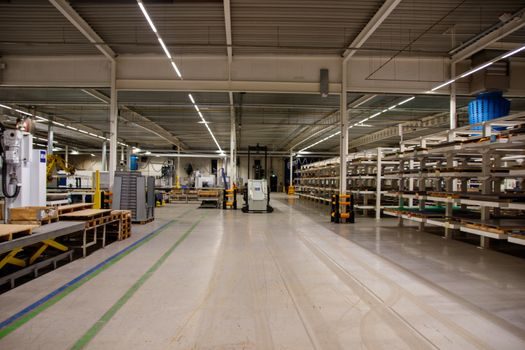
Four sub-types dominate the 2026 buying shortlist, and each maps to a different job. Slat chain conveyors use steel or polymer slats bolted to roller chain — heavy, hot, and impact-tolerant, common in automotive tire lines and lithium-battery electrode handling [S1]. Tabletop chain conveyors use single-hinge stainless or plastic chain (e.g., 880 series, straight and side-flex variants) — the workhorse for beverage bottling, can lines, and pharmaceutical washdown [S3]. Modular belt conveyors use interlocking plastic modules with UHMW wear strips — easy to repair section-by-section, side-flexing, popular in food and packaging [S1]. Belt conveyors split into PVC/PU (light-duty, food-grade, low-noise), EP/NN fabric ply (general industrial), and steel-cord (mining, port, aggregate) [S2].
For a deeper look at the chain itself, the roller chain and silent chain encyclopedia entries cover pitch, wear elongation, and noise tradeoffs that show up in conveyor duty cycles. On the belt side, the mesh belt conveyor reference covers the metal-mesh variant used in baking, frying, and parts washing, which sits between chain and belt in temperature capability.
Use-Case Fit: Who Each Conveyor Is FOR and NOT For
Chain conveyor is FOR: hot forgings (200-400 °C), oily stamping parts, battery cell stacking, mask and bun production lines, automotive tire and chassis transfer, beverage accumulation tables with side-flex curves [S1][S3]. It is NOT for: cleanroom semiconductor handling (particle shedding), long-run overland aggregate (energy per ton-mile), or applications where belt-edge tracking is critical for vacuum or gripper pick-off.
Belt conveyor is FOR: carton and parcel sortation, food packaging infeed, warehouse picking, e-commerce dispatch, mining and port bulk, and any line that needs a 30 m+ straight run with a single drive [S2]. It is NOT for: temperatures above 80-120 °C (PVC/PU) or 200 °C (rubber) without special compound, sharp cut-edge parts that slice the carcass, or layouts demanding tight 90° side flex without transfer modules. Cross-reference: this trade-off pattern — between heavy-duty mechanical drives and lighter continuous-loop alternatives — mirrors the spec-first thinking in Linear Guide TCO: Cost Driver Stack and 5-Year Buy Math.
Limitations, Failure Modes, and Maintenance Signals
Chain conveyor failure modes concentrate in wear strip replacement, chain elongation (typically 1.5-3% over service life before stretch is unacceptable), and sprocket tooth wear on the drive shaft [S1]. The Yichuan maintenance note (2025-04-29) flags "derailment" — chain or belt jumping track under tension loss or contamination — as the single most common cause of unplanned stoppage across both technologies, regardless of manufacturer [S2].
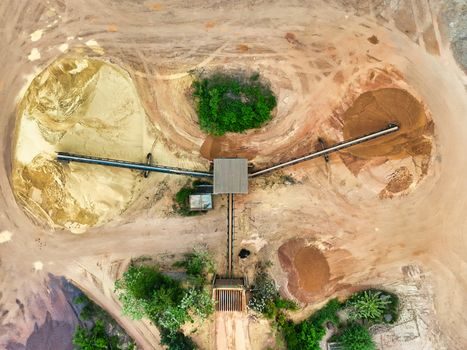
Belt conveyor failure modes center on carcass ply separation, splice failure (mechanical fastener vs. vulcanized vs. hot-air welded), and edge fraying on side-flex lines. EP and NN fabric belts are commonly specified with 2-5 plies and tensile ratings from 100-630 N/mm; steel-cord belts run 800-4000 N/mm but require heavier pulleys and crowned drum geometry. Working temperature range for standard rubber covers sits at -25 °C to +80 °C, with heat-resistant compounds pushing the upper limit to 200-400 °C at a cost premium [S2]. Sanitation class drives the belt cover choice: PU is the default for food contact, with FDA/EC food-grade variants documented by Changshuo and others [S1].
Supplier Landscape and 2026 Sourcing Signals
The 2026 sourcing map for both technologies remains concentrated in the Yangtze River Delta: Changshuo (Wuxi, Jiangsu), Haike Pei (Songjiang, Shanghai), Suzhou Junling (Kunshan, Jiangsu), and Kezhirun Standard Industrial (Jiangsu) all list conveyor or belt products on updated 2026-07-XX pages [S1][S3][S4][S5].
Kezhirun publishes its full belt range on a 2026-07-25 page: EP conveyor belts, NN conveyor belts, chevron conveyor belts, and sidewall conveyor belts, with WhatsApp +86 1330 1498 555 as the listed commercial contact [S5]. Cross-reference: the supplier-evaluation logic parallels the spec-gate approach in Butterfly Valve Suppliers 2026: Spec Gates, Sizing Map, and Sourcing Signals.
Specification and Standards Discipline
Buyers writing RFQs in 2026 should pin four numbers on every inquiry: (1) load per meter (kg/m) and peak load (kg), (2) belt or chain speed (m/s) and drive motor power (kW), (3) operating temperature range (°C) and chemical exposure, (4) sanitation class (food-grade, washdown IP rating, cleanroom ISO 14644 class) [S1][S2]. Material specs should name the cover compound (PVC/PU/rubber/EPDM/silicone) or the chain material (carbon steel, 304/316 stainless, acetal, polypropylene) explicitly rather than relying on "food grade" as a generic term.
Manufacturer-side certifications to request: ISO 9001 for the factory quality system (held by Suzhou Junling [S4]), FDA or EC 1935/2004 food-contact compliance for PU/PVC belts on food lines [S1], and ATEX zone rating where dust or solvent vapors are present. For drives, gearmotor IE3/IE4 efficiency class is increasingly specified on European-build lines; the energy math behind that shift is laid out in IE4 High-Efficiency Motor vs Motor Grader: Spec-First Decision Map. For conveyor chain engineering details, the chain conveyor encyclopedia page pulls together pitch, attachment, and drive-shaft sizing references.
Trackable signals to watch through Q4 2026: vendor updates to PE/UHMW wear-strip SKUs (Changshuo lists these as a separate component category [S1]); food-grade PU belt price movement tied to plasticizer cost; and the next round of ISO 9001 surveillance audits for Yangtze Delta conveyor builders. Buyers specifying both chain and belt in the same line should run a single layout review with the vendor rather than buying them as separate packages, because drive architecture and take-up tension settings differ enough that mismatched control philosophies are the most common root cause of chronic belt-slip or chain-jump incidents flagged in the Yichuan maintenance note (2025-04-29) [S2].