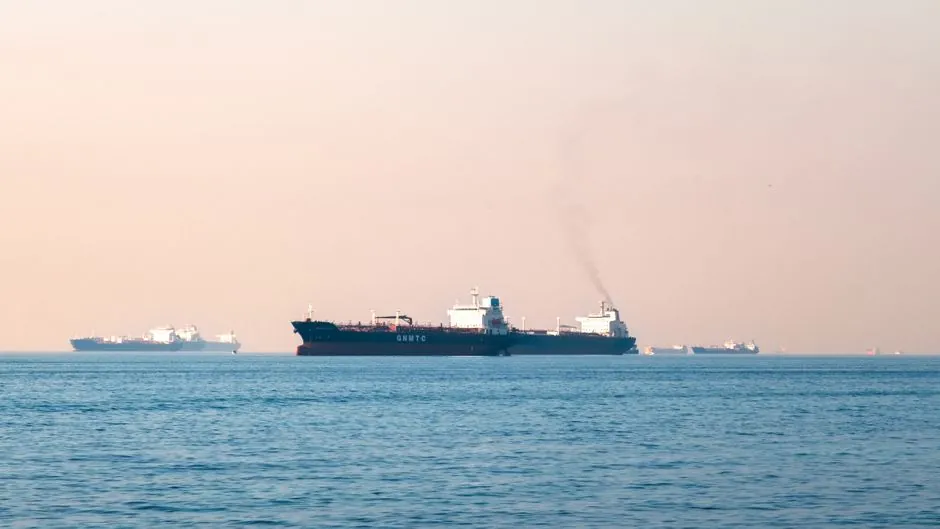
Two supply models dominate the industrial nitrogen market: bulk liquid delivery (dewar or tanker) and on-site generation via Pressure Swing Adsorption (PSA) or membrane separation, and they behave very differently when a delivery is delayed by a day or more [S3][S5][S6].
The decision is not ideological. It comes down to flow rate, purity window, redundancy philosophy, and how exposed the site already is to driver, truck, weather, and road disruptions, factors that have intensified in most regions since 2024 [S5][S6].
Pure cost, plus the disruption premium that does not show on the invoice
Published operating-cost comparisons put on-site PSA or membrane at roughly 50–90% lower than delivered gas at typical food, electronics, and chemical packaging flow rates, once electricity, maintenance, and air-treatment consumables are netted against cylinder rental, delivery, and fuel surcharges [S4]. For a 10 Nm³/h MAP (modified atmosphere packaging) line running two shifts, that is the difference between a multi-thousand-dollar monthly gas line and a few hundred dollars of compressor power.
On-site generation also removes the price volatility that bulk contracts pass through: transportation surcharges, fuel adjustments, and shortage-driven escalator clauses, all of which moved sharply during the 2024–2025 European industrial-gas allocation events and again during the 2026 US Gulf Coast trucking shortages [S3][S6].
Where bulk nitrogen still wins on merit
Liquid bulk also remains the lowest-friction option for nitrogen used intermittently, such as pipeline purge, vessel inerting, or cryogenic cooling of stainless before weld passivation, where renting a vacuum-insulated tank and scheduling a periodic top-up is operationally simpler than running a generator at 10% load [S2].
Disruption mechanics, what actually delays a bulk delivery
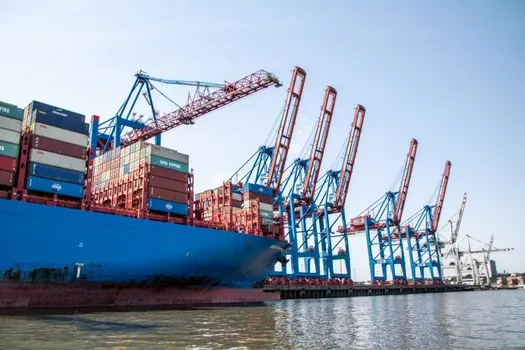
Bulk nitrogen supply interruptions are not abstract. The documented failure modes include driver absence, truck breakdown, road closures from severe weather, plant turnarounds at the air-separation unit, and route-planning errors that leave the last customers on a run short on a given day [S5]. Each of these has a median delay of roughly 1–3 days; in winter, weather-driven stops can stretch a routine 5-day cycle to 10–14 days in northern US and Nordic regions [S5].
For a facility sized to its typical burn rate with 3–5 days of liquid inventory, that is a hard stop on production, not an inconvenience. In a chicken-plant MAP line running at 2,000 birds/hour or a surface-mount electronics reflow line, an unscheduled N2 outage translates directly into scrapped product, missed ship windows, and write-offs that dwarf the gas line itself [S4][S5].
On-site generation, the part buyers underestimate
On-site nitrogen looks simple from the outside, feed the generator clean dry air, take N2 out the other side, but the failure modes sit in the air treatment. A PSA carbon-molecular-sieve bed will be permanently damaged by oil aerosol above ~0.01 mg/m³ and by dew point above +3 °C pressure dew point, and a membrane will lose permeate flow and purity if the feed is wet or contaminated [S1][S4].
Concretely, the on-site stack needs, at minimum, an oil-free or coalescing-plus-carbon pre-filter, a refrigerated or desiccant dryer to the required pressure dew point, a 0.01 µm particulate filter, and an N2 purity analyser with an automatic divert valve, sized for the worst feed-air quality on the site, not the best [S1][S3]. A pressure transmitter on the receiver tank and a switching power supply for the analyser loop are the kind of small items that decide whether the generator survives a feed-compressor trip. Skipping them is the single most common reason "we tried on-site and it didn't work" stories show up in plant meetings.
Decision matrix, when to pick which in 2026
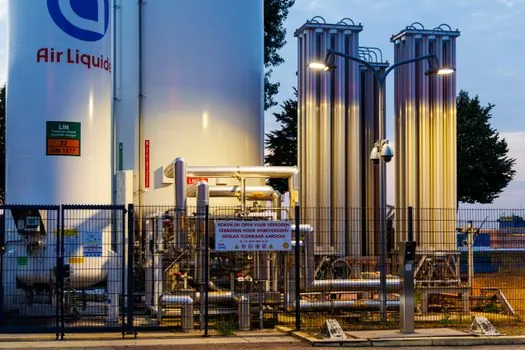
Use this four-criterion map for a first cut: (1) Continuous flow < ~5 Nm³/h, intermittent use, or 5.0 grade purity required = bulk liquid, no question; (2) 5–200 Nm³/h at 95–99.9% purity, > ~4,000 operating hours/year, exposed delivery route = on-site PSA or membrane; (3) > 200 Nm³/h continuous, high-purity, redundancy mandate = on-site primary plus bulk liquid as backup; (4) < 2,000 hours/year, low purity (90–97%), small lab or pilot = on-site membrane, accept that payback stretches past 24 months [S2][S4][S6][S7].
Hybrid architectures are increasingly common in 2026 spec sheets: a PSA generator covers the 24/7 baseline, a bulk liquid tank covers peak shaving and acts as the disaster-recovery layer, and an automatic changeover panel swaps feed in under 30 seconds. The total installed cost runs roughly 1.5–2.0× a generator-only system, but it eliminates the single largest residual failure mode of the on-site path: a PSA compressor or sieve failure on a weekend [S2][S6].
Payback, the numbers engineers actually use
Field-reported payback windows for on-site generation versus delivered cylinders or liquid cluster in the 6–18 month range for steady two-shift operation, and stretch to 24–36 months for single-shift food and beverage users where the baseline N2 burn is lower [S5]. Against bulk liquid specifically, payback is typically 12–24 months because the savings per Nm³ are smaller, the rental and demurrage charges are smaller, but the avoidance of disruption-driven lost batches tips the math for many plants [S3][S7].
The honest way to size this: take the last 24 months of gas invoices, add the average disruption cost (one lost batch, one missed ship, one overtime clean-up) per incident and multiply by incident count, then divide by the all-in on-site opex. If the ratio is above 1.5, the generator pays back even before any gas-cost reduction. If it is below 1.0 and the route is reliable, bulk liquid is the right answer and no amount of marketing changes that [S3][S4][S6].
Standards and safety guardrails that apply either way
Bulk liquid storage and on-site generation both touch pressure-equipment and asphyxiation rules, even when a published standard is not named in the proposal. The bulk tank sits under a vacuum-insulated, ASME-coded vessel with a relief valve set to the MAWP and a continuous oxygen-displacement hazard for any staff working near the vents; the on-site system sits on a compressed-air receiver that must be built to a recognised pressure-vessel code and inspected on the local statutory interval [S1][S6].
O2 sensors in the generator room and at the delivery bay are the lowest-cost insurance on either path, because the failure mode that kills people in N2 incidents is not the equipment, it is the invisible atmosphere. Pair the gas supply decision with the site's broader industrial UPS and DC power supply architecture, because a generator that survives a supply disruption is worthless if its analyser and controls brown out on the same event.
What to watch through 2026 and into 2027
Three signals are worth tracking: (a) Regional air-separation unit (ASU) turnaround schedules, the spring and autumn 2026 maintenance windows in the US Gulf and Northwest Europe are the next chance for a supply squeeze; (b) Trucking and driver-availability indices, which moved adversely in 2025 and are the single largest controllable cause of bulk delivery slippage; (c) Generator OEM lead times for 50–200 Nm³/h skids, which extended from roughly 8 weeks to 18–24 weeks in 2025 as compressor and sieve supply tightened [S1][S3][S6]. A facility that is still on bulk-only and is reconsidering should at least request a budgetary quotation now, since the gap between a Q4-2026 install and a Q2-2027 install is real money.
Related analysis: 3D visualization vs analytics-first digital twins: picking the architecture that pays back.