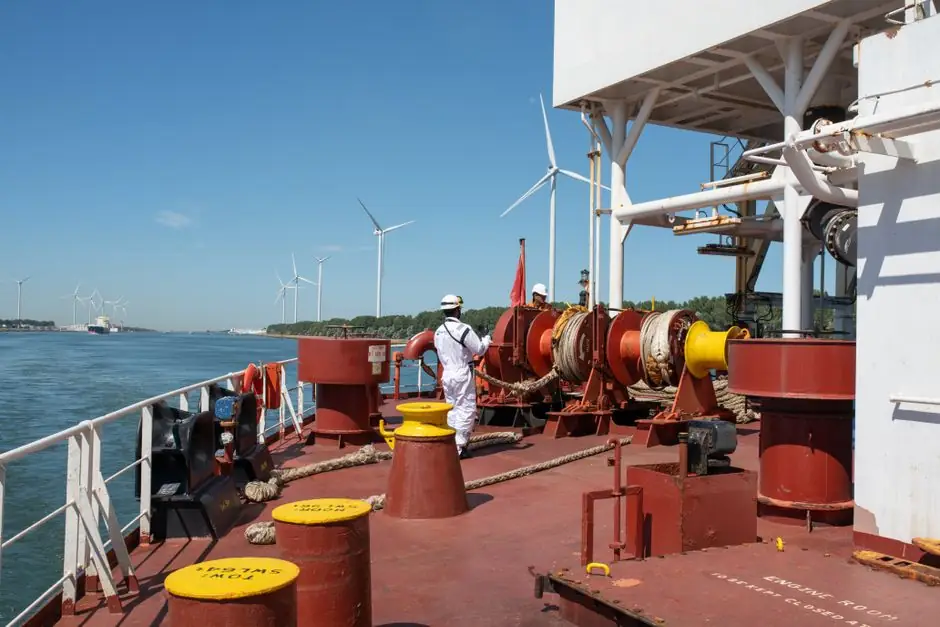
Carriers in the Americas report that demand for power-generation and grid cargoes, including gas turbines, generators, transformers, substations, and switchgear, has strengthened over the past 12 months, driven by the U.S. data-center buildout and grid-resilience projects [S1].
At the same time, vessel supply is barely keeping pace: Journal of Commerce projects heavy-lift-capable fleet growth at an average 4.1% per year through 2029, a rate the trade press warns may not be enough for the projected cargo surge [S5].
Transformer Lead Times Now Outrun Project Schedules
Industry estimates put average lead times at roughly 128 weeks for power transformers and 144 weeks for generator step-up units, with some large custom units quoted at up to four years, a mismatch that the Journal of Commerce flags as a structural risk for the entire heavy-lift pipeline [S5]. Wood Mackenzie data cited by JAXPORT shows U.S. demand for generator step-up transformers rose 274% between 2019 and 2025, and substation power-transformer demand rose 116% over the same window [S2].
One transformer shipper told the Journal of Commerce that all the big manufacturers are effectively full through 2030 as new plants come online and aging assets, some more than 40 years old, are replaced [S5]. Per JAXPORT's reporting, the U.S. Department of Energy estimates imports supply about 82% of U.S. large power transformers, a dependency that turns ocean capacity into a chokepoint for grid buildout [S2].
For non-containerized auxiliary hardware, multipurpose vessels offer a second-tier option. As JOC notes, the smaller pieces needed to manufacture a turbine or generator can ride on container or bulk carriers alongside dedicated construction machinery and equipment lots, giving charterers room to shop around when heavy-lift slots are tight [S5].
Carrier Survey: Power, Data Centers, and Reshoring Dominate
Four major carriers interviewed by Breakbulk magazine for its September 2026 Americas panel all identified data-center-driven power demand as the leading cargo driver. SAL Intermarine, AAL, BBC Chartering, and Chipolbrok named power generation, grid infrastructure, LNG, petrochemicals, mining, and industrial reshoring as the active verticals, with the cargo mix including gas turbines, generators, transformers, substations, and switchgear [S1].
Chipolbrok specifically called out 2025 tariff uncertainty as a demand suppressant that has now cleared, while SAL described the Americas market as healthy and improving but volatile around project timing and FID decisions [S1]. AAL and BBC both pointed to LNG, petrochemicals, mining, and industrial manufacturing as continuing sources of heavy-lift demand on top of the power-generation wave [S1].
The crossover between grid and data-center buildouts is sharp: the Breakbulk news desk notes an estimated 12 GW of U.S. data-center capacity has been announced across roughly 140 projects for 2026, against only about 5 GW currently under construction, a delta that translates directly into orders for large transformers and gas turbines on both sides of the Atlantic [S8].
Fleet Capacity by Class: Heavy-Lift Lags, MPP Barely Grows
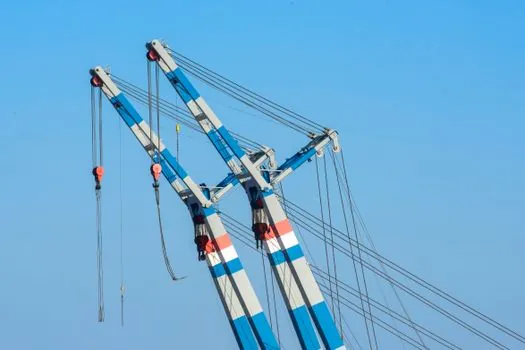
JOC projects heavy-lift-capable fleet growth of 4.1% per year through 2029, while simpler multipurpose vessels are projected to grow at just 0.5% per year, the exact tonnage that competes with container and bulker operators already running with overcapacity at the close of 2025 [S5]. If the Suez Canal route returns to normal, JOC warns both fleets could see an effective capacity increase of up to 10% as routing normalises, which would partly ease the squeeze but only after the current order book clears [S5].
Market Research Future sizes the heavy-lift and project-cargo maritime transportation market at USD 28,404.19 million in 2025, growing to USD 42,079.57 million by 2035 at a 4.0% CAGR, with the named major players including Boskalis, COSCO Heavy Transport, ZPMC, Seaway7, SAL Heavy Lift, Biglift Shipping, United Heavy Lift, Roll Group, AAL, and Jumbo Maritime [S3]. The Strategic Market Research break-bulk shipping study pegs multipurpose vessels at 49.3% of the 2024 market and heavy-lift vessels at 31.8%, with the Oil & Gas and Energy end-use segment leading at 33.7% [S4].
The Eurasian breakbulk and heavy-lift logistics market is separately expected to surpass USD 3.1 billion by 2028, with wind turbines, industrial machinery, and transformers as the named cargoes, and Strategic Market Research notes that U.S. ports handling oversized industrial cargo recorded a throughput increase of more than 18.6% between 2021 and 2024 across Gulf Coast and Atlantic industrial corridors [S4][S6].
Vessel Types Matched to Transformer and Turbine Loads
For a typical power transformer in the 100-150 metric-ton range, multipurpose and heavy-lift vessels with on-deck cranes (commonly 300-500 tonne SWL) are the standard tool, and Höegh has documented both a 112-metric-ton transformer shipment and its broader static breakbulk capabilities, with cargo exceeding RoRo limits routed to lift-on/lift-off options [S2].
For heavier generator step-up units and gas-turbine modules, semi-submersible heavy-lift ships and FLO-FLO barges are the workhorses; Market Research Future highlights semi-submersible decks, 500-ton cranes, and dynamic positioning as the enablers for ultra-heavy cargo such as oil rigs, with the same configuration increasingly specified for large transformers and turbine casings [S3]. The decision pivot sits on weight class: MRFR segments the market at up to 500 t, 500-2,000 t, 2,000-5,000 t, 5,000-10,000 t, and above 10,000 t, with the 500-2,000 t band covering most large power transformers and the 2,000-5,000 t band capturing large gas-turbine and generator sets [S3].
By cargo type, the Strategic Market Research study puts Project Cargo & Heavy Equipment at 27.1% of 2024 break-bulk shipping value (USD 4.28 billion), with transformers and turbine blades explicitly named as growth cargoes in that segment [S4]. For shippers weighing self-propelled modular transporters against tow-based options, MRFR's transportation-method segmentation (LO-LO, RO-RO, FLO-FLO, tow-based, SPMT) provides a useful match-up against weight class and port-side lift capacity [S3].
Port-Side Constraints: Lift Capacity, Surveyor Scope, and Cargo Data
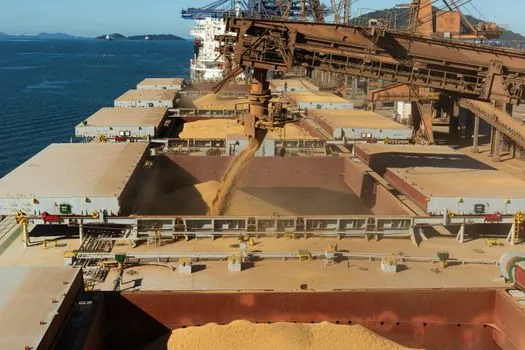
JAXPORT's Blount Island heavy-lift berth offers a load capacity of up to 2,000 pounds per square foot, on-dock rail, and high-and-wide rail clearances, and the port has demonstrated experience moving a 331,000-pound (about 150-metric-ton) generator, the kind of case study that defines the lower end of the large-transformer / large-generator range [S2].
For high-value shipments, insurers and project lenders frequently make marine warranty survey approval a contractual condition of cover, with the surveyor reviewing lift, load-out, transportation, and seafastening procedures, and attending load-out, sail-away, or discharge, a scope that JAXPORT's planning note recommends be confirmed with the cargo underwriter before operations begin [S2]. The same JAXPORT note warns that verified piece weight, dimensions, centre of gravity, lifting points, and drawings must be submitted as booking-stage deliverables, since late submission routinely delays engineering approval, equipment selection, and labour scheduling [S2].
The UK P&I Club's heavy-lift guidance, cited by JAXPORT, emphasises properly developed and documented lifting plans with accurate centre-of-gravity and rigging information, which dovetails with the carrier-side concerns raised by SAL, AAL, BBC, and Chipolbrok in the Breakbulk Americas survey about engineering approvals and operational volatility [S1][S2]. Strategic Market Research reports that advanced cargo stabilisation systems, digital load-balancing software, and reinforced deck engineering have improved oversized-cargo loading productivity by about 24.3% across multipurpose and heavy-lift fleets, with the same source estimating that modular loading systems and synchronised crane operations have cut average cargo-handling downtime by roughly 21.8%, saving an estimated USD 420,000-USD 670,000 per major project deployment [S4].
Metals, Mining, and the Secondary Cargo Wave
Beyond power cargoes, JOC flags metals and mining as a heavy-lift segment currently described by shippers as "on steroids," with copper in particular tight due to its role in the green energy transition and EV manufacturing. The IEA warned in December of a possible 30% global supply deficit by 2035 from declining ore grades, rising capital costs, and long project lead times, a backdrop that could fire up RoRo demand for mining equipment from South America, Southeast Asia, and the U.S. [S5].
For shippers building a multi-modal program that includes oversized lamps and light fittings for substations and control rooms, or smaller lighting equipment and electric lamps lots for site illumination, those items typically ride on the smaller-piece multipurpose and container capacity that JOC notes is in surplus rather than shortage [S5].
The dual pressure of grid rebuild plus data-center buildout is not the only capacity story: MRFR flags offshore wind installations, with capacity exceeding 64 GW in 2023, as a parallel heavy-lift demand driver for turbines, blades, nacelles, and foundations, alongside GCC green-hydrogen and petrochemical intra-regional flows and Southeast Asia's shift to onshore manufacturing value-add [S3]. For related engineering materials, see how specifiers are pairing HSLA vs Q&T alloy plate for heavy-equipment structures that ride these same vessels, and the ammonia and methanol as shipping fuels trajectory that is reshaping carrier fleet renewal decisions [S3].
Signals to Watch Into Late 2026 and 2027
Three trackable signals: (1) whether JOC's 4.1% annual heavy-lift fleet growth is confirmed in mid-2027 orderbook data, since a slip below that pace would extend the transformer-turbine squeeze; (2) whether ConstructConnect's USD 81.5 billion U.S. data-center construction-start figure through June 2026 keeps climbing in the second-half 2026 update, since the gap to the USD 72.5 billion full-year 2025 baseline is what underwrites the next wave of transformer and gas-turbine orders; and (3) whether the 30% copper-supply-deficit warning from the IEA translates into confirmed FID announcements for South American and Southeast Asian projects, which would pull additional RoRo demand into 2027-2028 [S2][S5].