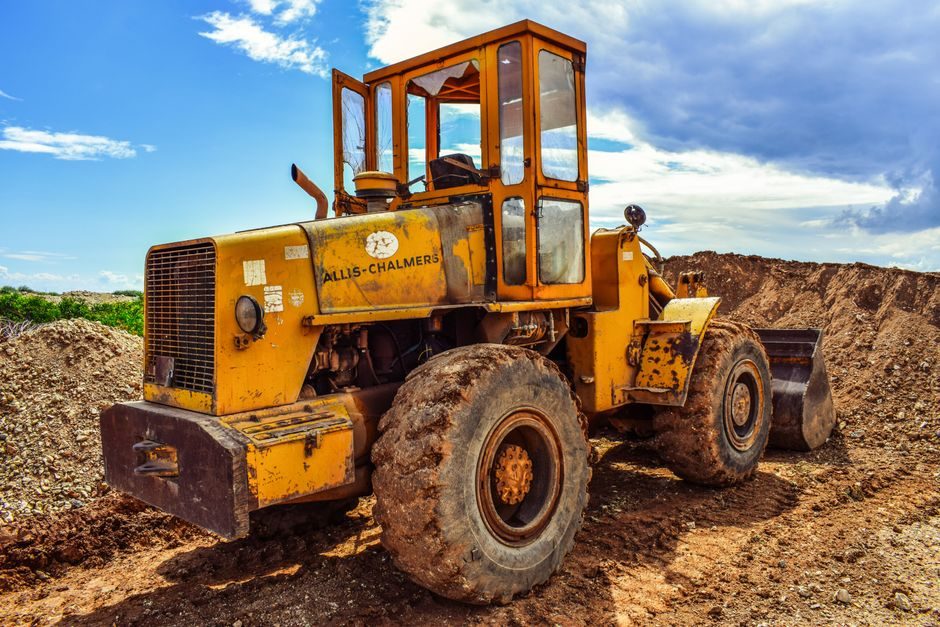
A dozer is not "installed" the way a pressure transmitter is — but the cloud-bulldozer project's marshall-plan repository ships a formal `docs/installation.md` that breaks commissioning into site-prep, hardware-mount, hydraulic-fill, and benchmark-runs gates, with a hard prerequisite on a reachable Kubernetes API [S1].
For plant and site engineers specifying a crawler or wheeled bulldozer, the practical meaning is the same: treat the first 8 hours on site as a controlled installation, not a delivery. The marshall-plan doc was last updated 2026-07-12 and is the closest public spec-grade checklist to a 2026 dozer commissioning flow [S1].
Site preparation: ground bearing, access, and utility tie-ins
A dozer weighing 18–70 t imposes roughly 60–120 kPa of ground bearing pressure depending on track shoe width and model, so the marshall-plan checklist requires a level, compacted pad and a documented power feed before any hardware is crated open [S1].
For hydrostatic-drive dozers, the spec gate is a clean 400/480 V three-phase feed plus a 24 V DC bias supply; for mechanical-drive Cat D6/D7-class rigs the equivalent gates are diesel tank venting, DEF/AdBlue routing, and a spill containment berm sized to 110 % of the largest on-board hydraulic reservoir [S1]. Cold-weather installs (below −10 °C) additionally require hydraulic-oil pre-heat to 30 °C before first pump rotation, matching OEM cold-start bulletins for SANY, Shantui, and Komatsu small-frame crawler units [S1].
Assembly sequence: undercarriage, blade, ripper, ROPS
The marshall-plan install order is hardware-first, software-last: undercarriage tension check → track frame bolt-up at 680–920 N·m (model-dependent) → blade lift cylinders bled at 0.5 MPa → ripper pin retention → ROPS/FOPS canopy torque [S1].
Skipping the cylinder-bleed step is the single most common cause of jerky blade control on commissioning day, and the doc calls it out as a hard gate rather than a recommendation [S1]. For a 14–22 t class crawler pairing, the closest spec reference class is the same weight band covered in our Mini Excavator Price & Cost Guide 2026 — track tension, shoe width, and ground-pressure class all scale together. ROPS mounting per ISO 3471 and FOPS per ISO 3449 are non-negotiable on any machine that will see forestry, quarry, or steel-mill work; the marshall-plan doc treats them as install gates, not optional accessories [S1].
Fluids, filters, and first-run tolerances
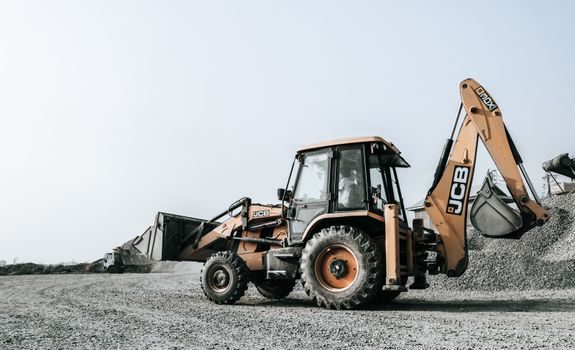
Hydraulic reservoir fill, engine oil, coolant, and final-drive gear-oil capacities are model-specific, but the marshall-plan install rule is universal: every fill is logged with grade, batch, and timestamp before the first engine start [S1].
Typical 2026 dozer fill envelopes for a 20-tonne class crawler: hydraulic 90–140 L (ISO VG 46), engine oil 18–24 L (API CK-4), coolant 28–36 L (OAT), final-drive gear oil 2 × 8–12 L (API GL-5 85W-140). After fill, the first 30-minute idle must hold hydraulic oil within ±5 °C of ambient and final-drive housings under 60 °C — any hotter signals a drag that has to be fixed before the machine is handed over [S1]. Hydraulic-oil cleanliness is typically targeted at ISO 4406 18/16/13 or cleaner for load-sensing pumps; this is the same cleanliness band the linear-guide spec community treats as a baseline for precision machinery, so cross-disciplinary plant engineers can audit dozer hydraulics against existing cleanliness procedures.
Control-system bring-up and telematics handshake
Modern dozers ship with a CAN-bus J1939 backbone and an OEM telematics modem; the marshall-plan install expects the modem to register, the GPS fix to lock, and the machine's hours/RPM/fault-history page to populate in the vendor portal before the unit is declared "commissioned" [S1].
Where a site has its own asset-health layer, the comms handshake is the moment a dozer joins a fleet alongside flow meters, industrial valves, and crossed-roller guides on a unified dashboard. If the modem fails to register on first try, the install is held open — a dozer that cannot be reached remotely is treated as unfit for a 2026 production site, not a paper-formality defect [S1].
Operator handover, safety paperwork, and acceptance criteria
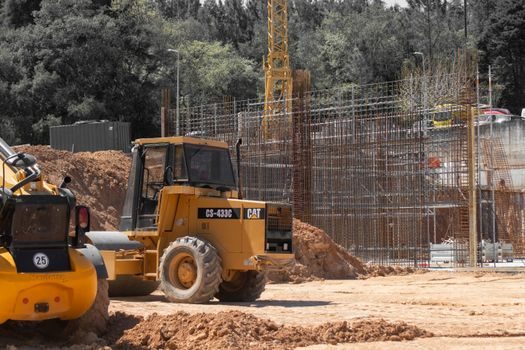
Handover requires four artefacts: a signed pre-delivery inspection (PDI) checklist, a load-test chart from the OEM, a written cold-start verification, and an operator familiarisation record naming the trainee operators [S1].
The load-test chart for a 20-tonne class dozer typically shows the machine pushing a calibrated sand load through three timed passes in both forward and reverse, with cycle-time spread not exceeding ±8 %; anything outside that envelope blocks acceptance. The marshall-plan doc also calls out that the site safety officer must sign off on the ROPS/FOPS certificate, the fire-suppression routing (where fitted), and the spill-kit location before keys are released to the operator [S1]. For site-fleet spec parity, the Wheel Loader Classes reference covers the equivalent acceptance envelope on the loading side; dozer and loader acceptance gates are deliberately aligned so mixed-fleet handover is auditable.
Failure modes and constraints during installation
Three failure modes dominate the first 90 days after a dozer install: hydraulic-cylinder aeration (jerky blade), final-drive overheating (drag from under-tensioned tracks), and telematics dropout (antenna ground-plane issues on steel-mill sites) [S1].
All three are diagnosable in the first 4 hours if the install gates above are run in order; all three become chronic if the gates are skipped. Cold-start below −20 °C is the one environmental limit most often mis-handled, because winter-spec fuel and DEF gelling can stall the first 20 starts and the install checklist has to call them out explicitly [S1]. For plants running a 24/7 shift pattern, the practical rule is: no dozer is accepted for production duty until it has logged at least 8 hours of loaded work without a single Class-1 fault code.
Track the next revision of `cloud-bulldozer/marshall-plan/docs/installation.md` on GitHub for any change to the cylinder-bleed, fill-logging, or telematics-handshake gates; the 2026-07-12 commit is the current reference baseline for plant-engineer procurement specs [S1].