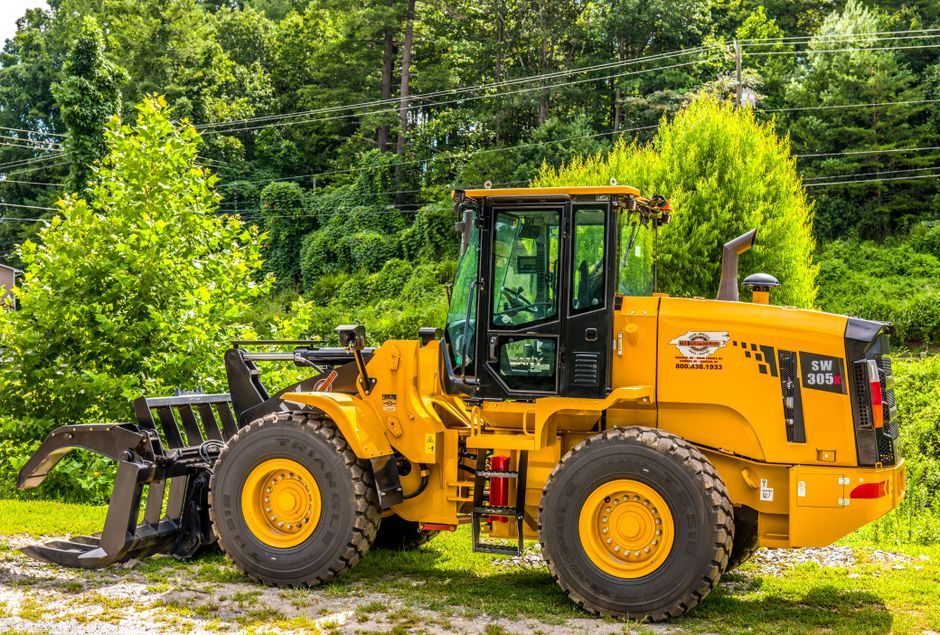
Total cost of ownership (TCO) is a financial analysis covering direct costs (purchase, installation, financing) and indirect costs (fuel, maintenance, downtime, residual value) across the asset's service life [S1][S3]. The framework was popularised by the Gartner group at the end of the last century and has since been adapted to heavy equipment fleets [S3].
What TCO Actually Counts for a Wheel Loader
A credible wheel loader TCO model splits the bill into five cost lines: acquisition (sticker + freight + attachments + tax), fuel and DEF, tires and undercarriage wear parts, scheduled and unscheduled maintenance, and residual value at disposal [S1][S2]. The acquisition price is the line most buyers negotiate; the other four are where the lifetime number is won or lost [S3].
Indirect costs include ongoing expenses such as maintenance and repairs, unexpected replacement, and the financial impact of breakdowns that make the machine temporarily unusable [S1]. A wheel loader idling on a quarry floor or stuck waiting on a tire delivery is a working-hour cost line the original quote never priced [S1][S2].
The Cost-Line Comparison: Where Each Dollar Lands
Across the typical 8,000-12,000-hour first life of a 3-7 m³ wheel loader, the cost ranking is reasonably stable: fuel 20-30%, tires 15-25%, maintenance + repair 15-20%, acquisition 25-35%, residual value recovers -10% to -20% as a credit [S1][S2]. The exact share shifts with duty cycle — a high-cyclic aggregate loader burns more fuel per hour but wears tires faster, while a low-hour log-handler skews toward depreciation.
The TCO analysis exposes hidden costs easily overlooked during budget planning or when making purchase decisions; optimising those elements yields higher savings than chasing a lower quote [S2]. For a wheel loader buyer, the practical question is which line you can actually move, not which line the dealer is willing to discount.
Selection Criteria That Move the Number
Engine tier and duty cycle drive fuel. Tier 4 Final / Stage V engines with auto-idle and load-sensing hydraulics routinely cut fuel burn 8-15% versus older mechanically governed units in matched work [S2]. Tire specification (L-2, L-3, L-5) and foam-fill versus air trade roughly 1.5-2.0x on tire cost per hour in abrasive shot-rock service [S1].
Maintenance access — centralised lube banks, ground-level filters, sight-gauge hydraulic tanks — is the line that separates a 250-hour service interval from a 500-hour interval and saves on labour hours per year [S1]. For a fleet already running excavators, sharing parts commonality and the same service technician pool is a TCO lever the OEM brochure will not print.
Who the Five-Cost-Line Model Is For, and Who It Is Not
The model fits fleet owners, mine operations, large contractors, and rental yards where the machine runs 1,500+ hours per year and where downtime is quantified [S1][S3]. It is less useful for a farmer buying a 1.1 m³ compact loader for 200 hours a year of seasonal work — there, the variability of annual hours makes the model noisy, and a single all-in price with a local dealer is the smarter conversation.
It is also the wrong tool for users who need qualitative benefits (operator comfort, ergonomics, telematics) — TCO is less effective at determining advantages; traditional analyses such as ROI are better suited to productivity and satisfaction gains that resist direct costing [S3].
Use Cases: Matching TCO Levers to Duty Cycle
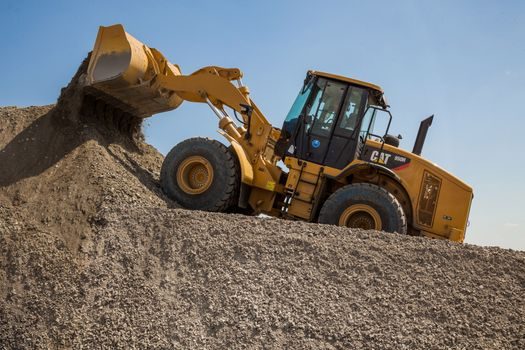
Quarry and aggregate: push the tire line down with L-5 cut-resistant compounds and prioritise auto-lube to extend pin and bushing life by 30-50% [S1][S2]. Bulk earthmoving: negotiate a fuel-scaled warranty and require telematics export so the fuel-burn data feeds back into next year's spec. Stockpile and rehandle: keep the bucket matched to the truck pass count (3-4 passes is the standard rehandle sweet spot); over-sized buckets raise fuel per tonne moved and stress the driveline.
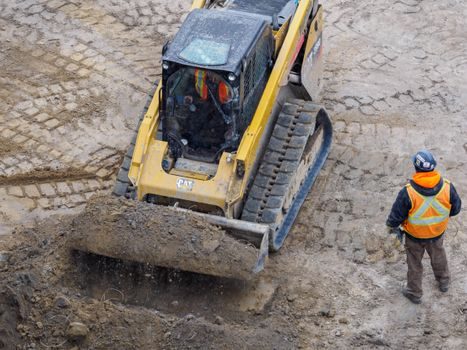
For a fleet already running skid-steer loaders on site, the wheel loader slot is the high-hour, high-volume node — a different TCO posture and a different maintenance contract, but the same TCO model applies.
Limitations, Failure Modes and Common Mistakes
The single most common TCO error is using the dealer's "extended warranty" line as if it were a maintenance saving — warranty covers catastrophic failure, not 500-hour service [S1][S3]. The second is under-reserving for tires in a high-abrasion duty cycle; L-2 tires on shot rock can deliver 2,000 hours of life, L-5 the same job yields 4,500-5,500 hours, and the hour-cost delta is larger than the price delta.
Residual value is the line most often guessed. A 10,000-hour machine from a recognised brand in good service records typically retains 35-45% of original value; an unbranded or poorly documented machine in the same hours can drop to 20-25% [S1][S2]. The book value of any used asset is set by maintenance records and brand reputation, not by the original quote.
Standards, Sourcing Signals and What to Track Next
ISO 6014 governs the test method for the machine's own operating weight; SAE J732 covers bucket ratings, both useful for cutting through marketing horsepower claims. For cross-equipment context, see the excavator TCO breakdown and the crawler excavator price bands, where the fuel and maintenance lines move the same way.
The next node to track is OEM telematics data export — machines shipped after 2024 increasingly push fuel, idle, fault and load data through a third-party API, and that single capability is the difference between a TCO model based on assumptions and one based on the actual machine [S1][S2]. The second signal is tire pricing in the second half of 2026: natural rubber and carbon-black moves through 2025 suggest a 4-8% tire-line lift year-on-year, which reshapes the TCO ranking on any 10,000-hour model.
For component-level specifications, see total station.