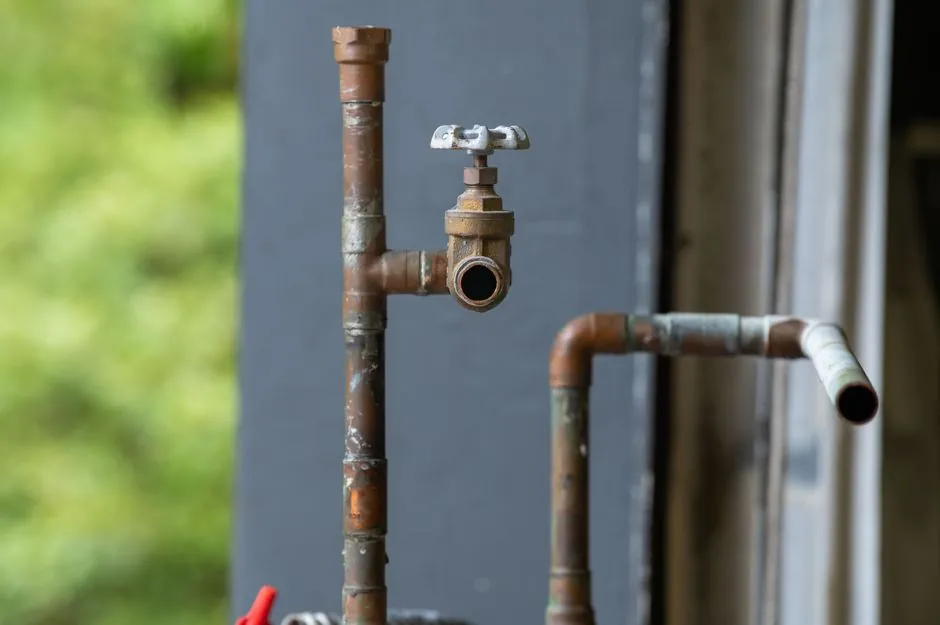
A butterfly valve rotates a single disc through 90° between fully open and fully closed, giving a compact quarter-turn package with lower cost and weight than equivalently sized ball valves or gate valves for on-off and light throttling duty in water, HVAC and chemical service [S2][S5].
Design variants span zero-offset resilient-seated wafer and lug bodies for low-pressure water lines, high-performance double-offset units for higher cycle and pressure work, and triple-offset metal-seated designs for tight shut-off on hydrocarbons and steam, with body materials ranging from cast iron and ductile iron through carbon steel, stainless steel and alloy liners [S2][S3][S5].
Core Advantages: Cost, Weight, Footprint and Flow Capacity
Butterfly valves typically weigh 30-50% less and cost 40-60% less than equivalently sized ball or gate valves in the 4-24 in size band, because the disc and stem assembly is far simpler than a ball-and-seat stack or a wedge-and-stem gate [S3][S4][S5]. A 90° rotation drives the disc from parallel to fully closed, so actuation torque is low and pneumatic or electric actuator packages stay small, which shortens commissioning time on skid builds [S2][S5].
Flow capacity is high for the installed face-to-face dimension: when the disc is parallel to the bore, the obstruction is only the disc thickness, so pressure drop is markedly lower than a globe valve and close to a full-bore ball valve in larger sizes, with the flow coefficient (Cv) typically 60-70% of an equivalent full-bore ball at the same nominal size [S2][S5]. For HVAC, cooling-water and raw-water service this combination of low ΔP and small footprint is the main reason butterfly valves dominate duct and plant-room piping.
Limitations: Cavitation, Temperature, Pressure and Piggability
Butterfly valves are prone to cavitation and choked flow when the disc operates below 30-40° open, because the disc edge accelerates fluid and creates a vena contracta with a high local pressure drop, so pump systems with limited NPSH margin should derate butterfly selections or move to control valves designed for flashing service [S1][S2]. Soft-seated resilient designs (EPDM, NBR, PTFE) are typically limited to about 200°C and ANSI 150 class; beyond that, seat life drops fast and triple-offset metal-seated bodies must be specified instead [S1][S2][S4].
Butterfly valves are also non-piggable, because the disc remains in the bore at all times and a pipeline pig cannot pass the closed or partially closed disc, so any long pipeline designed for routine pigging or cleaning should plan on a ball valve or full-bore gate valve at cleaning stations, with butterfly valves confined to branch isolation [S1]. The disc is also susceptible to corrosion in viscous or corrosive fluid service if the wrong disc or seat material is selected, so material compatibility must be checked against chloride, H2S, and pH limits in the same way as a check valve in the same line [S1][S2].
Selection Criteria: Body Style, Seat, Offset Geometry and Actuation
The first decision is body style: wafer bodies sandwich between flanges and are the lowest-cost, lightest option for bidirectional service in non-critical lines, while lug bodies have tapped holes that allow dead-end service and removal of downstream piping without venting the upstream side, which is preferred in chemical and wastewater isolation [S1][S3][S5]. Double-flanged and butt-welded ends are used when the line must be welded into a higher-pressure system or when the operating temperature rules out elastomer seals [S1].
The second decision is seat and offset geometry: resilient-seated zero-offset designs (EPDM, NBR, PTFE or FKM seats) are the default for water, air and low-pressure chemical service up to roughly 16 bar and 120-150°C; high-performance double-offset designs shift the disc axis off the seat centerline and off the bore centerline, producing a cam action that lifts the disc off the seat and reduces seat wear, allowing higher cycle counts and pressures up to ANSI 300; triple-offset metal-seated designs add a third angular offset that creates a metal-to-metal seal with virtually no sliding contact, supporting tight shut-off and temperatures above 200°C on steam and hydrocarbons [S2][S5]. For deeper type-level detail the field map in butterfly valve classifications is a useful companion. Actuation is the third decision: manual lever or gear for infrequent operation, pneumatic rack-and-pinion for fast failsafe on/off, and electric for modulating service with 4-20 mA or fieldbus positioners [S2][S3][S6].
Comparison vs Ball, Gate and Globe Valves on Decision Criteria
On cost and weight for nominal sizes above 4 in, butterfly valves win: they undercut ball valves of the same pressure class and are dramatically lighter than gate or globe valves, with a face-to-face dimension that is typically about half that of a flanged gate valve [S3][S4][S5]. On tight shut-off, a soft-seated butterfly is comparable to a ball valve (Grade 1 per API 598 on most resilient-seated designs), while a triple-offset metal-seated butterfly can achieve the same bubble-tight performance as a metal-seated ball at higher temperatures, but at a higher unit cost than a resilient-seated wafer body [S2][S4].
On throttling precision, butterfly valves fall behind: a ball valve used in partial rotation suffers seat erosion, and a gate valve cannot throttle at all, but a globe valve is the right choice for accurate flow control because its linear plug-and-seat geometry gives a stable installed characteristic, while a butterfly's equal-percentage characteristic is sensitive to disc position and is only used for coarse modulation [S2][S4]. On piggability and high-pressure/temperature service, ball and gate valves beat butterfly valves because the butterfly disc always remains in the bore and its soft seats cap the pressure and temperature envelope [S1][S4]. The economic analysis in ball valve TCO and the criteria walkthrough in ball valve advantages, limitations, and selection criteria line up the same trade-off from the ball-valve side and are useful to read alongside this article.
Application Fit, Failure Modes and Standards Mapping
Butterfly valves are a strong fit for municipal water distribution and wastewater treatment (typical line conditions 30-80 psi and 4-38°C, so resilient-seated designs cover nearly all duty), HVAC chilled- and condenser-water loops, fire-protection loops where a UL-listed indicator post is paired with the body, and chemical and slurry service when specified with a compatible seat and disc coating [S1][S2][S3]. They are a poor fit for high-pressure superheated steam above the seat rating, for pipelines that must be pigged for cleaning, and for tight modulating control where a globe valve or dedicated control valve would give better rangeability and less seat wear [S1][S2][S4].
The most common failure modes reported in field service are seat degradation from chemical attack or temperature overshoot, disc erosion in slurry or two-phase service, stem packing leaks after high cycle counts, and actuator sizing errors that leave the disc stuck in the throttling band and accelerate cavitation damage [S1][S2][S7]. Specification should call out the body and seat material, the pressure class (e.g. ASME B16.34 pressure-temperature rating), the shut-off class per API 598, the actuation torque and the actuator fail-safe mode, and for pinless disc designs should verify the disc-to-stem retention method against the published torque ratings [S4][S7].
Trackable signals for the next 6-12 months: wider adoption of double- and triple-offset metal-seated designs in chemical and refinery retrofits as 200°C-plus services move away from soft-seated units, continued displacement of gate and globe valves by lug-body butterfly valves in large-diameter water lines, and incremental integration of electric actuators with Foundation Fieldbus and PROFINET positioners for plant-level diagnostics. Verify these by monitoring published plant bid packages, EPC material-take-off updates, and the next round of vendor datasheet revisions.