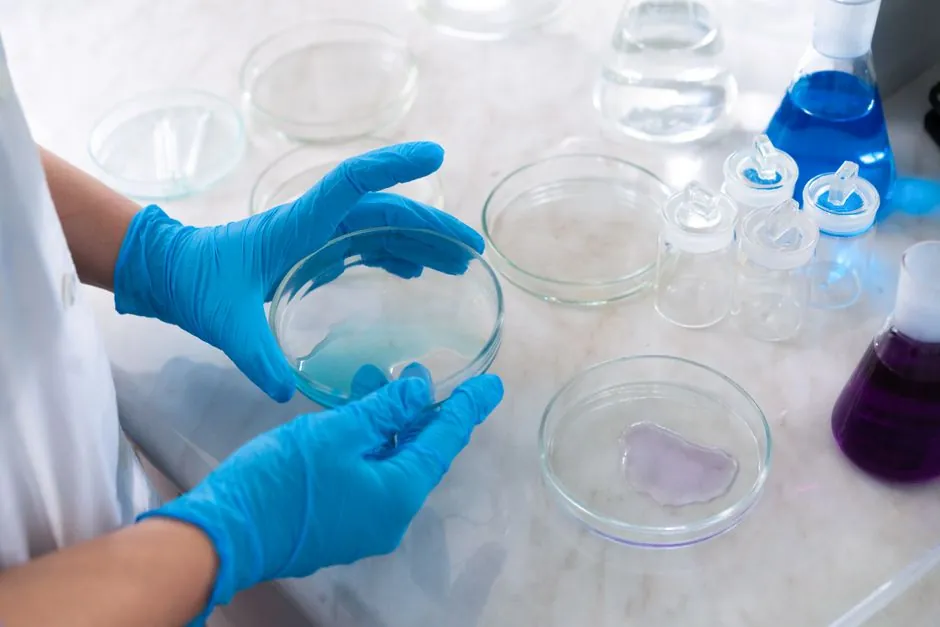
Butyl rubber is the only widely recommended polymer for sustained acetone, MEK, and ester handling, with reusable butyl gloves specified for extended contact where disposable nitrile and latex permeation occurs within minutes [S2][S10].
Viton (fluoroelastomer, FKM) extends that capability into chlorinated and aromatic solvents that defeat both butyl and neoprene, at a 3-8x cost premium over general-purpose chemical gloves [S5][S6]. Neoprene (polychloroprene) sits between the two on price and ranks as the polymer of choice for acid/caustic splash, peroxide, and moderate-solvent service where ketones are not the dominant hazard [S5][S7].
Scope of the comparison: contact mode and chemical family
OSHA's hand-protection rule at 29 CFR 1910.138 requires employers to select PPE based on the task and the chemicals present, and the standard practice is to split the decision into two contact modes: incidental contact (splash, overspray) and extended contact (submersion, full-hand immersion, prolonged handling) [S2]. No single polymer is universal, and glove compatibility is governed by the polymer chemistry, not glove color [S9]. Selection on OSHA's selection chart starts with the chemical family, then layers in permeation, degradation, and breakthrough time data, with the Safety Data Sheet (SDS) Section 8 as the source for chemical-specific recommendations [S5].
For ketones and most polar solvents, the polymer that survives extended contact is butyl rubber; nitrile and latex fail against acetone in minutes and are treated as splash-only [S10]. For chlorinated and aromatic solvents, the polymer that survives is Viton, while neoprene is the splash and short-contact middle option across acids, caustics, peroxides, fuels, and moderate organic solvents [S5][S7]. Glove thickness in the 0.4 mm+ reusable range adds breakthrough time against aggressive chemicals, versus 0.1-0.2 mm disposable nitrile which is suitable only for splashes [S7].
Selection criteria: what actually decides the polymer
Five quantitative parameters drive the choice between butyl, Viton, and neoprene for ketone and solvent service: [S9]
1. Chemical family match. Butyl rubber is rated for ketones, esters, and aldehydes, and is poor for gasoline and aliphatic/aromatic hydrocarbons [S2]. Viton (FKM) is rated for aromatics, chlorinated solvents, and aggressive fuels, with limited flexibility and the highest cost in the polymer set [S5]. Neoprene gives medium-level resistance to acids, caustics, peroxides, and many moderate organic solvents, while remaining flexible across a wide temperature span [S5].
2. Breakthrough time and permeation. Disposable nitrile and latex show near-immediate breakthrough against acetone, which is why butyl is the only polymer routinely recommended for that service [S10]. Reusable butyl gloves have a documented long breakthrough time for ketones and esters per the FWS glove selection chart [S2]. Viton data, where manufacturer permeation charts are required because no public standard guarantees performance across all chlorinated solvents, are pulled from chemical-resistant glove compatibility selectors [S9].
3. Degradation and physical aging. Neoprene maintains its physical properties under moderate solvent exposure and across temperature swings, but degrades faster than butyl in strong ketones [S5]. Butyl holds up against oxygenated solvents but ages faster in hydrocarbon fuels [S2]. Viton tolerates aggressive aromatic and chlorinated exposure with low degradation but is not used in ketones alone, where butyl is preferred [S5].
4. Mechanical hazard overlay. ANSI/ISEA 105 cut and abrasion ratings are added on top of chemical resistance; multi-hazard stacks such as a cut-rated shell worn under a chemical glove are common when sharp parts are handled alongside solvents [S5].
5. Cost and dexterity. Butyl sits in the mid-cost range for reusable chemical gloves, Viton in the 3-8x premium tier, and neoprene near the lower end of the reusable chemical-glove set; Viton is the least dexterous of the three [S5][S6].
Decision matrix: butyl vs Viton vs neoprene on six criteria
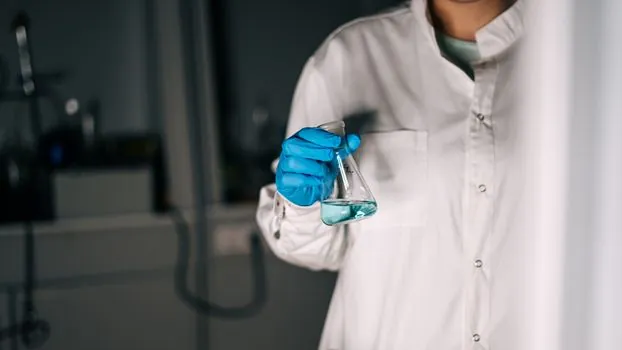
Side-by-side, on the criteria that drive a procurement spec for ketone and solvent service [S2][S5][S6][S10]:
Best fit for ketones (acetone, MEK, esters, aldehydes): butyl, with reusable butyl the polymer of record for extended contact; Viton is not preferred for ketones alone; neoprene is splash/short-contact only.
Best fit for chlorinated and aromatic solvents (methylene chloride, toluene, xylene, trichloroethylene): Viton; butyl is the secondary option; neoprene is rated for splash only and not the first pick.
Best fit for acids, caustics, and peroxides: neoprene as the primary; butyl is acceptable for many inorganic chemicals; Viton is acceptable but rarely specified for this family alone because of cost.
Permeation/breakthrough versus acetone: butyl rated long; neoprene moderate; nitrile and latex near-zero [S10].
Cost per pair (reusable, indicative): neoprene low, butyl mid, Viton at the top of the polymer set [S5].
Dexterity and tactile feel: neoprene high; butyl moderate; Viton lowest of the three because of the dense fluoroelastomer matrix [S5][S6].
Use-case recommendations: which polymer to where
Acetone, MEK, and ester cleanrooms, paint stripping, and resin work in lab or production: butyl rubber, reusable, with double-gloving where the contact exceeds 30 minutes or immersion is possible [S2][S5][S10]. The reusable inventory belongs on the chemical-resistant gloves shelf rather than in the disposable dispenser, because the cost of butyl is amortized over many shifts.
Chlorinated-solvent degreasing, aromatic-solvent extraction, and aggressive fuel handling: Viton (FKM), reusable; this is the polymer that survives methylene chloride, perchloroethylene, toluene, and xylene, where butyl begins to lose barrier and neoprene is not specified [S5][S6][S9]. When specifying a Viton glove, defer to the manufacturer's permeation chart, because the chemistry varies between fluoroelastomer grades [S9].
Acid and caustic splash, peroxide handling, and moderate organic solvents in a plant or chemical reagent warehouse: neoprene, with the option to step up to a thicker reusable neoprene or supported neoprene-on-nitrile for immersion, or to laminate-film gloves (SilverShield/Norfoil) for broad-spectrum service where snag is acceptable [S4][S5]. The chemical anchor handling guide applies the same family logic at the bulk-handling scale.
Solvent-blended or mixed-family operations (e.g., a ketone-then-chlorinated rinse on the same line): Viton is the most defensible single choice, with a thicker supported glove or a laminate inner glove under a Viton outer for the highest-exposure stations [S5].
Limitations, failure modes, and what not to do
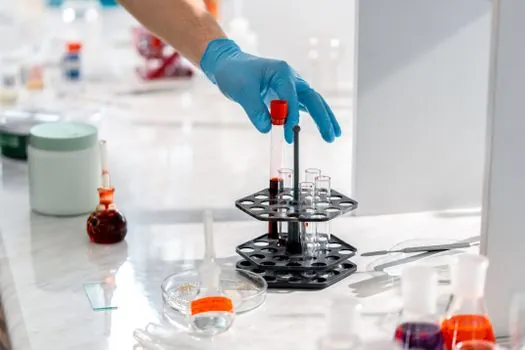
Disposable nitrile, the default in most labs, fails against acetone in minutes and should not be used for ketone immersion; the failure mode is permeation without visible degradation, so the user sees no warning before skin contact [S10]. Latex fails similarly and carries an additional sensitization risk for repeated use [S2][S4]. Neoprene is the most common single replacement for nitrile in chemical labs, but neoprene is also not specified for aggressive chlorinated solvents or for sustained ketone contact [S5].
Butyl is the wrong polymer for gasoline, aliphatic hydrocarbons, and aromatic solvents, where it loses barrier faster than nitrile in some services; this is why butyl and nitrile are often paired in a double-glove stack [S2][S5]. Viton is the wrong polymer for low-cost, high-dexterity tasks; specifying Viton for routine acid/caustic splash wastes budget and reduces tactile feedback. PVA is not an option in any wet or water-blended service, because water degrades the polymer [S5].
Across all three, the engineering failure mode to design against is invisible permeation, not visible breakthrough: gloves should be replaced on the SDS-prescribed schedule, on the manufacturer's permeation-chart interval, or immediately on any color or texture change [S2][S5]. The checking and testing apparatus reference is the right analog for a controlled permeation test in a lab QA program.
Standards, sourcing, and spec lines
OSHA 29 CFR 1910.138 is the U.S. federal requirement for hand protection in chemical service, and the OSHA solvent overview groups the chemical families that drive polymer choice [S1][S2]. ASTM F739 is the standard permeation test referenced in NIOSH PPE-Info and used to populate manufacturer breakthrough-time data [S5]. ANSI/ISEA 105 layers cut, abrasion, and puncture ratings on top of chemical resistance when a multi-hazard glove is needed [S5]. The FWS (U.S. Fish and Wildlife Service) Exhibit 4 / 241 FW 3 Glove Selection Guide remains a useful consolidated reference for polymer vs. chemical family [S2].
For procurement, the spec line should read: "Reusable [butyl | Viton | neoprene] glove, minimum 0.4 mm thickness, ASTM F739 permeation data for [chemical list] attached, ANSI/ISEA 105 cut rating as required by task, manufacturer permeation chart on file." [S5][S7] For a ketone-dominant process the polymer is butyl; for a chlorinated-solvent process it is Viton; for an acid/caustic/solvent-mix process it is neoprene, stepped up to laminate-film or supported constructions at the highest exposure points [S4][S5][S9]. The same polymer-vs-chemical-family logic at industrial scale shows up in chemical material bulk-handling and in construction machinery and equipment fuel-system service, where Viton and butyl are the long-life choices.
Next signals to track: ASTM F739 permeation data updates for newer ketone blends (methyl acetate, ethyl acetate, dimethyl carbonate) and any 2026 manufacturer chart revisions for thin-wall Viton liners, since both would shift the cost-vs-dexterity balance that today puts butyl first for ketones and Viton first for chlorinated solvents [S5][S9].
Background reading: Gland Packing Advantages and Disadvantages: Where It Still Wins, and Where It Loses.