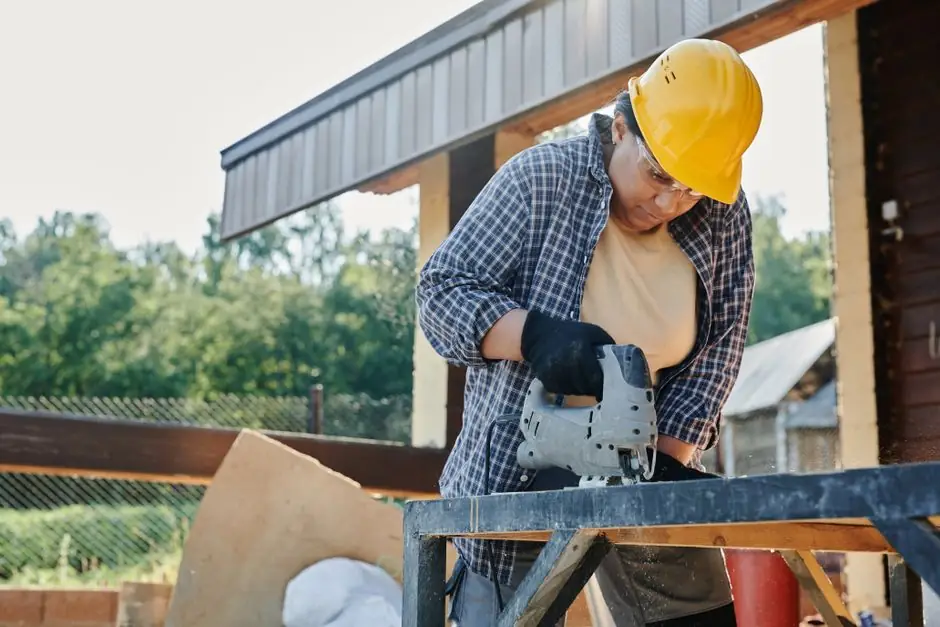
Bump caps and full hard hats sit on opposite ends of the head-protection risk spectrum, and confusing the two is the most common PPE compliance error on low-clearance job sites [S2][S4].
The core rule: bump caps meet ANSI/ISEA 100-2024 and protect against worker-generated contact with fixed objects; full hard hats meet ANSI Z89.1 and protect against object-generated impact, including falling tools, overhead loads, and electrical contact up to the rated class [S5][S6].
Standards Divide: ANSI Z89.1 vs ANSI/ISEA 100-2024
Full hard hats sold in the US must comply with ANSI Z89.1, which defines Type I (top impact) and Type II (top + side impact) and Class G (up to 2,200 V), Class E (up to 20,000 V), and Class C (no electrical rating) [S4][S5]. Bump caps are explicitly excluded from ANSI Z89.1 scope; the product standard they reference is ANSI/ISEA 100-2024, which covers industrial headwear for low-risk environments and is NOT a substitute for Z89.1 in any overhead-hazard zone [S5]. OSHA 29 CFR 1910.135 and 1926.100 require Z89.1-rated head protection where objects may fall from above, where electrical hazards exist, or where stationary fixtures can be struck, and they treat bump caps as non-compliant for those conditions [S4].
Verification is printed inside the shell: manufacturer name, ANSI standard, Type I or II, Class G/E/C, size, and date of manufacture, plus optional LT (low temperature) and HV (high visibility) marks; bump caps carry ANSI/ISEA 100-2024 instead of Z89.1 [S4]. According to the Bureau of Labor Statistics cited in [S1], roughly 40,000 annual US private-sector head-injury days away from work occur, with 6% in construction where hard hats are most likely worn, while production workers (12.9%), transportation and material moving (20.6%), service workers (22.1%), and installation, maintenance, and repair workers (8.9%) account for the majority of the remaining incidents according to the National Safety Council.
Impact Type: Object-Generated vs Worker-Generated
Object-generated impact covers anything falling onto, or propelled at, the worker: dropped tools, swinging loads, ricocheting fasteners; this is the hazard class Z89.1 is designed around and the reason hard hats have a rigid ABS or HDPE shell with internal suspension [S1][S6]. Worker-generated impact is the reverse: the worker moves into a fixed object, a low beam, a duct, a conveyor frame, a shelf upright, or a vehicle cab roof, and the injury is typically a bruise, laceration, or minor concussion rather than a penetrating or crushing wound [S1][S6].
GoSafe Labs frames the distinction plainly: bump caps protect you from running into something, hard hats protect something from running into you (or falling on you) [S6]. Ergodyne extends the same logic to fitment, with typical bump-cap shells 0.5-1.0 cm of padding over a low-profile ABS insert, weighing roughly 150-300 g versus 350-450 g for a cap-style hard hat with suspension [S1].
Selection Criteria: Five Decision Variables
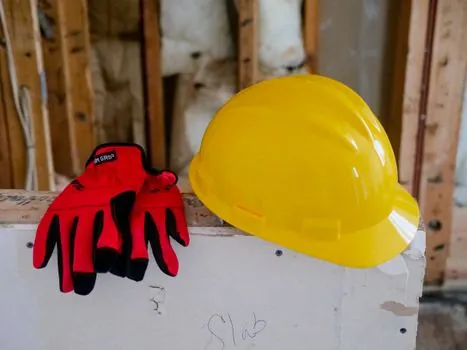
Use the following five variables, in order, to drive the spec:
1. Overhead hazard present? If yes, full hard hat, no exceptions. Falling tools, suspended loads, crane lifts, overhead piping work, and active demolition all fall in this bucket per OSHA 1926.100 [S2][S4].
2. Electrical exposure? If yes, hard hat only, with Class E (20 kV) for high-voltage work and Class G (2.2 kV) for general construction; bump caps carry no dielectric rating [S4][S5].
3. Vertical clearance? Ceilings, cable trays, valves, and door frames below roughly 2.0 m of head room are the canonical bump-cap case, including crawl spaces, in-home service, plenum work, and aircraft cabin access [S1][S3].
4. Lateral impact risk? Forklift aisles, rotating machinery, and two-person lift stations warrant Type II (side-impact) hard hats, not bump caps, because side strikes are object-generated [S5].
5. Shift length and climate? Above roughly 4 hours of continuous wear, or in ambient temperatures above 30 °C, bump-cap ventilation and sub-300 g weight measurably improve compliance, per uvex [S3].
Use-Case Matrix: Bump Cap, Cap-Style Hard Hat, Full-Brim Hard Hat
For a direct comparison an engineer can paste into a job hazard analysis, the three options line up as follows against the dominant selection criteria [S1][S2][S3][S5]:
- Bump cap (ANSI/ISEA 100-2024): cost roughly $15-$30 per unit; weight 150-300 g; overhead-falling-object protection none; electrical protection none; side impact none; best fit for warehouse aisles, food processing lines, in-home HVAC and plumbing service, aircraft cabin cleaning, and low-clearance maintenance catwalks [S2][S3].
- Cap-style hard hat Type I Class G (ANSI Z89.1): cost roughly $20-$50; weight 350-450 g; top impact yes; dielectric 2.2 kV; side impact no; best fit for general construction, utility work, and any site with overhead tools or light electrical exposure [S4][S5].
- Full-brim hard hat Type I Class E (ANSI Z89.1): cost roughly $30-$70; weight 400-500 g; 360° brim for sun, rain, and splash; dielectric 20 kV; best fit for outdoor utility, line work, forestry, and any task combining overhead impact with weather exposure [S5].
Failure Modes and Misuse Patterns
Three misuse patterns show up repeatedly in incident write-ups and vendor guidance. First, bump caps on active construction sites: a worker wearing a bump cap under a steel-erection crew has no Z89.1 shell, so a dropped wrench or a swinging choker passes straight through to the skull [S4][S5][S6]. Second, bump caps near electrical work: even proximity to a 480 V bus bar requires a Class G or Class E dielectric shell, which a bump cap does not provide [S2][S4]. Third, hard hats in genuinely tight spaces: a Type II Class E helmet adds 12-15 cm of vertical profile versus a bump cap, and a full-brim adds another 4-6 cm of lateral sweep, so workers in crawl spaces and overhead-plenum zones routinely remove them, which is the ergonomic failure mode bump caps are designed to solve [S1][S3].
Material behavior reinforces the spec: hard-hat shells are ABS or HDPE with a 6-point or 8-point webbing suspension that holds the shell 2.5-3.0 cm off the skull to spread impact load; bump-cap inserts are typically a thin ABS or polypropylene cap under 6 mm of EVA foam, which absorbs the lower-energy contact of a worker stepping under a 1.9 m door frame but does not have the energy budget for a 1 kg tool drop from 2 m [S1][S5].
Sourcing, Brands, and Specification Anchors
Specifying engineers can anchor on three vendor families that publish Z89.1 and ANSI/ISEA 100-2024 documentation by SKU. Ergodyne (Skullerz line) ships the 8950, 8955, and 8966 bump cap and cap-style hard hat SKUs and publishes the 150-300 g weight band and the worker-vs-object impact framing [S1]. uvex publishes a five-point use-case breakdown and the 30 °C/4-hour compliance threshold for hot-climate wear [S3]. Defender Safety, Master-Mans, and Safety By Design publish the ANSI Z89.1 vs ANSI/ISEA 100-2024 line and confirm bump caps are NOT OSHA-compliant substitutes for hard hats in 1926.100 environments [S2][S4][S5].
For a wider view of PPE-confined-space decisions, see the comparison of basket and scoop stretchers in confined space rescue, and for adjacent overhead-impact work, the browguard vs headgear-mounted face shields selection guide covers the eye-and-face side of the same head-protective envelope. The composite vs metal housing on air impact wrenches piece, while not head protection, is a useful reference for the same materials-reasoning pattern ABS and HDPE follow under repeated impact.
Trackable signals for the next spec cycle: EN 812:2012 (the European bump-cap standard) alignment with ANSI/ISEA 100-2024; OSHA clarification letters on 1926.100 referencing bump caps by name; and any Type II Class E bump-cap hybrid entering the US market, which would compress the worker-vs-object impact gap.
For the relevant spec sheets and selection criteria, see low pressure die casting machine, pressure transmitter, and flow meter.