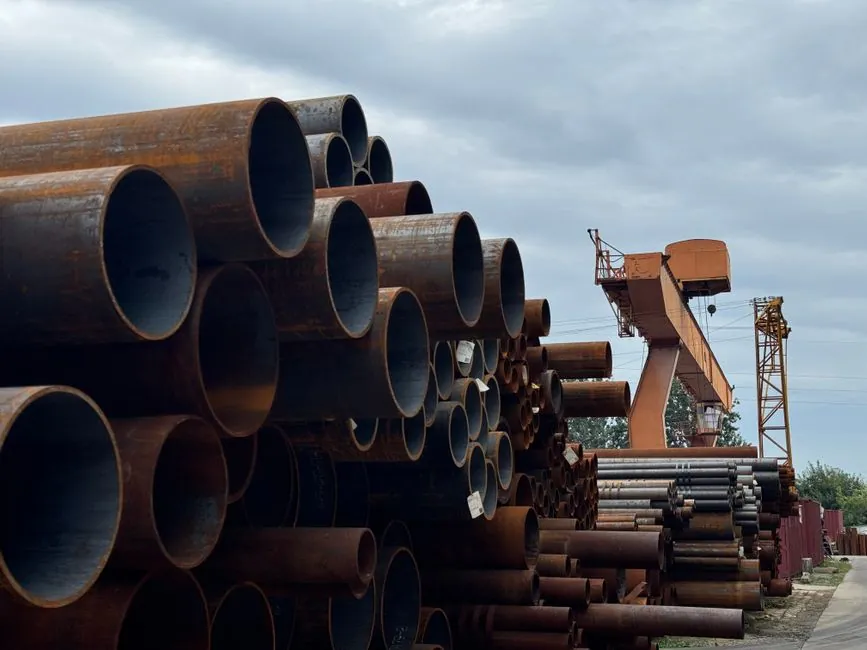
Shot blasting is a proven mechanical substitute for hydrochloric and sulfuric acid pickling on carbon-steel bars and wire rod, with no documented metallurgical barrier to the swap [S5].
The two processes attack the same Fe3O4/Fe2O3/FeO scale layer, but through different physics: chemical dissolution in acid baths versus kinetic impact from steel shot or cut wire at controlled velocity, a topic detailed in the shot blasting machine reference page.
Where Pickling Still Wins on Surface Quality
Acid pickling produces a smoother, more uniform finish because the solution attacks the entire exposed surface evenly, including complex geometries, recesses, and internal passages on seamless pipe and fittings [S4]. Shot blasting is a line-of-sight process: shadowed areas, deep threads, and tightly radiused bends see less abrasive and retain residual scale unless the part is tumbled or rotated, a limitation noted across the sand blasting machine equipment class. For tight-tolerance cold-rolled feedstock where a Ra below roughly 1.6 micrometers is specified, pickling plus a light rinse remains the conservative default.
Where Shot Blasting Already Replaces Pickling
For straight wire rod in 5.5–22 mm diameters and plain bar stock, multi-strand shot blasting systems have demonstrated superior economics under optimum throughput, with descaling achieved in one pass after a pre-breaking stage [S7]. A pre-breaking step, either reverse bending, brushing, or a light scale-breaker roll pass, cracks the brittle scale so the abrasive can do the bulk removal, a sequence confirmed in field trials of mechanical descaling of wire rod [S6]. Carbon-steel results from that work show effective scale removal down to coil diameters of approximately 5.5 mm without acid immersion.
Cost, Capex, and Workflow Trade-offs
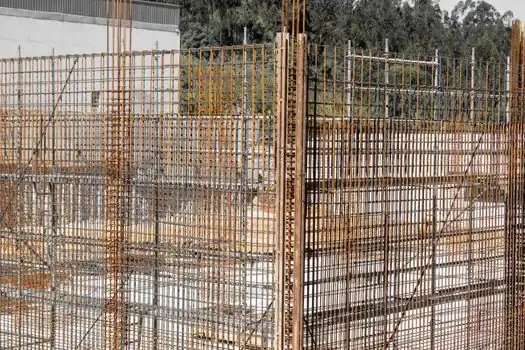
Pickling carries a higher upfront chemical-handling and wastewater-treatment capex, plus continuous acid-heating energy, while shot blasting shifts the spend to media consumption, dust collection, and abrasive-recovery cyclones [S1]. Operating cost per ton for a mid-size wire-rod line running approximately 20 t/h typically favors blasting once throughput exceeds roughly 10,000 t/month because acid bath residence time (often 20–60 minutes per immersion) becomes the bottleneck. Operators also avoid sludge disposal, typically 15–30 kg of iron-rich wet cake per ton of pickled steel, which simplifies plant permitting.
Health, Safety, and Environmental Drivers
Eliminating hydrochloric or sulfuric acid removes hydrogen embrittlement risk on hardened and spring-steel wire, a benefit cited in process-engineering discussions of the swap [S5]. It also removes HCl fume exposure (ACGIH TLV 2 ppm ceiling), acid splash burn risk, and the regulatory burden of neutralization and heavy-metal precipitation in wastewater. Shot blasting does not eliminate hazards: abrasive dust, noise at 85–105 dB(A), and shot-media breakdown require integrated dust collection rated for the airflow, plus hearing protection. Slag and spent shot are dry solid waste, generally easier to recycle than pickling sludge, but still classified as process residue under most EU and US frameworks.
Decision Matrix: Pickling vs Shot Blasting vs Wet Blasting
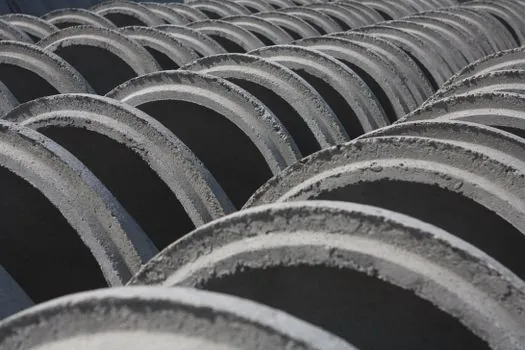
Pickling scores highest on surface uniformity, internal-surface access, and tolerance of mixed part geometries, but loses on chemical handling, embrittlement risk, and wastewater cost. Shot blasting scores highest on throughput, environmental footprint, and operator safety, but loses on complex shapes and tight Ra limits. Wet blasting, a hybrid using abrasive slurry, narrows the gap on uniformity and is now specified for oxide-scale removal on steel bars where both sludge-free operation and a smoother profile are required, replacing both pickling and dry shot blasting in the cited application [S3]. For a process engineer weighing a retrofit, the binding question is rarely metallurgical; it is part geometry, surface specification, and local waste-handling cost.
Wire-Rod-Specific Selection Rules
For wire rod destined for cold heading or wire drawing, the surface must be scale-free but also free of micro-pits that become drawing-die score marks, a quality factor covered in the wire rod reference. Strand blasting with cut-wire or conditioned steel shot at 40–60 m/s impact velocity, followed by a water rinse and a phosphate or lime precoat, has become the dominant mechanical route for high-carbon and spring-steel grades 0.4–1.2% C. The shot sleeve article covers the consumable side of the cycle. [S1]
What Cannot Yet Be Replaced
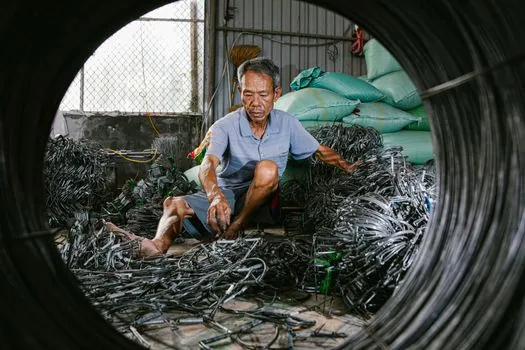
Stainless and tool-steel wire rod with chromium-rich oxide layers still needs acid pickling (typically HNO3/HF mixes) because the scale chemistry resists mechanical impact removal. Thin-gauge wire below roughly 4 mm diameter is also problematic: it bends and entangles in blast wheels, so single-strate in-line blasting with precise tension control is required, a configuration not all mills run. Seamless tube internal descaling is the clearest case where pickling has no mechanical rival. [S1]
Trackable Signals Going Forward
Two verifiable indicators to watch: provincial environmental enforcement actions on acid-pickling sludge disposal in eastern China, which historically drive retrofits to wet or dry blasting at Tier 2 wire-rod mills, and revised EU Best Available Techniques (BAT) conclusions for the ferrous metals processing sector, which set the next wastewater thresholds for acid-bearing effluents. A spike in either usually translates into a wave of mechanical-descaling line orders within 12 to 24 months. [S3]
For related coverage, see Chemical anchor selection for warehouse pallet racking: resin type, substrate, and load.